LAGOS — The West African Examinations Council has officially announced the nationwide release of the 2026 West African Senior School Certificate Examination results for school candidates.
The announcement, communicated via the council's central administrative headquarters and official digital channels, marks a major milestone for secondary education across Nigeria, relieving months of intense anticipation for nearly two million students, parents, and secondary education institutions.
Out of the total candidate pool of one million, nine hundred and fifty thousand, seven hundred and twenty-six individuals who sat for the international assessment, one million, two hundred thousand, five hundred and fourteen candidates, representing sixty-one point five four percent, achieved credits and above in at least five subjects, including the compulsory core subjects of English Language and Mathematics.
With the formal declaration of results finalized, attention now pivots to the university admission ecosystem, where millions of young candidates prepare to utilize their academic qualifications to gain placement into tertiary institutions across Africa and internationally.
Examination Performance Analysis: Breaking Down the 2026 Performance Metrics
The performance metrics released by the examination body provide critical empirical insights into the current academic standards and educational health of Nigeria’s secondary school system.
The recording of a sixty-one point five four percent benchmark pass rate in five core subjects including Mathematics and English Language reflects a sustained academic baseline when benchmarked against recent historic trends.
Securing pass credits across these two foundational subjects remains the indispensable baseline criteria for candidates seeking undergraduate admission into degree-awarding universities, polytechnics, and colleges of education across the country.
The examination cycle, which spanned from April 21 through June 19, 2026, represented an immense logistical undertaking across more than twenty-four thousand, two hundred registered secondary schools nationwide.
While the overwhelming majority of examination centers continued to operate under the traditional paper-and-pencil testing model, the 2026 school candidate cycle witnessed an unprecedented, expanded deployment of computer-based testing infrastructure, signaling a decisive shift toward digital assessment methodologies within West Africa’s secondary education landscape.
Digital Transformation and Results Access: The PIN Generation and Portal Authentication Process
To facilitate seamless, secure access to examination scores, the West African Examinations Council has integrated multi-factor authentication protocols within its digital results delivery platform.
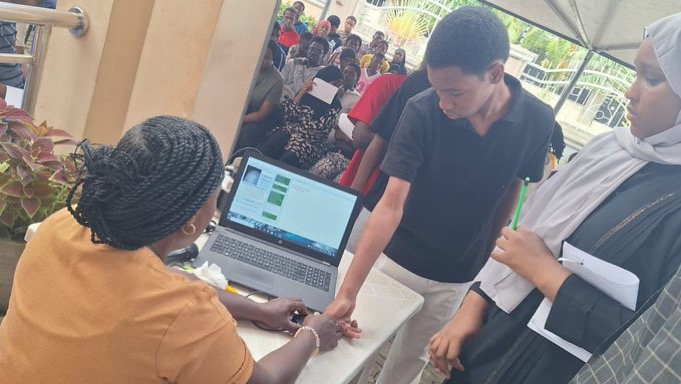
Candidates seeking to retrieve their academic transcripts are required to undergo a multi-step digital authentication process beginning on the primary portal.
Students must first generate a dedicated Personal Identification Number and matching serial key by providing their unique candidate registration number, National Identification Number, and registered mobile contact details for real-time one-time password verification.
Once the security credentials are successfully generated, candidates transition to the dedicated results portal to access their detailed subject scorecards.
By tying result verification directly to validated national identification numbers and real-time security tokens, the examination body aims to eliminate corporate transcript forgery, mitigate identity theft, and prevent unverified third-party tampering, ensuring that higher education institutions receive authentic academic records directly from the primary assessment authority.
Understanding Credit Thresholds, Tertiary Admissibility, and CBT Transition Mechanics
To fully evaluate the significance of the 2026 examination results, it is necessary to examine the underlying educational structures, grading thresholds, and technological shifts governing West African secondary assessments.
-
Five-Credit Tertiary Threshold: Under current national education guidelines, entry into Nigerian universities requires candidates to earn a minimum grade of C6 or higher in five relevant subjects. Obtaining credits in both English Language—the primary medium of instruction and Mathematics—the baseline for quantitative literacy is mandatory across virtually all academic disciplines, ranging from medicine and engineering to law and humanities.
-
Computer-Based Testing Migration: Transitioning national assessments from traditional paper booklets to computer terminals involves specialized software environments designed to prevent cheating, record student responses securely, and automate scoring. Following initial pilots for private candidates, expanding digital testing option models to school candidate centers improves grading turnarounds, reduces manual marking errors, and eliminates paper logistics vulnerabilities.
-
Result Processing Timeline: The council's release of results precisely forty-five days following the conclusion of the final paper demonstrates strict adherence to operational schedules, providing prospective university applicants sufficient time to submit verified transcripts during the annual tertiary admissions cycle.
From Regional Standardization to Computer-Based Testing Innovations
The evolution of the West African Senior School Certificate Examination reflects more than seven decades of regional educational coordination and continuous assessment modernization across Anglophone West Africa.
Established in 1952 through legislative enactments across five member countries—Nigeria, Ghana, Sierra Leone, Liberia, and The Gambia—the West African Examinations Council was established to harmonize secondary education standards, maintain internationally recognized academic benchmarks, and replace colonial examination boards.
Over the decades, the council expanded its operations, transitioning from paper-based regional certificates to the unified West African Senior School Certificate Examination structure in the late 1990s.
In recent years, the council has prioritized technological modernization to meet the demands of an increasingly digital global economy.
Following successful trials of computer-based assessments during the 2026 First Series for private candidates earlier in the year, the expansion of digital examination pathways during the main 2026 school candidate cycle represents the culmination of years of technical investment, infrastructure expansion, and regional teacher training initiatives aimed at modernizing West African educational assessment.
National Economic Productivity, University Admissions Pressure, and Human Capital
The release of the 2026 examination results carries profound socio-economic implications for Nigeria’s economic development, human capital accumulation, and tertiary education infrastructure.
From a macro-economic perspective, a nation's long-term productivity and competitiveness depend directly on the quality of its secondary education system.
With over one point two million candidates clearing the foundational five-credit barrier, Nigeria secures a massive fresh pool of qualified youth eligible for higher technical, scientific, and professional training.
Developing a literate, mathematically competent workforce is essential to driving digital technology adoption, expanding domestic industrial manufacturing, and supporting high-value service sectors across West Africa.
However, the sheer volume of successful candidates also highlights systemic pressure points within the tertiary education sector.
Nigeria's public and private universities possess a combined annual intake capacity that historically absorbs only a fraction of qualified secondary school graduates.
This structural capacity deficit creates intense competition during national university entrance examinations, driving tens of thousands of students toward private domestic institutions or international universities, resulting in significant annual capital outflows in international tuition payments.
Educational Assessment Across West Africa and International Mobility
The 2026 results release connects directly to broader sub-regional academic trends and global student mobility dynamics across the international higher education landscape.
Across the five member nations of the West African Examinations Council, maintaining standardized, cross-border academic assessment ensures that secondary school qualifications issued in Lagos, Accra, Freetown, Monrovia, or Banjul remain fully transferable and mutually recognized.
This sub-regional integration enables seamless academic mobility, allowing West African students to pursue undergraduate degrees across member states without undergoing costly credential conversion procedures.
On the international stage, the West African Senior School Certificate Examination remains widely recognized by admissions boards across North America, Europe, Asia, and Australia as a rigorous secondary school credential.
As global universities increasingly seek international student diversity from emerging African markets, verified high-performing candidates from the 2026 cohort will enter competitive global scholarship pipelines, bolstering the international standing of African academic talent.
As secondary schools across Nigeria begin issuing physical statements of results and candidates proceed to verify their scores online, educational administrators, policy makers, and university admissions boards are focusing their efforts on guiding this massive cohort of young scholars into productive tertiary and vocational pathways, ensuring that the country's youth dividend is effectively harnessed for long-term national growth.