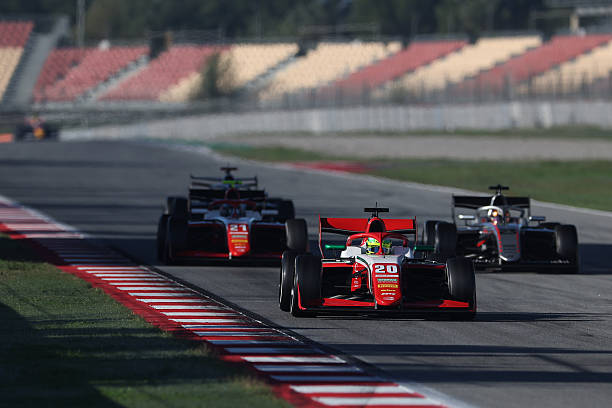
Formula 1 will restore its standard Grand Prix race distance in 2028 after temporarily shortening races for the 2027 season as part of changes linked to the sport's new power-unit regulations.
The standard maximum race distance will return to 305 kilometres (189.5 miles) in 2028, reversing a one-season reduction to 290km (180.2 miles) that will apply in 2027. The change has been incorporated into the FIA's regulations governing the next phase of Formula 1's technical rules.
The temporary reduction was introduced because of concerns over fuel consumption as Formula 1 adjusts its power-unit technology.
Why F1 is shortening races in 2027
The 2027 reduction is connected to changes being made to the hybrid power units introduced for the 2026 season.
Under the current regulations, the internal-combustion engine and electrical system are designed to provide a much more balanced share of the car's power. The FIA and Formula 1 agreed further adjustments for 2027 and 2028 after teams encountered concerns around energy management and fuel usage.
For 2027, the maximum race distance was reduced from 305km to 290km.
The FIA confirmed in September that the reduction would correspond to approximately two or three fewer laps, depending on the circuit.
The decision was partly intended to deal with increased fuel consumption without immediately forcing teams to redesign their cars around larger fuel tanks.
Under the revised power-unit regulations, the combustion engine's contribution will increase, while the electric motor's share will decline. The internal-combustion engine/electric split is scheduled to move from 53/47 in 2026 to 58/42 in 2027 and 60/40 in 2028.
The changes also include higher permitted fuel flow, meaning cars will be capable of consuming more fuel during races.
Why the distance returns in 2028
The 290km limit was always linked to the transitional phase of the new power-unit regulations.
The FIA's published rules for the following season already contain provisions restoring the standard 305km distance from 2028. That means the shorter races are scheduled to last only one season.
By 2028, the power-unit regulations will move to their next stage, with the internal-combustion engine expected to account for 60% of the power and the electrical system 40%.
The increase in fuel-flow allowance is also expected to give drivers access to greater combustion-engine power for longer periods of a race.
That regulatory transition makes it possible for Formula 1 to restore the longer race distance while giving teams additional time to adapt their chassis and fuel systems.
What will change for fans
For spectators, the difference may appear relatively small at first glance, but 15km represents roughly 9.3 miles of racing.
Depending on the circuit, the 2027 format could remove two or three laps from a Grand Prix. The exact number will vary because Formula 1 determines race distance according to the number of complete laps required to exceed the prescribed distance.
A 290km race could therefore produce slightly shorter strategic windows, fewer opportunities for overtaking and fewer laps in which teams can recover from mistakes.
The impact will depend heavily on individual circuits.
At a circuit with long lap times, removing two laps can represent a considerable amount of racing. At shorter circuits, the same 15km reduction could translate into more laps being removed.
The sporting regulations nevertheless maintain the existing principle that the race consists of the minimum number of complete laps required to exceed the applicable distance.
Monaco remains different
Monaco is treated separately under Formula 1's race-distance rules because of the unique characteristics of the street circuit.
The FIA's existing sporting regulations set Monaco's race distance at 260km, rather than the standard 305km threshold.
That separate provision will continue to distinguish the Monaco Grand Prix from most other races on the calendar.
Hamilton previously questioned shorter races
The decision to reduce race distances has also attracted criticism from some drivers.
Seven-time world champion Lewis Hamilton previously questioned the logic of shortening races, arguing that Formula 1 drivers should be pushed physically and mentally by the demands of a full Grand Prix.
Hamilton said that races should be longer because he believes the current cars can be physically easier to drive in some circumstances than previous generations.
His comments came before the FIA's latest regulations formally established the temporary nature of the 290km rule.
The return to 305km in 2028 therefore means the sport will spend only one season under the shorter-distance format.
The bigger power-unit transition
The race-distance change is just one element of a broader technical adjustment.
Formula 1's 2026 regulations introduced a major overhaul of the power units, with greater reliance on electrical energy and the removal of the previous MGU-H system.
After the first phase of the new regulations, the FIA, Formula 1, manufacturers and teams agreed further modifications for 2027 and 2028.
The package includes changes to combustion-engine power, fuel-flow limits, energy recovery and the balance between the internal-combustion engine and electric motor.
The FIA said the adjustments were intended to address concerns identified around energy management while maintaining the racing characteristics generated by the new regulations.
For 2027, the combustion engine's maximum power is scheduled to increase to 420kW, compared with 400kW in 2026. By 2028, the figure rises to 450kW.
At the same time, the maximum MGU-K power will be 300kW in both 2027 and 2028, while maximum harvesting power rises from 375kW in 2027 to 400kW in 2028.
These changes are part of the reason fuel consumption and vehicle packaging became important considerations in determining the 2027 race distance.
Teams get a year to adapt
The one-season reduction gives teams additional time to deal with the consequences of increased fuel requirements.
Fuel tanks are integrated into the car's chassis, so increasing fuel capacity is not simply a matter of installing a larger tank. It can affect the packaging, weight distribution and aerodynamic design of the entire car.
The shorter 2027 races therefore provide some relief while teams adjust to the next stage of the power-unit regulations.
By 2028, however, the return to 305km means teams will again have to complete the longer distance while operating with the more combustion-heavy power-unit configuration.
The FIA has already established the regulatory direction, although the precise engineering solutions individual teams will use remain a matter for their technical departments.
What happens next
The 2027 season will therefore be the only season currently scheduled to feature the reduced 290km standard distance.
From 2028, Formula 1 will return to the familiar 305km threshold for most Grands Prix.
The change represents a temporary compromise between the sporting desire for longer races and the technical realities created by the evolving power units.
Rather than permanently changing the length of Formula 1 races, the FIA has effectively created a one-year transition period before restoring the traditional distance.
For fans, that means the shorter races will arrive in 2027 but are currently scheduled to disappear just one year later.