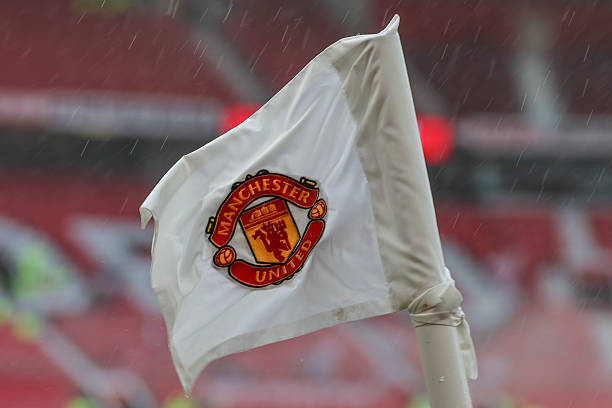
Manchester United’s latest crisis has revived a question that would have seemed almost unthinkable during the Sir Alex Ferguson era: has the club become unmanageable?
The question is no longer simply about whether Michael Carrick is the right manager. It goes deeper, touching on the club’s leadership, recruitment, squad structure, managerial appointments and the expectations that come with managing one of the biggest clubs in world football.
United have now gone eight matches without a win in all competitions after Sunday's 3-0 home defeat by Bournemouth, leaving them 16th in the Premier League and just one point above the relegation zone. Yet, despite intense pressure and crisis talks among senior executives, Carrick remained in charge as of Tuesday and took training ahead of Saturday's trip to Chelsea.
That uncertainty has made the current situation particularly revealing.
The problem at Old Trafford increasingly appears to be bigger than one manager.
Carrick Is the Latest Manager Under Pressure
Carrick's current predicament follows a pattern that has become familiar at Manchester United since Ferguson retired in 2013.
According to BBC Sport's analysis, Carrick is the seventh full-time manager appointed by United since Ferguson's departure. David Moyes, Louis van Gaal, José Mourinho, Ole Gunnar Solskjær, Erik ten Hag, Ruben Amorim and now Carrick have all taken permanent charge during the post-Ferguson period.
Several of those managers arrived with strong reputations.
Van Gaal had already managed some of Europe's biggest clubs and won major trophies. Mourinho had won league titles and the Champions League. Ten Hag arrived after building an impressive Ajax team that reached the Champions League semi-finals. Amorim was regarded as one of Europe's most promising young coaches when United appointed him.
Yet none managed to establish a sustained winning cycle at Old Trafford.
Carrick's appointment was different.
A former United midfielder and popular figure among supporters, he had previously taken temporary charge and then guided the club to third place and Champions League qualification after succeeding Amorim. His permanent appointment in May therefore appeared to offer continuity after a positive period.
But the start to the new campaign has been dramatically different.
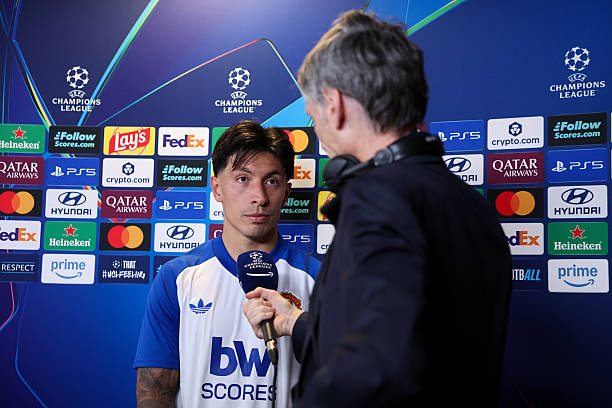
United have won only two matches in all competitions and have failed to win since August 30 in the Premier League. The 4-1 Champions League defeat by Como was followed by the 3-0 loss to Bournemouth at Old Trafford.
The question is whether replacing Carrick would address the underlying problem or simply restart the same cycle.
A Dressing-Room Problem Has Also Emerged
The situation became more complicated after disagreements involving senior players became public.
Captain Bruno Fernandes questioned Carrick's tactical approach following the 4-1 defeat by Como. Fernandes specifically questioned United's decision not to press Como more aggressively and argued that allowing the Italian side to retain possession gave them confidence and left United's players physically exhausted.
Carrick subsequently left Fernandes out of the starting XI against Bournemouth, although he said the decision was based on football considerations rather than the captain's public criticism.
United lost 3-0.
The episode illustrated the difficult position Carrick finds himself in. A manager needs authority over his squad, but that authority becomes harder to establish when tactical disagreements with senior players are being played out publicly.
There have also been concerns about recruitment.
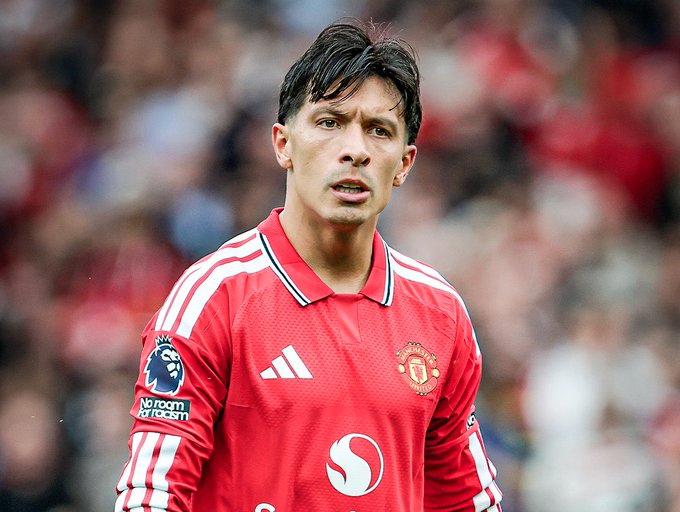
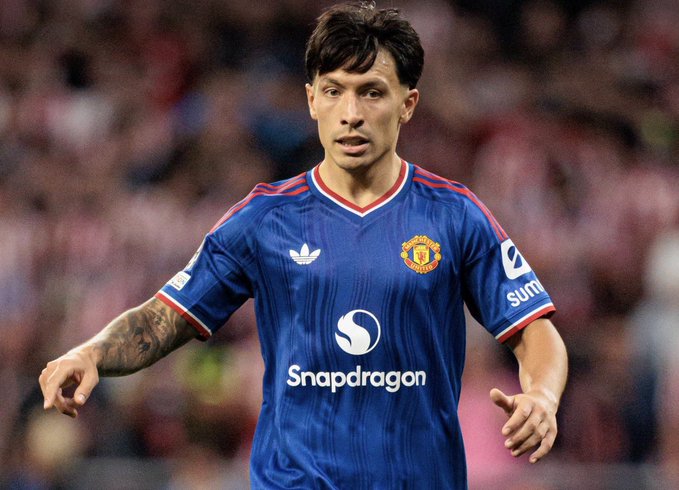
Lisandro Martínez has publicly questioned aspects of the club's recruitment and leadership, adding another layer to the pressure surrounding Carrick and the football structure.
When disagreements between players, the manager and senior football executives become public, the problem is no longer confined to results on the pitch.
It becomes an organisational problem.
United Have Changed Managers, But the Problems Keep Returning
This is where the argument that United may be "unmanageable" becomes more interesting.
Since Ferguson's retirement, United have tried managers with very different philosophies.
Moyes represented continuity from the Ferguson era but struggled to handle the scale and expectations of the job.
Van Gaal brought enormous experience and won the FA Cup, but was dismissed after two seasons.
Mourinho won the League Cup and Europa League and finished second in the Premier League, but his relationship with the club eventually deteriorated.
Solskjær initially restored optimism and emotional connection with supporters but ultimately suffered the same fate.
Ten Hag won the Carabao Cup and FA Cup during his tenure, including a significant FA Cup victory over Manchester City in 2024, but was eventually dismissed.
Amorim arrived with a strong reputation from Sporting but could not establish a long-term turnaround.
Now Carrick is facing the same pressure.
BBC Sport's Phil McNulty argues that the repeated managerial failures should force greater scrutiny of the people making the appointments and determining the club's direction, rather than automatically placing responsibility on whichever manager is sitting in the dugout.
That distinction is crucial.
If seven permanent managers with different backgrounds have struggled to deliver sustained success, the common denominator cannot simply be the managers themselves.
The Ferguson Shadow
One of United's biggest structural problems is the size of the Ferguson legacy.
Ferguson spent 26 years at Old Trafford, winning 38 trophies and building an environment in which the manager had enormous authority over the football operation.
Replacing that kind of institutional authority was never going to be straightforward.
But the succession process did not produce a stable long-term structure.
United went from Ferguson to Moyes, then through a series of managers and executive changes. The club repeatedly attempted to recreate elements of the Ferguson era while simultaneously operating under new ownership and financial structures.
The result has been a club that has often appeared to change direction whenever a manager changes.
That makes long-term planning difficult.
A new manager arrives with his own tactical preferences.
The squad is then reshaped around those preferences.
If the manager fails, another coach arrives with different ideas.
Some players become unsuitable.
More transfers follow.
Another manager eventually inherits a squad assembled partly for somebody else's system.
The cycle begins again.
Recruitment Has Become a Central Issue
United's current squad illustrates why recruitment matters so much.
A manager can be criticised for tactics, training and team selection, but ultimately he works with the players provided by the club.
Following the Bournemouth defeat, United defender Harry Maguire said the squad remained behind Carrick but acknowledged that the players themselves were not performing well enough.
"We're not playing well enough," was the substance of Maguire's assessment, with the defender calling on every player to examine his own contribution.
That is significant because it shifts part of the responsibility away from the manager.
United's football structure has changed repeatedly in recent years, with different executives assuming responsibility for recruitment and sporting strategy.
Yet the squad has continued to have weaknesses.
When recruitment does not consistently match a clear footballing philosophy, managers are left attempting to solve structural problems through tactics.
No coach can permanently compensate for an unbalanced squad.
The Board Is Now Under Greater Scrutiny
The current crisis has already pushed United's hierarchy into emergency discussions.
Following the Bournemouth defeat, senior executives held talks about Carrick's future. The Guardian reported that the club was actively considering whether to dismiss him, with director of football Jason Wilcox understood to favour former Newcastle manager Eddie Howe if a change were made. Julian Nagelsmann, Antonio Conte and Unai Emery have also been linked in reports.
Yet the club did not immediately make a change.
Reuters subsequently reported that Carrick remained manager on Tuesday and conducted training after the discussions.
That hesitation reflects the wider dilemma.
If United sack Carrick, they may get a short-term emotional reaction and potentially a new manager bounce.
But what happens afterward?
If the new manager encounters the same recruitment problems, squad issues and institutional pressures, United could find themselves back in exactly the same position 12 or 18 months later.
That is the cycle the club needs to avoid.
United's Biggest Problem May Be Institutional, Not Tactical
Calling Manchester United "unmanageable" does not necessarily mean that the club is literally incapable of being managed.
Rather, it describes the difficulty of creating stability inside an institution where expectations remain enormous but the football operation has struggled to maintain a consistent long-term direction.
The club still has enormous commercial strength.
It still has global support.
Old Trafford remains one of football's most recognisable stadiums.
And United remain capable of attracting elite players and coaches.
But attraction is not the same thing as organisation.
A club can have money, history and global influence and still lack the footballing structure necessary to convert those advantages into consistent sporting success.
That is arguably what makes the current crisis different from an ordinary bad run.
The Players Cannot Escape Responsibility
At the same time, blaming every problem on the owners, executives or managers would be incomplete.
Footballers ultimately have to perform.
United's players have produced performances that have fallen well below expectations, and their results have reflected that.
After the Bournemouth defeat, supporters showed sympathy toward Carrick while booing Fernandes and other players as they left the pitch. Reuters reported that Carrick received applause from sections of the crowd, reflecting the goodwill he retains from his playing career and his conduct as manager.
That reaction says something about the mood around Old Trafford.
Supporters appear to be questioning not only the manager but also the players' commitment and performances.
Former United striker Wayne Rooney has also criticised the current squad, questioning whether the players are showing the effort and commitment expected from those wearing the club's shirt.
Those criticisms are subjective, but they reflect the growing frustration surrounding the team.
What Happens Next Could Define More Than Carrick's Future
United's immediate problem is results.
The club must stop the losing and winless run.
But the longer-term challenge is more complicated.
If Carrick stays, United need to determine whether he has the authority, squad and institutional support to reverse the situation.
If he goes, the club needs to ensure that his replacement is appointed as part of a coherent football strategy rather than simply as another attempt to stop the latest crisis.
That distinction could determine whether United repeat the same pattern.
A new manager cannot be expected to rebuild the club every time results deteriorate.
The sporting director, recruitment department, ownership, executive leadership, manager and players all need to operate within the same footballing plan.
Without that alignment, another managerial change risks becoming another chapter in the same story.
So, Have Manchester United Become Unmanageable?
The evidence does not prove that Manchester United are literally unmanageable.
But it does demonstrate why the question is being asked.
Seven permanent managers since Ferguson have failed to establish lasting success. Carrick is now under severe pressure despite having secured Champions League qualification in his first period as permanent manager. The club has experienced repeated changes in football leadership, public disagreements involving senior players and management, recruitment concerns and another prolonged run of poor results.
That makes it difficult to argue that the problem begins and ends with the manager.
Manchester United's post-Ferguson history suggests a deeper issue: the club has repeatedly struggled to establish a stable footballing structure capable of surviving changes in personnel.
Whether Carrick remains or another manager takes his place, that is the problem United's leadership ultimately has to solve.
Otherwise, the club risks continuing the same cycle — appoint a manager, raise expectations, suffer a poor run, sack the manager, appoint another and start again.
And that is precisely why the question of whether Manchester United have become an "unmanageable club" is now more than a provocative headline.
It is a question about the structure of the institution itself.