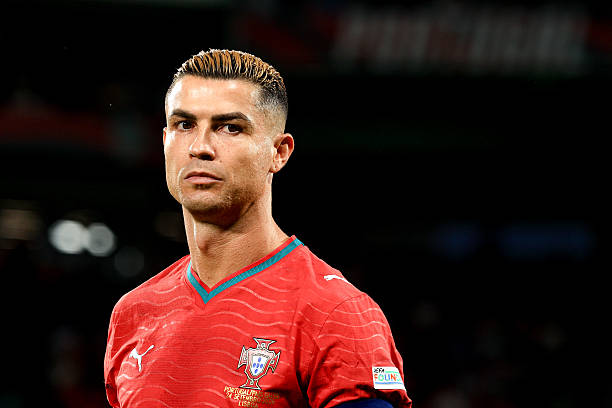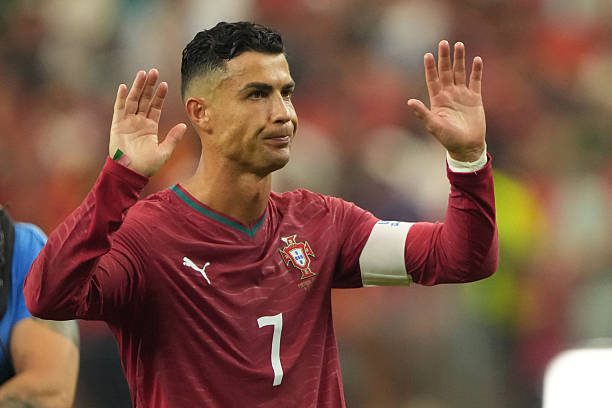
Cristiano Ronaldo has announced his retirement from international football, bringing an end to his 23-year career with Portugal after becoming the country's record appearance-maker and all-time leading scorer.
The 41-year-old made the announcement on Thursday, November 5, 2026, through a social media statement, confirming that he intends to leave the national team after the November international break.
Ronaldo said the decision had not been easy but that the time had come to hand over Portugal's famous number seven shirt to the next generation.
“Today, the time has come to pass it on to the future. It was not an easy decision,” he said in his announcement.
The Al-Nassr forward will retire with 234 appearances and 146 goals for Portugal, records that place him at the top of the men's international football rankings for both appearances and goals.
Ronaldo brings a historic Portugal career to an end
Ronaldo made his senior international debut for Portugal in 2003, aged 18. Over the following 23 years, he became the central figure in one of the most successful periods in the country's football history.
His international career included five FIFA World Cup appearances, multiple European Championship campaigns and two UEFA Nations League titles.
The defining achievement came at Euro 2016 in France, when Portugal won their first major international trophy. Ronaldo captained the team throughout the tournament but was forced off injured during the final against France. He watched from the sidelines as Portugal secured a 1-0 victory after extra time.
Portugal subsequently won the 2019 and 2025 editions of the UEFA Nations League, adding to the silverware accumulated during Ronaldo's time with the national team.
His individual records also became a defining part of his legacy. With 146 international goals, he established a scoring record that extended beyond Portugal and made him the most prolific goalscorer in men's international football.
His 234 appearances similarly placed him at the top of the all-time list for men's international caps.
The announcement comes after a difficult period with Portugal
Ronaldo's retirement announcement follows a turbulent period involving the Portugal national team and head coach Jorge Jesus.
The dispute became public in September after Ronaldo left Portugal's training camp during an international break. The departure followed his omission from the starting line-up against Norway and uncertainty over his role in the subsequent match against Denmark.
The Portuguese Football Federation confirmed at the time that Ronaldo had left the camp, although its initial statement did not provide details of the disagreement.
Ronaldo later issued a lengthy explanation in which he accused Jesus of breaking promises about his playing time and how the situation would be addressed publicly.
He also apologised to his team-mates and the Portuguese public for leaving the camp, accepting that his actions could have consequences.
Importantly, Ronaldo initially rejected suggestions that the incident meant he was retiring. In his October statement, he said he remained available for Portugal after serving any disciplinary punishment imposed by the federation.
The Portuguese Football Federation subsequently handed him a 30-day suspension and a €255 fine for leaving the national team camp. The suspension was backdated, meaning it had largely been served before Portugal's November fixtures.
Ronaldo's international future had previously been uncertain
Even before the disagreement with Jesus, Ronaldo had acknowledged that he was thinking about the end of his international career.
Following Portugal's 2026 World Cup campaign, he revealed that he had considered retiring from the national team. He said he had prepared a farewell letter but reconsidered after discussions with Portuguese Football Federation president Pedro Proença.
At the time, Ronaldo maintained that he could still contribute to the national team, both through his goals and his experience with younger players.
His decision to continue meant he remained part of Portugal's plans despite growing questions about his age, role and future involvement.
The latest announcement, however, brings that period of uncertainty to an end. Reuters reported that Ronaldo intends to hand back the number seven shirt after the November international break.
What Ronaldo's retirement means for Portugal
Ronaldo's departure will mark a major transition for Portugal, which has relied on his goals, leadership and experience for more than two decades.
The national team now faces the task of moving into a new era without the player who has been its most recognisable figure since the early 2000s.
Portugal have developed a younger generation of attacking players, but replacing Ronaldo's contribution will involve more than finding another goalscorer. His international records, influence and experience in major tournaments have made him a central figure in the country's football identity.
His retirement also means that Portugal will need a new long-term figure to carry the responsibility associated with the number seven shirt.
Ronaldo's final international appearances are expected to come during the November break, although the precise details of any farewell arrangements will depend on the Portuguese federation and the player.
A legacy that extends beyond the numbers
Ronaldo's international career was marked by individual records, major trophies and a long period of consistency at the highest level.
He experienced the disappointment of losing the Euro 2004 final on home soil, the heartbreak of Portugal's early exits from major tournaments and the eventual triumph of winning Euro 2016.
He also became the first player to score in multiple editions of the FIFA World Cup and continued representing Portugal well into his forties.
While his club career took him through Manchester United, Real Madrid, Juventus and Al-Nassr, his connection with Portugal remained a defining part of his public identity.
His 146 goals and 234 appearances provide a statistical record of his contribution, but his influence also includes the generation of Portuguese players who grew up watching him lead the national team.
Ronaldo's retirement closes one of the longest and most decorated international careers in modern football.
After 23 years wearing Portugal's number seven shirt, the player who became the face of the national team is preparing to pass that responsibility to the next generation.