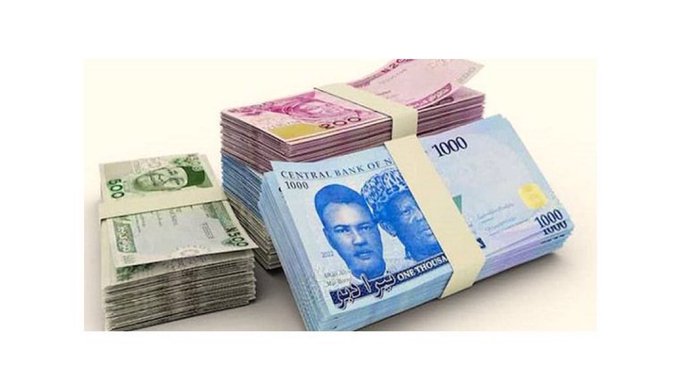
Cash held outside Nigeria’s banking system rose to ₦4.92 trillion in September 2026, increasing by ₦48.73 billion from the ₦4.87 trillion recorded in August, according to the latest monetary data from the Central Bank of Nigeria (CBN).
The increase came as Nigeria’s overall money supply expanded sharply during the month, with broad money supply, measured as M3, rising by ₦7.51 trillion to ₦146.60 trillion, from ₦139.09 trillion in August.
The latest figures show that physical cash remains a significant part of Nigeria’s financial system despite the CBN’s efforts to promote electronic payments, expand financial inclusion and reduce dependence on cash.
Cash outside banks rises for second consecutive month
The September increase extended a recovery in cash held outside banks that began in August.
CBN data showed that currency outside banks fell to ₦4.80 trillion in July, before increasing to ₦4.87 trillion in August and then ₦4.92 trillion in September.
The September figure represents a month-on-month increase of about 1 per cent.
It was also significantly higher than the corresponding figure a year earlier. Currency outside banks stood at approximately ₦4.47 trillion in September 2025, meaning the latest figure is about ₦458 billion, or 10.3 per cent, higher year on year.
However, the September figure remains below some of the levels recorded earlier in 2026.
Cash outside banks stood above ₦5 trillion during several months in the first half of the year and reached about ₦5.19 trillion in May before declining to ₦4.92 trillion in June and ₦4.80 trillion in July.
This means the latest increase does not represent a return to the year's earlier peak.
Nearly 90% of currency in circulation is outside banks
The CBN figures also show how much of Nigeria's physical currency remains outside the banking system.
Total currency in circulation increased to ₦5.52 trillion in September, from ₦5.44 trillion in August. Of that amount, about ₦4.92 trillion was outside banks.
That means roughly 89 per cent of currency in circulation was outside the banking system during the month.
The remaining physical currency was held within the banking system.
Currency outside banks refers to physical naira notes and coins held by members of the public and other entities outside banks, while currency in circulation includes cash outside banks as well as cash held in bank vaults.
The figures therefore should not be interpreted as meaning that 89 per cent of all money in Nigeria is held as physical cash.
Nigeria's broader money supply is much larger because it includes bank deposits and other monetary instruments.
Broad money supply climbs to ₦146.6 trillion
The increase in cash outside banks occurred alongside a much larger expansion in Nigeria's broad money supply.
CBN data showed that M3 rose from ₦139.09 trillion in August to ₦146.60 trillion in September, representing a monthly increase of about 5.4 per cent.
Compared with January, when broad money stood at about ₦123.95 trillion, September's figure represents an increase of more than ₦22 trillion.
M3 includes currency outside banks, deposits and other qualifying financial instruments, making it a much broader measure of liquidity than physical cash.
The latest figures therefore show that the growth in overall money supply was considerably larger than the increase in physical cash outside banks.
BusinessDay reported that one major contributor to September's M3 expansion was a sharp increase in CBN bills held by the non-bank public, which rose to about ₦5.60 trillion during the month.
This distinction is important because an increase in broad money does not necessarily mean that an equivalent amount of new physical cash is available for everyday spending.
Narrow money also increased
Nigeria's narrow money supply, which captures currency and highly liquid deposits, also increased during September.
The measure rose from ₦43.11 trillion in August to ₦44.05 trillion in September.
Demand deposits also increased during the month, rising by approximately ₦888.35 billion to ₦39.12 trillion, compared with ₦38.24 trillion in August.
The movement indicates that both physical currency holdings and highly liquid bank deposits increased during the period.
However, the CBN data by themselves do not establish precisely why households and businesses increased their cash holdings.
The rise could reflect several factors, including normal seasonal demand, business transactions, cash withdrawals, changes in liquidity conditions or other movements within the financial system.
CBN wants Nigerians to rely less on cash
The September figures come as the CBN continues to promote a financial system with greater reliance on electronic payments.
Under its Nigeria Payment System Vision 2028, the central bank has set a target of reducing cash outside banks to below 40 per cent of currency in circulation while aiming to raise financial inclusion among adults to 95 per cent by 2028.
The strategy builds on Nigeria's rapidly expanding digital-payment ecosystem, including instant bank transfers, mobile banking, fintech applications and other electronic payment channels.
The CBN's objective is not simply to eliminate physical cash but to increase the number of Nigerians who can conveniently access formal financial services and conduct transactions electronically.
The September figures show that achieving the target will require a substantial change from current patterns.
With almost nine out of every 10 naira notes and coins in circulation held outside banks, physical cash continues to play an important role in everyday economic activity.
Cash remains important to Nigerians
Despite the growth of digital payments, cash remains widely used across Nigeria.
Small businesses, informal traders, transport operators and consumers frequently rely on physical currency for transactions, particularly where access to reliable internet services, electronic payment infrastructure or formal banking services is limited.
Cash also provides a way to transact without requiring a bank account or electronic device.
For some Nigerians, therefore, holding physical money outside a bank is not necessarily a sign of avoiding the formal financial system. It can simply reflect how everyday transactions are conducted.
At the same time, greater use of electronic payments can reduce the need for people and businesses to physically hold large amounts of cash.
The CBN's financial inclusion strategy seeks to address both sides of the issue by increasing access to formal accounts and making digital payment infrastructure more accessible.
Money supply growth follows major interest-rate cut
The September monetary figures also came shortly after a major change in the CBN's monetary policy.
At its September 2026 Monetary Policy Committee meeting, the central bank reduced the Monetary Policy Rate from 26.5 per cent to 23 per cent, cutting the benchmark rate by 350 basis points.
The reduction was the largest single cut in the benchmark rate since December 2006, according to reports on the MPC decision.
The MPC also retained the Cash Reserve Requirement at 45 per cent for commercial banks and 16 per cent for merchant banks. The reserve requirement for non-Treasury Single Account public-sector deposits remained at 75 per cent.
The rate reduction came after the CBN maintained the MPR at 26.5 per cent at its July meeting.
Lower interest rates can eventually influence borrowing, investment and economic activity, although the effect on credit conditions does not necessarily appear immediately.
Government credit increased while private-sector credit fell
Another notable feature of the September monetary data was the contrasting movement in credit to government and the private sector.
Net credit to the government rose by ₦6.36 trillion to ₦39.40 trillion, from ₦33.04 trillion in August.
Private-sector credit, meanwhile, moved in the opposite direction.
Outstanding credit to the private sector fell by approximately ₦537.61 billion to ₦83.93 trillion, compared with ₦84.47 trillion in August.
BusinessDay reported that private-sector credit nevertheless remained significantly higher year on year, even though it declined during September.
The divergence means that the expansion in overall money supply should not automatically be interpreted as a broad-based surge in bank lending to businesses.
Physical cash remains below the year's starting level
Although cash outside banks increased in August and September, the longer-term picture is more mixed.
Currency outside banks was approximately ₦5.25 trillion in January 2026, meaning September's ₦4.92 trillion was still about 6.3 per cent below the year's starting level.
This is important when assessing the CBN's efforts to reduce cash dependence.
The latest two-month increase does not necessarily indicate that Nigerians have abandoned digital payments or that the central bank's cash-reduction strategy has reversed.
Rather, it shows that cash holdings can fluctuate significantly from month to month while remaining part of a much larger shift in Nigeria's monetary and payment landscape.
What the latest figures mean
The September data present two developments occurring simultaneously.
First, the amount of physical cash held outside banks increased to ₦4.92 trillion, continuing the rise recorded in August.
Second, the broader monetary system expanded considerably faster, with M3 reaching ₦146.60 trillion.
The figures therefore demonstrate that Nigeria's financial system is expanding even as the CBN attempts to change how Nigerians access and use money.
For policymakers, the challenge will be balancing financial inclusion and digital-payment growth with the reality that cash remains essential for millions of consumers and businesses.
For banks and fintech companies, the continued expansion of digital financial services creates opportunities to bring more transactions into the formal system.
And for ordinary Nigerians, the figures underline the continuing importance of both traditional cash and increasingly sophisticated electronic payment channels in the country's economy.
The CBN's target of reducing cash outside banks to below 40 per cent by 2028 represents a significant shift from the current level of roughly 89 per cent of currency in circulation.
Whether that gap can be substantially narrowed will depend not only on monetary policy, but also on the reliability, affordability and accessibility of Nigeria's digital financial infrastructure.
For now, the latest CBN data show that Nigerians held ₦4.92 trillion in physical cash outside banks in September, even as the country's broader money supply reached a record ₦146.60 trillion.