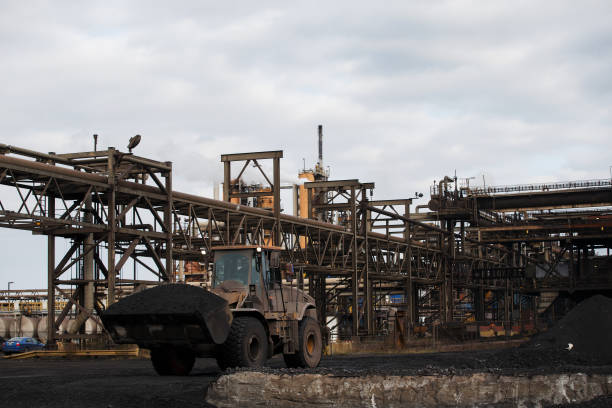
Canada’s federal government has given U.S.-based steelmaker Cleveland-Cliffs five business days to present a plan for protecting jobs at its Stelco operations in Hamilton, Ontario, warning that failure to comply could lead to legal action.
Industry Minister Mélanie Joly issued the demand in a letter to Stelco president Paul Simon as Ottawa steps up pressure over the planned layoffs of up to 500 workers at the Hamilton steel plant.
Ottawa challenges planned Stelco layoffs
Cleveland-Cliffs, which acquired Stelco in 2024, announced plans to indefinitely idle its cold-rolled and coated operations in Hamilton beginning October 9. The company has attributed the decision to weaker demand, U.S. tariffs and difficult market conditions.
The move could affect as many as 500 workers. Cleveland-Cliffs has said it expects a significant number of affected employees to find work at its Lake Erie Works in Nanticoke, Ontario, while maintaining that overall Canadian steel production will not decline.
Ottawa, however, says the company's employment commitments were legally binding conditions attached to its acquisition of Stelco.
Canada approved Cleveland-Cliffs' takeover under the Investment Canada Act, with commitments that included maintaining the number of unionized employees and the majority of non-union positions for five years. Joly argues that those commitments remain in force despite changes in business conditions.
She has now asked the company to provide a plan showing how it will comply with all of the undertakings it made when it acquired Stelco.
Government warns of court action
Joly's letter gives Cleveland-Cliffs five business days to respond.
If the company fails to provide a satisfactory plan, Ottawa could pursue the matter through Canada's courts. Possible consequences include an order requiring the company to comply with its commitments, financial penalties or, in more serious circumstances, an order requiring the sale of the business.
The government has previously indicated that it is prepared to use the enforcement powers available under the Investment Canada Act.
Prime Minister Mark Carney had already warned last week that Ottawa would use the full extent of its legal powers to enforce Cleveland-Cliffs' employment obligations.
Tariffs at centre of dispute
The dispute comes amid continuing trade tensions between Canada and the United States.
Stelco has said demand for its cold-rolled and galvanized products has fallen sharply, with the company pointing to U.S. tariffs and increased import pressure. Cleveland-Cliffs CEO Lourenco Goncalves has also publicly supported U.S. steel tariffs, describing them as necessary to protect American steelmakers.
That position has become part of the political dispute in Canada because the same tariff environment is being cited by Stelco as a reason for reducing operations and employment.
The United Steelworkers union has also challenged the company's explanation, arguing that Cleveland-Cliffs should be held to the employment commitments it made when purchasing Stelco.
Cleveland-Cliffs faces a difficult legal question
The exact legal obligations agreed to by Cleveland-Cliffs have not been made public because the detailed agreement is confidential.
Legal experts have noted that the Investment Canada Act provides circumstances in which an investor may not be held responsible when it is clearly unable to fulfil an undertaking because of factors beyond its control.
Whether tariffs and changing market conditions qualify could therefore become an important issue if the dispute reaches court.
For now, Ottawa is demanding that Cleveland-Cliffs demonstrate how it intends to preserve its commitments rather than simply explain why the layoffs are necessary.
The federal government has also said financial assistance was available to help prevent job losses, but that Stelco chose not to pursue the support offered.
Stelco workers await the company's response
The United Steelworkers union, which represents employees at Stelco's Hamilton operation, has welcomed the government's intervention.
The immediate issue is whether Cleveland-Cliffs can provide a plan that satisfies Ottawa's requirements while dealing with the weaker market conditions it says have made the Hamilton operations unsustainable.
The company's five-business-day deadline now puts the next major decision in Cleveland-Cliffs' hands. If Ottawa rejects its response, the dispute could move from negotiations into a legal battle over the employment commitments attached to the 2024 takeover.
For hundreds of Stelco workers and their families, the outcome could determine whether the planned job losses proceed or whether the company is required to find another way to meet the obligations it accepted when it acquired the Canadian steelmaker.































1
Sun Oct 11 2026