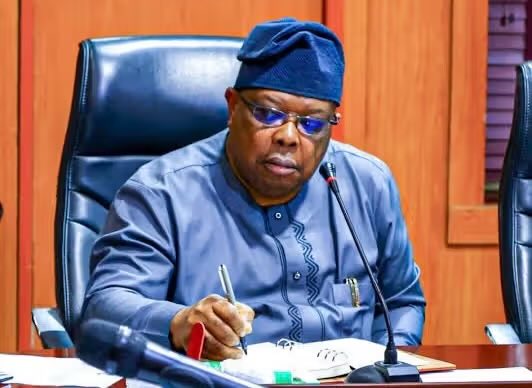
Senior Advocate of Nigeria Wahab Shittu says Nigeria’s abundant human and natural resources have not translated into sufficient national development because wealth is being accumulated through unexplained means.
Senior Advocate of Nigeria (SAN) Wahab Shittu has identified the accumulation and movement of “unexplained wealth” as one of the factors hindering Nigeria’s economic and developmental progress.
Shittu argued that Nigeria possesses substantial human and natural resources but has struggled to convert those resources into broad-based prosperity.
According to the legal practitioner, a significant portion of the country’s wealth is being taken away through channels that cannot be adequately explained or justified.
His comments highlight a longstanding concern around illicit financial flows, corruption, money laundering and the difficulty of tracing the sources of some assets and financial transactions.
Shittu raises concern over unexplained wealth
Shittu's remarks focus on the gap between Nigeria's resource endowment and its development outcomes.
Nigeria is one of Africa's largest economies and has substantial oil and gas reserves, agricultural resources and a large working-age population. Yet the country continues to face challenges including poverty, infrastructure deficits, unemployment and limited access to essential public services.
For Shittu, the problem is not simply the availability of resources but how wealth is generated, transferred and accumulated.
He said the country is blessed with both human and natural resources but argued that much of its wealth is being diverted through unexplained means.
The concern is particularly relevant to efforts to combat financial crimes because unexplained wealth can make it difficult for authorities to determine whether assets were obtained through legitimate economic activity or through corruption and other unlawful activities.
What is unexplained wealth?
The term “unexplained wealth” generally refers to assets or financial resources whose apparent value cannot be readily reconciled with a person's known legitimate income or economic activities.
It does not automatically mean that an individual has committed a crime.
A person may possess substantial assets for legitimate reasons, including inheritance, successful business activities, investments or income from sources that are not immediately obvious.
However, where authorities identify a significant discrepancy between known legitimate income and the value of assets, questions about the source of the wealth can arise.
This is why financial investigations often focus on establishing the origin and movement of funds rather than simply examining the value of assets.
The connection with illicit financial flows
Shittu's concerns also touch on the broader problem of illicit financial flows.
Illicit financial flows can involve money generated through illegal activities, funds obtained through corruption or tax-related offences, or money moved across borders in violation of applicable laws.
Such flows can deprive governments of revenue and make it more difficult to finance public infrastructure and social programmes.
The issue is not unique to Nigeria. Governments and international organisations have for years worked to strengthen systems for identifying suspicious transactions, tracing assets and recovering funds connected to financial crimes.
For Nigeria, the challenge is particularly significant because the country has faced repeated cases involving allegations of corruption and the movement of public funds through complex financial structures.
Nigeria's financial-crime framework
Nigeria has several institutions responsible for investigating and prosecuting financial crimes.
The Economic and Financial Crimes Commission (EFCC) investigates economic and financial crimes, including fraud and money laundering. The Independent Corrupt Practices and Other Related Offences Commission (ICPC) is responsible for investigating and prosecuting corruption-related offences within its statutory mandate.
The Central Bank of Nigeria and the Nigerian Financial Intelligence Unit also play important roles in the country's anti-money-laundering framework.
These institutions work within a broader legal system designed to identify suspicious financial transactions and prevent the proceeds of crime from being integrated into the legitimate economy.
Nigeria has also strengthened its legal framework over time in response to international standards on anti-money laundering and countering the financing of terrorism.
Asset recovery remains a major issue
Asset recovery is another important part of the discussion surrounding unexplained wealth.
When authorities establish that assets were obtained through criminal activity, the law provides mechanisms through which such property can be confiscated or recovered, subject to the relevant judicial and legal processes.
Nigeria has pursued the recovery of assets both domestically and through international cooperation.
The process can be complicated when money has been moved through multiple bank accounts, companies, jurisdictions or investment structures.
Tracing the original source of funds can require cooperation between financial institutions, investigators, prosecutors and authorities in other countries.
Natural resources have not eliminated development challenges
Shittu's comments also raise a broader question about why Nigeria's large natural-resource base has not translated into comparable improvements in living standards for all Nigerians.
Oil has historically been central to Nigeria's economy and government finances.
The country has also sought to diversify its economy through agriculture, manufacturing, technology and other sectors.
However, the management of public resources remains an important component of the country's development debate.
Weak institutions, corruption, inadequate infrastructure and limited economic opportunities have all been identified by different analysts and institutions as challenges affecting Nigeria's development.
Shittu's focus on unexplained wealth adds another dimension to that discussion by drawing attention to the movement and accumulation of resources outside transparent economic channels.
Human resources are also important
Nigeria's resource base extends beyond oil and minerals.
With a population exceeding 200 million people, the country has one of the largest labour forces and consumer markets in Africa.
Nigerians are active in sectors ranging from technology and finance to agriculture, entertainment, manufacturing and professional services.
The country's technology sector, for example, has produced companies that have attracted significant international investment, while Nigerian professionals and entrepreneurs have established businesses across Africa and other parts of the world.
Shittu's argument is therefore not that Nigeria lacks productive capacity, but that the country's existing resources are not translating sufficiently into national development.
Transparency is central to tracking wealth
One of the major challenges in addressing unexplained wealth is establishing transparent ownership and financial records.
Companies and other legal entities can sometimes make it difficult to determine who ultimately controls an asset.
Beneficial ownership transparency is therefore an important component of modern anti-money-laundering systems.
When authorities can identify the individuals who ultimately own or control companies, bank accounts and other assets, investigators have greater ability to trace financial transactions and determine whether wealth was legitimately acquired.
Nigeria has taken steps toward improving beneficial ownership transparency, including through the Corporate Affairs Commission's beneficial ownership framework.
The effectiveness of these systems, however, depends on the accuracy of information supplied and the ability of regulators and investigators to use it effectively.
Shittu's comments come amid wider economic concerns
Nigeria is currently facing several economic challenges, including inflationary pressures, high living costs, unemployment concerns and the need to expand productive investment.
The government has introduced economic reforms aimed at increasing revenue, attracting investment and improving the country's fiscal position.
At the same time, concerns over corruption and financial accountability remain part of public discussions about how government resources are managed.
The question of where wealth comes from and how it is transferred therefore extends beyond individual cases.
It also affects confidence in financial institutions, public administration and the broader economy.
A broader debate about national development
Shittu's comments contribute to a wider Nigerian debate about the relationship between wealth creation and national development.
A country can possess substantial natural resources without automatically achieving broad-based prosperity.
Economic development also depends on institutions, investment, human capital, infrastructure, productivity and the ability to ensure that public and private resources are used lawfully and transparently.
Unexplained wealth becomes particularly significant where it involves public officials, politically exposed persons or assets that investigators believe may have been acquired through criminal proceeds.
At the same time, allegations concerning the source of a person's wealth must be distinguished from proven wrongdoing.
Establishing that an asset is unexplained is not, by itself, the same as proving that the owner obtained it illegally. Investigators and courts must rely on evidence and applicable legal procedures to establish criminal liability.
The importance of financial accountability
The concerns raised by Shittu ultimately point toward the importance of financial accountability in Nigeria.
Transparent financial systems can make it easier to identify suspicious transactions, recover stolen assets and ensure that legitimate businesses are not unfairly affected by illicit competition.
They can also strengthen public confidence in institutions responsible for managing the country's resources.
For Nigeria, the challenge is therefore not simply producing more wealth but ensuring that wealth is generated, managed and transferred through legitimate and transparent channels.
Shittu's warning about “unexplained wealth” places the issue within that broader development conversation, arguing that Nigeria's human and natural resources can contribute more significantly to national progress when financial resources are properly accounted for and protected from illicit diversion.