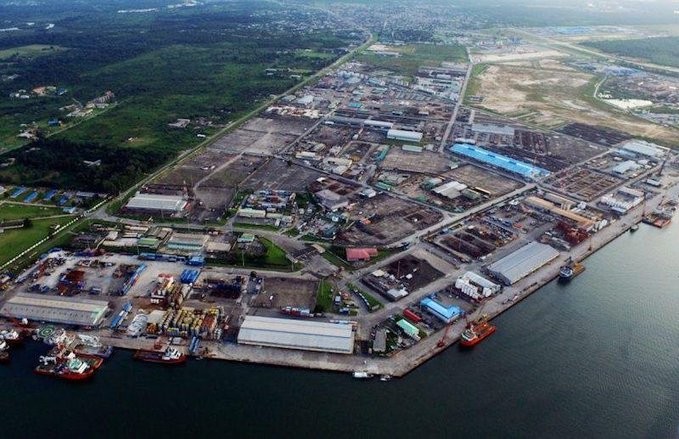
The Federal Government says the expansion of its port modernisation programme beyond Lagos will improve cargo handling, reduce vessel turnaround times and create additional gateways for international trade.
The Federal Government has approved the comprehensive modernisation and upgrade of Onne, Rivers, Delta and Calabar ports, extending its port-renewal programme beyond Lagos as part of efforts to strengthen Nigeria's maritime and logistics infrastructure.
The Minister of Marine and Blue Economy, Adegboyega Oyetola, announced the approval on Sunday, September 27, 2026. He said the programme would complement the previously approved modernisation of Apapa and Tin Can Island ports in Lagos and help create a more balanced national port system.
The latest decision places six existing major ports under the government's broader modernisation programme and reflects an attempt to reduce the concentration of cargo traffic around Lagos.
According to Oyetola, upgrading the four eastern ports is expected to improve cargo handling, reduce vessel turnaround times, strengthen regional connectivity and make the movement of goods more predictable and cost-effective.
However, the approval is an important first step rather than evidence that the infrastructure has already been delivered. The government has not yet disclosed the total value of the newly approved four-port programme, its funding structure, procurement details or a specific construction timetable.
Government Expands Port Renewal Beyond Lagos
For years, Lagos has remained the dominant centre of Nigeria's maritime trade, with Apapa and Tin Can Island handling a substantial share of the country's cargo traffic.
The Federal Government's earlier approval to modernise those two ports was therefore significant, but it also raised questions about the condition and capacity of ports in other parts of the country.
The new approval expands the modernisation effort to Onne and Rivers ports in Rivers State, Delta Port in Delta State and Calabar Port in Cross River State.
Oyetola said extending the programme beyond Lagos would complement the investments being made in Apapa and Tin Can Island while providing additional efficient gateways for international trade.
The government says the broader objective is to develop a national port network in which different regions can participate more effectively in import, export and industrial activity.
That could be particularly relevant to businesses located in the South-South and South-East, where access to functional ports closer to industrial and commercial centres could potentially reduce dependence on Lagos-based cargo routes.
What the Four Port Upgrades Are Expected to Deliver
The government has identified several expected benefits from the modernisation programme.
One is improved cargo handling.
Modern cargo-handling infrastructure can allow ports to process ships and goods more efficiently, potentially reducing delays between the arrival of a vessel and the movement of its cargo out of the port.
Another objective is to reduce vessel turnaround times.
A vessel's turnaround time affects shipping efficiency because longer delays can increase the cost of operating and moving cargo. Faster processing can therefore contribute to more efficient maritime trade if improvements in port infrastructure are matched by efficient customs, terminal, road and other logistics operations.
The government also expects the upgrades to strengthen regional connectivity.
Oyetola said the four ports have strategic roles in Nigeria's trade, industrial and regional development and that the government intends to equip them to meet the needs of a growing economy.
Could Eastern Ports Reduce Pressure on Lagos?
The concentration of cargo traffic around Lagos has been one of the reasons the Federal Government has been pursuing a wider port strategy.
If ports outside Lagos become more efficient and capable of handling greater volumes of cargo, some businesses may have additional options for importing and exporting goods.
This could be particularly relevant for companies operating in the South-East and South-South.
Instead of goods being routed through Lagos and subsequently transported by road to businesses located hundreds of kilometres away, a more efficient eastern port network could potentially allow some cargo to move through ports closer to its final destination.
That could reduce pressure on Lagos-based infrastructure while creating new logistics corridors around the eastern ports.
However, the actual effect on the cost of doing business will depend on more than port upgrades alone.
Road connections, rail infrastructure, inland waterways, customs procedures, terminal efficiency, security, storage facilities and the cost of transporting cargo from the port to its final destination will all influence whether businesses ultimately see lower logistics costs.
Onne Port Has Strategic Importance
Onne is already an important maritime and industrial location in the Niger Delta.
Its location in Rivers State places it close to major oil and gas activities, industrial facilities and other commercial operations in the region.
Improving the infrastructure around Onne could therefore have implications beyond conventional containerised cargo.
A more efficient port system in the area could support industrial supply chains and facilitate movement connected to the wider regional economy.
The government has also identified the development of new deep seaports as part of its broader maritime strategy, meaning the Onne upgrade will form part of a wider attempt to expand Nigeria's maritime capacity rather than simply shift cargo from one existing port to another.
Calabar Port Could Strengthen the Eastern Corridor
Calabar Port in Cross River State is another facility covered by the approval.
The port's location gives it potential importance for trade involving Cross River and neighbouring areas, as well as regional connections toward Nigeria's eastern border and other parts of the Gulf of Guinea.
The government has separately approved the development of the Bakassi Deep Seaport in Cross River State.
The combination of upgrading existing facilities and developing new deep-sea infrastructure is intended to create greater capacity across Nigeria's coastline.
However, the relationship between the existing Calabar Port and future deep-seaport projects will depend on how the projects are developed, financed and connected to roads and other transport infrastructure.
Delta and Rivers Ports Also Included
Delta Port is among the facilities included in the latest approval, extending the modernisation programme into another major industrial area of the Niger Delta.
Rivers Port is also covered alongside Onne.
The inclusion of both facilities means the government's latest approval is not limited to a single eastern gateway but instead covers multiple ports across the South-South region.
That wider approach could allow cargo and industrial activity to be distributed across several locations if the necessary infrastructure and supporting transport networks are eventually put in place.
The government says its intention is to build an integrated maritime and logistics system in which ports work together with roads, railways, inland waterways and other transport infrastructure.
Six New Deep Seaports Also in Broader Plans
The port upgrade announcement comes alongside plans for additional deep-seaport developments across Nigeria.
According to the Federal Government, the wider programme includes proposed or approved projects involving the Ibom Deep Seaport in Akwa Ibom, Bakassi Deep Seaport in Cross River, Agge Deep Seaport in Bayelsa, Gateway Deep Seaport in Ogun, Ondo Deep Seaport in Ondo and Bonny Deep Seaport in Rivers State.
The government says combining upgrades of existing ports with new deep-seaport projects will expand Nigeria's maritime capacity and create stronger economic corridors.
The approach also reflects an attempt to position maritime infrastructure as part of a wider economic strategy rather than treating ports simply as points where ships load and unload cargo.
Potential Impact on Nigerian Businesses
For businesses, the biggest potential benefit is not simply having more modern port facilities.
The real economic impact would come if those facilities make it faster, more reliable and less expensive to move goods.
Importers in the South-East and South-South, for example, could potentially benefit if they can use efficient regional ports instead of routing cargo through Lagos and transporting it long distances by road.
Manufacturers could potentially gain from more predictable supply chains.
Transport and logistics companies could see increased activity around the upgraded ports.
Warehousing and distribution businesses could also benefit if greater cargo volumes begin moving through the eastern corridor.
Port activity can additionally support employment in areas such as trucking, freight forwarding, customs services, warehousing, equipment maintenance, shipping services and other related industries.
These are potential benefits, however, rather than outcomes that have already been achieved by the latest approval.
Approval Does Not Mean the Work Is Complete
The distinction between approval and delivery will be important as the programme moves forward.
The Federal Government has announced the approval, but the ports have not suddenly become fully modernised.
The Ministry of Marine and Blue Economy has not disclosed the full financial value of the four-port programme, the complete funding arrangements, procurement status or a detailed timeline for the physical works.
This means businesses and Nigerians will need to wait for subsequent stages of the programme before its economic impact can be properly measured.
Procurement, financing, construction, equipment installation, operational reforms and connections to road and rail networks will all matter.
A modern port surrounded by inefficient transport infrastructure could still leave businesses facing significant delays and costs.
Roads, Rail and Inland Waterways Will Matter
The Federal Government has said its broader vision involves connecting ports with roads, rail and inland waterways to create a more integrated logistics network.
That could be critical to determining whether the port investments deliver their intended economic benefits.
A ship may be unloaded efficiently, but if cargo then spends days stuck on congested roads, the overall logistics chain remains inefficient.
Similarly, faster vessel turnaround will not necessarily translate into cheaper goods for consumers unless savings are passed through the wider supply chain.
For the eastern ports, therefore, the success of the modernisation programme will likely depend on how effectively port infrastructure is integrated with the rest of the transport network.
A Wider Maritime Strategy
The Federal Government's latest approval forms part of a broader effort to increase Nigeria's maritime capacity.
Oyetola said the government wants Nigeria to develop a port system that is efficient, transparent and globally competitive while supporting trade, investment and employment.
The strategy combines the modernisation of existing ports with plans for new deep-sea facilities.
If implemented successfully, the approach could give importers and exporters more options and reduce the country's dependence on a small number of major gateways.
But the outcome will ultimately depend on execution.
The approval provides the policy direction. The more important test will be whether the government can move from approval to procurement, construction, operational improvements and effective connections between ports and inland markets.
For Nigerian businesses, particularly those operating in the South-East and South-South, the potential is significant: shorter cargo routes, fewer delays, stronger regional logistics networks and potentially lower transportation costs.
But those benefits will only become real when the upgraded ports are operational and businesses can actually move goods through them more efficiently.