Nigeria and U.S. sign framework for mining investment
Nigeria and the United States have signed a framework agreement aimed at deepening American investment in Nigeria’s mining sector and developing the country’s estimated $700 billion mineral resources.
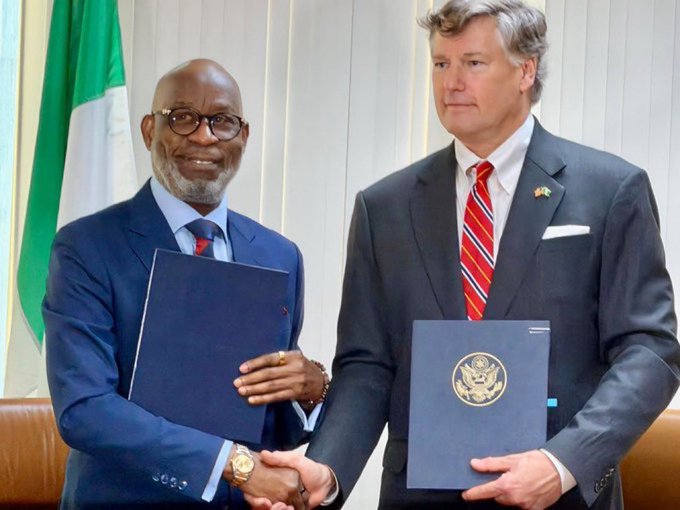
The agreement was signed on Wednesday at Nigeria’s Mission House in New York by Nigeria’s Minister of Solid Minerals Development, Dele Alake, and U.S. Deputy Secretary of State Christopher Landau, on the sidelines of the 81st United Nations General Assembly.
The framework covers cooperation in geological data and exploration, mineral development and processing, infrastructure, and technical capacity building, according to Nigeria's Ministry of Solid Minerals Development.
The agreement is intended to create a framework for future investments and commercial partnerships rather than representing $700 billion of immediate U.S. investment.
Nigeria estimates the total value of its mineral resources at about $700 billion.
Nigeria wants to move beyond raw mineral exports
A major focus of the agreement is Nigeria's ambition to increase the amount of mineral processing carried out domestically.
For years, the country has sought to diversify its economy away from crude oil and develop its largely underdeveloped mining sector.
Alake said Nigeria does not want to remain primarily a supplier of raw materials while other countries capture much of the value generated through processing and manufacturing.
The minister said the government wants greater local processing, job creation, technical skills and opportunities for Nigerian businesses.
That approach would mean encouraging investment not only in mining itself, but also in processing facilities, infrastructure and other parts of the mineral value chain.
What the Nigeria-U.S. framework covers
The agreement identifies several areas where the two countries intend to cooperate.
They include:
• Geological data and exploration
• Mineral development
• Mineral processing
• Infrastructure
• Technical capacity building
• Development of value-added mineral supply chains
The framework is also expected to encourage business-to-business partnerships between Nigerian and American companies.
Alake said the government would now work with potential partners to identify viable projects and translate the framework into specific investments.
$700bn figure represents estimated mineral wealth
The $700 billion figure attached to the agreement refers to Nigeria's estimated mineral resources, not the value of the investment being provided by the United States.
That distinction is important.
The framework establishes cooperation designed to attract investment into the sector, but the available announcements do not indicate that the United States has committed $700 billion to Nigeria.
Nigeria is instead seeking to use its estimated mineral wealth to attract capital, technology and expertise while developing domestic processing capacity.
Critical minerals increase strategic importance
The agreement comes at a time when major economies are increasingly focused on securing supplies of critical minerals needed for modern technologies.
Minerals used in electric vehicle batteries, renewable-energy infrastructure and other advanced technologies have become strategically important as countries seek to reduce dependence on concentrated supply chains.
Reuters reported that the Nigeria-U.S. agreement follows Washington's wider effort to strengthen relationships with mineral-producing countries and diversify critical-mineral supply chains.
Nigeria's emerging lithium industry is particularly relevant to this effort.
Chinese companies have been among the most active foreign investors in Nigeria's lithium sector, making the country's mineral resources part of a broader international competition for access to critical minerals.
U.S. signals stronger partnership with Nigeria
Landau said the United States views Nigeria as an important partner and expressed Washington's willingness to support the country's economic development.
At the signing ceremony, he said the agreement was intended to create greater prosperity for both countries.
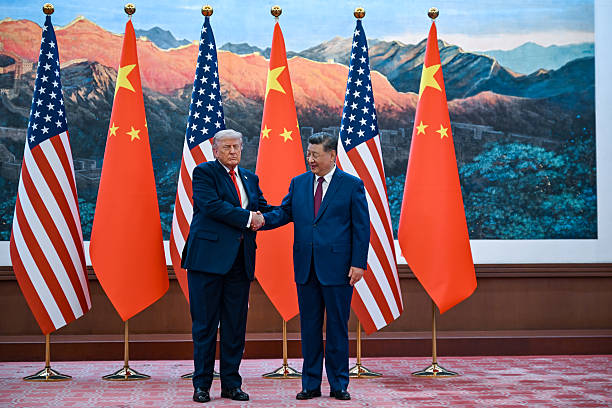
He also pointed to increased cooperation between the Trump and Tinubu administrations over the past 18 months.
The participation of senior officials from both governments gives the framework diplomatic significance, but its economic impact will ultimately depend on whether it produces actual projects and investment commitments.
Agreement is only the beginning
Alake acknowledged that signing the framework was only the beginning of the process.
The next stage involves identifying commercially viable projects, mobilising investment and establishing partnerships between companies.
That means the immediate outcome is a framework for cooperation rather than the completion of major mining projects.
Nigeria's government will need to attract investors while addressing issues that have historically affected the country's mining industry, including infrastructure, geological information, processing capacity and technical expertise.
Developing these areas could determine how much of the country's estimated mineral wealth can eventually be converted into economic activity within Nigeria.
Local processing could become a major focus
For Nigeria, one of the central objectives is to retain more value from its natural resources inside the country.
Instead of exporting minerals in relatively raw form, the government wants more processing to take place domestically.
That could create demand for processing plants, transport infrastructure, technical workers and supporting businesses.
It could also create opportunities for Nigerian companies to participate further down the supply chain rather than simply supplying raw materials to foreign buyers.
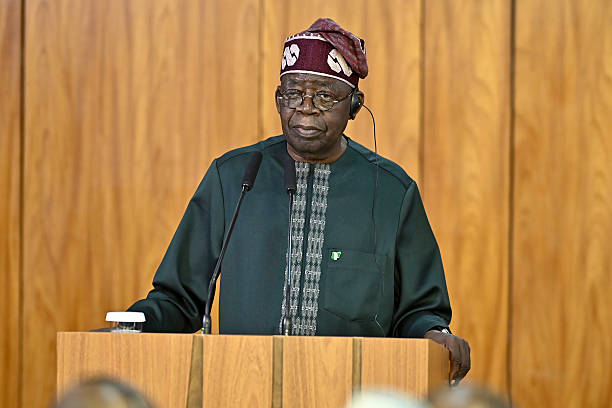
The government has linked the approach to President Bola Ahmed Tinubu's broader economic diversification programme.
What happens next
Following the signing, Nigeria and the United States are expected to work toward identifying specific projects and investment opportunities.
The framework covers a broad range of activities, meaning individual projects will still require commercial negotiations, financing arrangements, regulatory approvals and other steps before they can become operational.
The two countries' focus on geological exploration could also help investors obtain better information about the location and quality of mineral deposits.
For Nigeria, improved geological information could make it easier to identify commercially viable deposits and attract investors willing to finance exploration and development.
A potential shift in Nigeria's mining sector
Nigeria has long had significant deposits of minerals including lithium, gold, tin, tantalite, iron ore and other resources, but the sector has remained much smaller than the country's oil industry.
The new framework represents another attempt to attract international capital into mining while increasing domestic participation.
For the United States, closer cooperation with Nigeria could provide another avenue for diversifying critical-mineral supply chains.
For Nigeria, the opportunity lies in turning mineral resources into processing capacity, industrial activity, jobs and increased participation by local businesses.
Whether the agreement achieves those objectives will depend on implementation.
The signing therefore marks the beginning of a process rather than the completion of a major investment programme. Both governments now have to translate the framework into projects, financing and commercial partnerships that generate measurable economic activity.
As Alake indicated, the next test will be implementation and whether the agreement produces tangible investment in Nigeria's mining value chain.