LASCOPA has warned consumers across Lagos to be vigilant when buying palm oil as experts identify increasingly difficult-to-detect adulteration methods, including harmful dyes and recycled oils.
The Lagos State Consumer Protection Agency (LASCOPA) has raised concerns over increasingly sophisticated methods of adulterating palm oil, urging residents to exercise greater caution when purchasing the widely consumed cooking oil.
The agency said it was intensifying market surveillance across Lagos to identify unsafe and substandard products and protect consumers.
The warning followed a technical presentation at the Lagos State Food Safety Conference and Exhibition 2026 by Dr Nurah Oseni, a Senior Lecturer in the Department of Food Technology at Auchi Polytechnic. Her paper was titled “Palm Oil Adulteration: Emerging Risks, Detection Strategies and Regulatory Control.”
Why palm oil is vulnerable to adulteration
According to Oseni, several factors make palm oil particularly vulnerable to adulteration.
They include the high volume of palm oil traded, consumers' association of a deep-red colour with quality, differences in prices and the prevalence of informal market practices.
These factors can create opportunities for unscrupulous traders to alter palm oil in ways that make an adulterated product appear genuine.
Oseni warned that newer adulteration techniques are also making it more difficult for consumers to identify unsafe products through simple checks.
Harmful dyes among emerging concerns
One of the concerns highlighted at the conference was the use of Sudan and Azo dyes to change or intensify the colour of palm oil.
The presentation identified these substances as potentially carcinogenic and raised concerns about their use to make palm oil appear more attractive to consumers.
The concern is particularly significant because many consumers use colour as one of their first indicators when deciding whether palm oil looks authentic or of good quality.
However, the appearance of the oil does not provide a reliable guarantee of its safety.
The Lagos State Government said the emerging risks demonstrate the need for stronger surveillance and better detection methods throughout the palm oil supply chain.
Recycled and recovered oils also a concern
Another issue highlighted by the expert was the blending of palm oil with recovered or recycled oils, including spent cooking oil.
Oseni also warned about the use of combinations involving multiple adulterants that may be deliberately designed to evade basic quality checks.
This means that simply examining a product visually may not always be sufficient to determine whether it has been tampered with.
The presentation also raised concerns about fraudulent labelling and falsified batch records, which can make it harder for regulators to trace products through the supply chain.
Can consumers identify adulterated palm oil?
Consumers have been advised to use visual inspection as an initial precaution, but experts stressed that visual inspection alone cannot confirm adulteration.
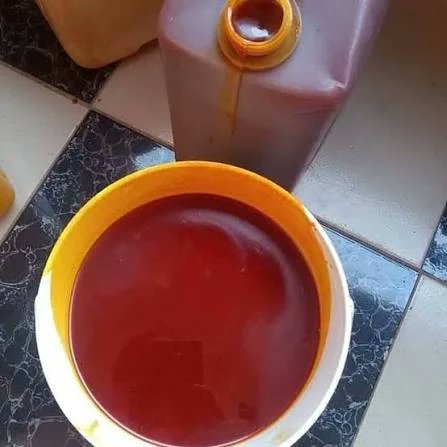
Oseni explained that palm oil can naturally separate into layers. The lower portion may appear orange to red-yellowish rather than being uniformly deep red.
This means consumers should not automatically assume that very dark or deep-red palm oil is better quality.
Likewise, a different colour does not by itself prove that a product has been adulterated.
Laboratory testing remains necessary to confirm whether an oil contains prohibited substances or has been mixed with other oils.
Experts recommend stronger testing
Oseni proposed a tiered system for detecting and responding to palm oil adulteration.
The approach would involve risk-based screening, rapid physicochemical and spectroscopic testing, followed by confirmatory laboratory analysis where necessary.
She also stressed the importance of proper sampling and chain-of-custody procedures to ensure that suspected products can be reliably investigated.
For Lagos, she proposed a five-step surveillance framework:
Risk Map, Sample, Screen, Confirm and Act.
The proposed framework would also rely on an adulteration intelligence database and cooperation among processors, traders, laboratories, regulators, researchers and consumers.
LASCOPA intensifies market surveillance
LASCOPA's General Manager and Chief Executive Officer, Afolabi Solebo, reaffirmed the agency's commitment to protecting consumers from unsafe and substandard products.
Solebo urged Lagos residents to remain alert and report suspected cases of adulterated palm oil and unscrupulous traders through the agency's official channels.
The agency said its market surveillance activities were being intensified across the state.
According to reports, the agency has also warned that traders found dealing in adulterated products could face enforcement action, including arrest and prosecution under relevant laws.
Earlier enforcement action
The latest warning comes several months after LASCOPA raised a similar alarm over adulterated palm oil in Lagos.
In May 2026, the agency reported sealing a shop on Lagos Island as part of enforcement activities against unsafe and substandard palm oil. At the time, LASCOPA said market surveillance and complaints had revealed contaminated and artificially enhanced palm oil being sold to consumers.
The latest alert suggests that regulators remain concerned about the ability of adulterators to develop methods that can evade straightforward inspection.
Consumers urged to buy carefully
For consumers, the latest warning highlights the importance of paying attention to where palm oil is purchased rather than relying entirely on its colour or appearance.
Buying from established and trusted sources can reduce the risk of purchasing products from questionable supply chains, although regulators stress that proper testing is ultimately required to establish whether an oil is safe.
Consumers who suspect that a trader is selling adulterated palm oil are encouraged to report the matter to LASCOPA rather than relying solely on personal visual assessments.
The agency's warning also places responsibility on other participants in the supply chain, including processors, traders and distributors, to ensure that products reaching the market meet required safety standards.
As Lagos increases surveillance, authorities and food-safety experts are calling for stronger testing, traceability and enforcement mechanisms to keep adulterated palm oil away from consumers.