Kenya has confirmed its first-ever Ebola case and death after a Kenyan man who had been living in the Democratic Republic of Congo (DRC) died in Nairobi, raising concerns about further transmission as the Ebola outbreak in Central and East Africa continues to spread.
Kenya’s Health Minister, Aden Duale, said the man had lived in the DRC for seven years and became ill about a month before travelling to Kenya. He was treated at several health facilities in the DRC before travelling by road to Kampala, Uganda, and later boarding a flight to Nairobi.
The patient arrived in Nairobi on Saturday and was taken directly from the airport to a hospital by relatives. He was isolated after presenting with symptoms including fever, chills, intense fatigue, muscle pain, sore throat and bleeding under the skin. He later tested positive for Ebola and died on Monday night.
Authorities begin contact tracing
Kenyan health authorities have identified 28 people who came into contact with the patient, including relatives and healthcare workers who treated him.
Officials are also searching for 23 passengers and four crew members who travelled on the same flight from Uganda to Nairobi. Those identified as contacts are being monitored for 21 days, with authorities conducting testing as part of efforts to prevent further transmission.
Kenya's government has also increased surveillance at border points and other locations considered vulnerable to the importation of Ebola.
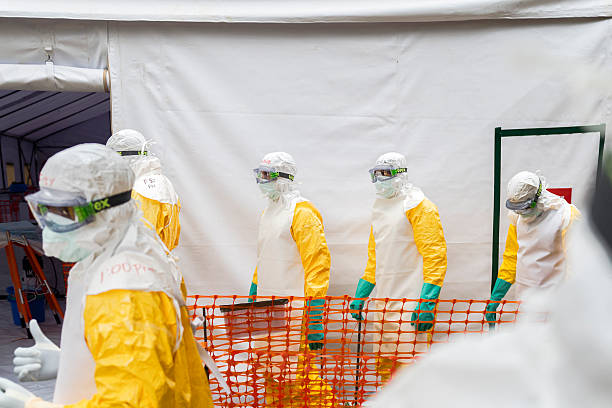
The Africa Centres for Disease Control and Prevention has dispatched a high-level team to support Kenya's response, while the World Health Organization is providing additional assistance. WHO has supplied approximately 1,000 Ebola test kits and 1,000 personal protective equipment kits to high-risk counties, according to the organisation.
Kenya becomes fourth country affected
The Kenyan case is linked to the ongoing Ebola outbreak in the DRC, which was declared in May.
Kenya is now the fourth country to record a case connected to the current outbreak, following the DRC, Uganda and France. Uganda recorded 20 cases and two deaths earlier in the year before being declared Ebola-free in August. France also reported a case involving a doctor who had travelled to the DRC on a humanitarian mission.
The current outbreak is being caused by the Bundibugyo strain of Ebola. According to figures cited by the WHO and AFP, the DRC had recorded 8,463 cases and 4,082 deaths as of October 2.
The outbreak has spread from its initial epicentre in Ituri province to seven provinces in the northern and eastern parts of the DRC.
Concerns over cross-border transmission
The Kenyan case has raised questions about how an infected person showing symptoms was able to travel through multiple countries and board a commercial flight.
Kenyan health officials said the patient passed routine screening at Jomo Kenyatta International Airport after arriving from Uganda.
The Ministry of Health's Director-General, Patrick Amoth, said medication may have masked some of the patient's symptoms during airport screening. Officials are also seeking more information about how the man crossed from the DRC into Uganda, particularly because Uganda's border with the DRC had been closed since May.
The development has increased pressure on countries in the region to maintain strict surveillance, particularly along borders and major transportation routes.
Ebola outbreak continues to worsen in DRC
The situation in the DRC remains particularly difficult.
Health workers responding to the outbreak have faced insecurity, misinformation, limited healthcare resources and difficulties accessing some affected communities.
The outbreak has also expanded into North Kivu and South Kivu, areas affected by armed conflict and instability.
Doctors Without Borders, known as MSF, has warned of an “alarming surge” in cases in North Kivu, where insecurity and limited resources are making containment efforts more difficult.
The WHO has warned that the outbreak could eventually surpass the deadliest Ebola epidemic on record, which killed more than 11,000 people in West Africa more than a decade ago.
Kenya urges public not to panic
Despite the confirmation of its first case, Kenyan authorities have urged citizens to remain calm while following public health guidance.
Duale said the government had systems in place to respond to the disease, while officials stressed the importance of maintaining vigilance at borders and healthcare facilities.
Kenya has trained nearly 5,000 health workers in Ebola prevention and management and has an isolation facility that can be used for suspected cases.
The deceased patient was scheduled for a safe burial under public-health protocols designed to reduce the risk of transmission from the body.
For now, Kenyan authorities are focused on identifying everyone who may have been exposed and ensuring that any new cases are detected and isolated as quickly as possible.