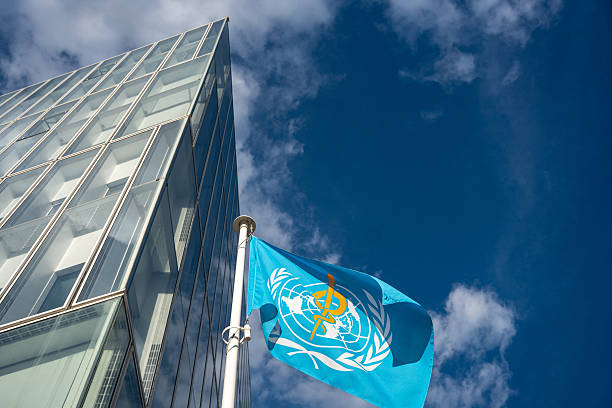
The World Health Organization has asked Russia for more information about the death of a laboratory worker at a plague research institute in Siberia, saying greater transparency is needed to determine the cause of her severe pneumonia and assess any potential public health risk.
The 28-year-old worker, identified by Russian media as Darya Shipilova, died on October 2 after developing pneumonia of undetermined origin. She worked at the Irkutsk Anti-Plague Research Institute of Siberia and the Far East, a facility that studies plague and other dangerous pathogens.
Russian authorities have repeatedly said there is no evidence that she died from plague or that her illness was linked to her work at the institute.
WHO asks Russia for more information
WHO Director-General Tedros Adhanom Ghebreyesus said the organisation had requested additional information to clarify the cause of Shipilova's severe pneumonia, the pathogen that prompted public-health measures and reports concerning a second employee with pneumonia of unclear origin.
WHO's Maria Van Kerkhove, director of Epidemic and Pandemic Management, said the agency does not yet know what caused the woman's illness.
She said the organisation needs more information because it does not understand how the worker became infected.
The WHO has also said that Russia informed it that no plague cases had recently been registered in the Irkutsk region.
Russia says there is no evidence of plague
Russia's public health watchdog, Rospotrebnadzor, has maintained that Shipilova died from pneumonia of unknown origin rather than plague.
The agency said extensive testing had found no evidence that her illness was caused by any of the dangerous pathogens handled at the research institute. It also reported that testing of people who had contact with her had not detected plague or other dangerous pathogens.
About 200 people were initially placed under quarantine or medical observation following her death. Russian authorities have since released many of those people, with a local official saying about 60% had completed the required monitoring.
Rospotrebnadzor said tests among contacts detected isolated cases of COVID-19 and rhinovirus but no other dangerous infectious pathogens.
Kremlin pushes back against media reports
The Kremlin has reacted angrily to reports suggesting that Russia has failed to provide adequate information.
Kremlin spokesman Dmitry Peskov said Wednesday that Russia had informed the WHO about the laboratory worker's death in accordance with established procedures.
Peskov also criticised media coverage of the incident, saying much of the reporting was false and urging people to rely on information released by Rospotrebnadzor.
His comments followed reports that the United States had formally requested additional information from Moscow over the incident.
The Kremlin said it had no information about such a diplomatic request, while the U.S. State Department said Washington had formally requested additional information from Russia.
Concerns over possible pneumonic plague
The case has attracted international attention because Shipilova worked at an institute specialising in plague research and because the precise cause of her pneumonia has not been publicly established.
There is currently no confirmed evidence that she died from plague.
Some reports and social-media speculation have suggested possible exposure to plague bacteria, including claims of a laboratory accident. Reuters reported that there is no public evidence supporting those theories, and Russian health officials have rejected claims that a dangerous laboratory incident occurred.
Pneumonic plague is a particularly serious form of plague because it affects the lungs and can spread between people through respiratory droplets. However, it is treatable with antibiotics when diagnosed and treated promptly.
The WHO has assessed the broader risk as low, while continuing to seek information about the specific case.
Questions over a reported second case
WHO has also asked Russia to clarify reports that another employee had developed pneumonia of undetermined origin.
The organisation said it was seeking information about the reported second employee as part of its effort to establish what happened at the institute.
However, Reuters said it could not independently find evidence in Russian media that a second person had died, despite some Western media reports suggesting this had happened.
That distinction is important because there is currently no confirmed evidence of a wider plague outbreak connected to the institute.
U.S. seeks information from Moscow
The case has also drawn attention from Washington.
U.S. Secretary of State Marco Rubio has called for Russia to provide more information, while President Donald Trump said he intended to discuss the situation with Russian President Vladimir Putin.
Peskov said Wednesday that no Putin-Trump phone call had been scheduled at that point, although he said such a call could be arranged quickly.
Meanwhile, Russia's health authorities continue to insist that there is no evidence of an active plague outbreak in the Irkutsk region.
WHO continues monitoring the situation
The WHO said it remains in contact with Russian health authorities and has offered technical support.
The organisation's request for additional information reflects the uncertainty surrounding the precise cause of Shipilova's illness rather than confirmation that plague was responsible for her death.
For now, Russia maintains that the worker died from pneumonia of undetermined origin and that testing has found no evidence of plague among her contacts. The WHO, however, says more information is needed before the situation can be fully understood.
With the investigation and medical monitoring continuing, international health authorities are watching the case closely while cautioning against drawing conclusions that are not supported by available evidence.