Trump says AI will be major topic in Xi Jinping meeting
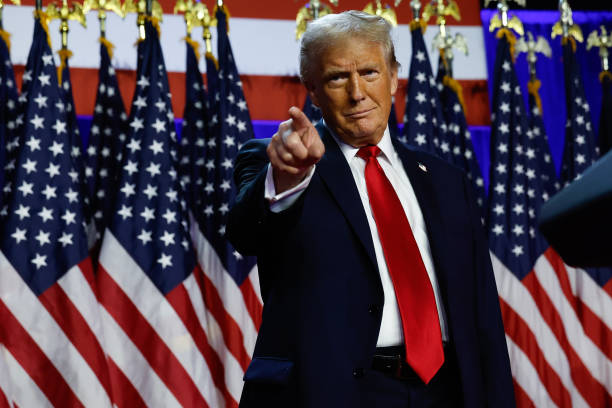
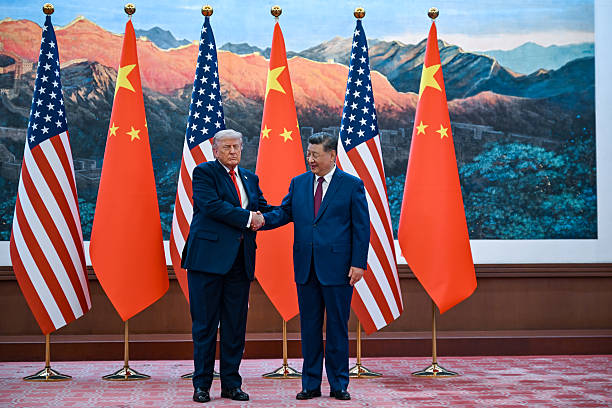
U.S. President Donald Trump has said artificial intelligence, which he referred to as “Super Intelligence,” will be a major subject of his meeting with Chinese President Xi Jinping, while indicating that Washington does not intend to introduce new broad restrictions on the technology.
Trump made the comments on Thursday, September 24, ahead of his meeting with Xi at the White House.
In a post on his social media platform, Trump said: “Super Intelligence (SI) will be a big topic of discussion, but I want to leave it exactly where it is.” He added that this was also China's position and identified the U.S. Department of Justice as the country's guardrail.
The comments come as the world's two largest economies compete for leadership in advanced artificial intelligence while facing growing international debate over how powerful AI systems should be governed.
Trump says China shares the position
Trump's statement indicated that he believes the United States and China currently share a preference against introducing broad new AI guardrails.
However, the statement was Trump's characterization of China's position rather than a formal joint declaration from Washington and Beijing.
The two governments have been discussing AI-related issues as part of wider U.S.-China negotiations. U.S. Treasury Secretary Scott Bessent and Chinese Vice Premier He Lifeng recently discussed the possibility of establishing an AI dialogue and a mechanism for notifying each other about major AI-related safety incidents.
That proposed communication mechanism would be different from imposing broad restrictions on the development of AI. It would instead provide a channel for the two countries to communicate about serious incidents involving advanced AI systems.
‘Our guardrail is the DOJ’
Trump's reference to the Justice Department is significant because it indicates his administration's preference for using existing institutions to address harmful or unlawful uses of AI rather than creating extensive new restrictions specifically for artificial intelligence.
Trump has previously argued that the United States already has mechanisms capable of dealing with abuses involving AI.
Reuters reported that Trump had said the U.S. already has guardrails in place to regulate and prosecute AI companies, while playing down calls for additional restrictions on the technology.
His position comes amid increasing concern from technology researchers and other experts about the risks associated with increasingly capable AI systems.
U.S. and China remain AI competitors
Despite Trump's comments about a shared position on AI guardrails, Washington and Beijing remain major strategic competitors in the development of advanced artificial intelligence.
Both countries are investing heavily in AI infrastructure, computing power and research, while seeking advantages in technologies that could have economic, military and national-security implications.
The competition has also been accompanied by restrictions on the transfer of advanced semiconductor technology to China, while Chinese companies continue developing increasingly capable AI systems.
The Associated Press reported that the two countries have shared concerns about risks including cyberattacks, biological misuse, threats to critical infrastructure and the possibility of losing control over advanced systems.
AI enters a broader Trump-Xi summit
AI is only one of several major issues expected to feature in the Trump-Xi meeting.
The leaders are also discussing trade, Taiwan, rare-earth materials and the war in Iran.
The summit comes after Washington and Beijing agreed to extend a fragile trade truce that had been scheduled to expire in November. Reuters reported that the extension would run until January 10, giving both sides additional time for negotiations.
AI has nevertheless become an increasingly important part of the U.S.-China relationship because developments in the technology affect economic competitiveness, national security and access to advanced computing.
Global debate over AI regulation continues
Trump's comments come as governments around the world debate how to manage increasingly powerful AI systems.
More than 20 mostly European countries have called for stronger safety measures for advanced AI, according to reporting on the summit. The United States and China have not endorsed those proposals.
The disagreement reflects a wider debate over whether governments should impose strict rules before AI systems become significantly more capable or instead allow development to continue while relying on existing laws to address harmful applications.
Trump's position suggests that his administration currently prefers the latter approach.
For the United States and China, however, the issue extends beyond regulation. Both countries are attempting to maintain their positions at the forefront of a technology that could reshape industries ranging from finance and healthcare to defence and communications.
What Trump's statement means
Trump's remarks do not amount to a new U.S.-China agreement on AI regulation.
Rather, they indicate his stated position ahead of discussions with Xi: AI will be discussed, but he does not want the technology's development placed under new broad restrictions.
His claim that China holds the same position also reflects his description of Beijing's stance; Chinese officials have separately participated in discussions about AI safety and crisis communication.
The meeting could therefore focus on maintaining communication between the two countries even while they continue competing over advanced AI capabilities.
For now, Trump's comments signal that Washington is not seeking a sweeping new international AI-guardrail agreement as part of the summit, while discussions over safety, incident reporting and the strategic implications of advanced AI remain on the agenda.