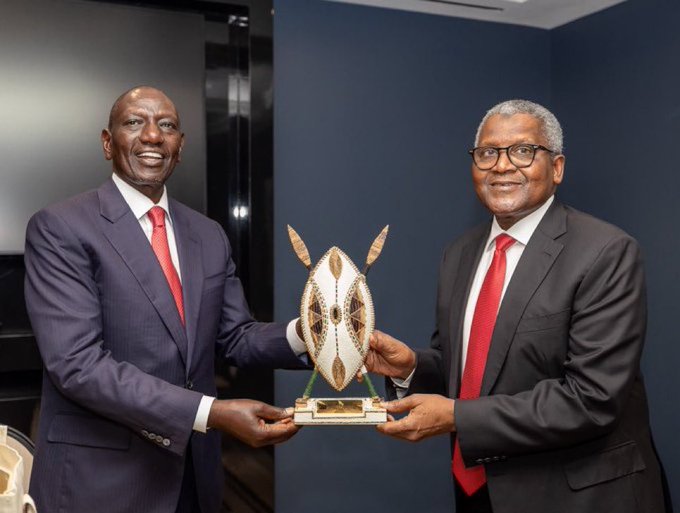
Kenyan President William Ruto has held talks with Aliko Dangote and Africa Finance Corporation CEO Samaila Zubairu in New York as Kenya moves closer to developing a major refinery in Lamu.
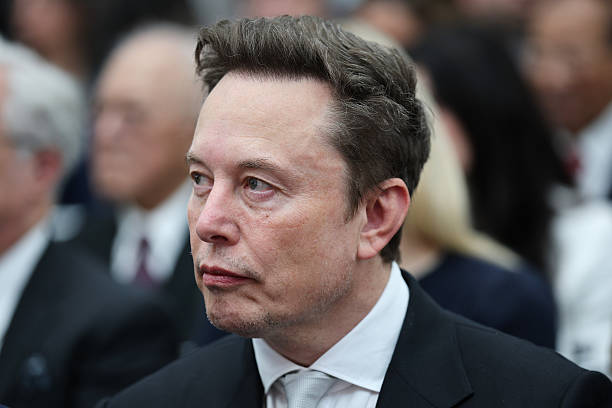
Kenyan President William Ruto has stepped up efforts to advance the proposed East Africa Refinery in Lamu, following a meeting with Nigerian billionaire and Dangote Industries President and CEO Aliko Dangote in New York.
The meeting took place on September 21, 2026, on the sidelines of the 81st United Nations General Assembly, with Africa Finance Corporation (AFC) President and CEO Samaila Zubairu also participating. Discussions focused on financing and final preparations for the proposed multibillion-dollar refinery.
Ruto subsequently said Kenya was ready to proceed toward the groundbreaking of the project, which is designed to strengthen energy security, create employment and support industrialisation across East Africa.
“We are ready to break ground on the East Africa refinery in Lamu,” Ruto said.
A proposed $15bn–$17bn refinery
The planned refinery is expected to have a processing capacity of 700,000 barrels of crude oil per day.
Reports have placed the estimated cost between approximately $15 billion and $17 billion, depending on the stage and source of the project estimate. Kenyan reporting has put the investment at about KSh2.2 trillion, equivalent to roughly $17 billion.
The project is planned for Lamu, on Kenya's Indian Ocean coast, where it would benefit from the area's deep-water port and its connection to the Lamu Port-South Sudan-Ethiopia Transport (LAPSSET) Corridor.
If completed at the proposed capacity, the refinery would become one of the largest refining projects in Africa.
Groundbreaking planned for September 30
Kenyan authorities are preparing for a groundbreaking ceremony scheduled for September 30, 2026.
The planned ceremony is expected to mark the transition from negotiations and preparations toward construction of the facility. Kenyan officials have been making arrangements for the event, with senior government officials and regional leaders expected to attend.
The latest developments suggest that financing remains a major focus before construction begins.
Ruto's meeting with Dangote and the AFC chief in New York was specifically focused on financing and final preparations, making the discussions an important step in moving the project forward.
Dangote expands beyond Nigeria
The Lamu project would represent a major expansion of Dangote's energy business beyond Nigeria.
Dangote already operates the Dangote Petroleum Refinery in Lagos, which has a crude-processing capacity of about 700,000 barrels per day.
The Nigerian refinery has become one of Africa's largest refining facilities, while Dangote is also pursuing an expansion that could eventually take its Nigerian capacity to 1.4 million barrels per day.
The proposed Kenyan refinery would give the group another major refining base on the opposite side of the continent and place Dangote in a position to supply petroleum products to markets across East and Central Africa.
Why Lamu was selected
The choice of Lamu follows months of discussions over where Dangote's proposed East African refinery should be located.
Tanzania had previously been associated with the project, particularly the port of Tanga. Kenya subsequently emerged as the preferred location, with Lamu selected as the site.
The location provides access to the Indian Ocean and the developing LAPSSET infrastructure.
The refinery is also expected to complement Lamu Port and potentially contribute to the development of a wider energy and industrial hub along Kenya's coast.
Regional fuel supply
The proposed refinery is intended to serve markets beyond Kenya.
Countries across East and Central Africa depend substantially on imported refined petroleum products. A large refinery on the East African coast could potentially reduce some of the region's reliance on imported fuels and create a new regional supply centre.
Kenyan authorities have also linked the project to the country's ambition to increase local value addition in the petroleum sector.
Ruto said the refinery would enhance regional energy security, deepen local value addition, create jobs and advance industrialisation.
For Kenya, the project could also create demand for supporting infrastructure, transportation, storage, engineering and other services.
Financing remains a key challenge
Despite the latest progress, the refinery is not yet a completed investment.
The size of the proposed project means financing will be one of the most important factors determining how quickly construction can proceed.
The New York discussions involving Ruto, Dangote and the AFC focused specifically on financing arrangements and preparations for the project's commencement.
The project will also require substantial infrastructure around the refinery, including crude supply, storage, transportation and distribution systems.
Reuters has previously identified crude supply as one of the challenges facing the proposed Kenyan refinery. Kenya currently does not have sufficient domestic crude production to independently supply a refinery of the proposed scale, meaning the project would require reliable regional or international crude sources.
Kenya's own crude could play a role
Kenya has been exploring ways to develop its petroleum resources, particularly crude oil from Turkana.
The government has discussed the possibility of connecting domestic crude production to Lamu, potentially allowing locally produced oil to reach the refinery.
However, such infrastructure and supply arrangements remain separate components of the broader refinery project and would need to be developed and financed.
The availability and cost of crude will be important to the refinery's eventual commercial performance.
Jobs and industrial development
Kenyan officials have also highlighted employment as one of the expected benefits.
Deputy President Kithure Kindiki said the project could create employment opportunities on a large scale, particularly for people in Lamu and the wider coastal region. Recent reporting has put potential employment associated with the development at tens of thousands of jobs.
Beyond direct refinery employment, a project of this size could generate demand for contractors, engineers, logistics companies, suppliers and other businesses.
The refinery is also being presented as part of a wider industrialisation strategy rather than simply a petroleum-processing facility.
A major step for East Africa's energy sector
The proposed Lamu refinery would significantly change the energy infrastructure landscape in East Africa if completed at its planned scale.
At 700,000 barrels per day, the facility would have the capacity to process a volume of crude comparable to some of the largest refineries on the continent.
It could also strengthen the strategic importance of Lamu Port and the LAPSSET corridor by connecting petroleum processing to regional transportation and trade infrastructure.
However, the project's eventual impact will depend on several factors, including financing, construction, crude supply, infrastructure and the commercial arrangements for distributing refined products.
Dangote and Ruto push project forward
The New York meeting represents another step in the effort to turn the proposed East Africa Refinery from a long-term plan into a construction project.
Ruto has publicly backed the investment as an important component of Kenya's energy and industrialisation agenda, while Dangote is seeking to expand the group's refining footprint beyond Nigeria.
With financing discussions progressing and a September 30 groundbreaking planned, attention will now turn to whether the project can move into construction and how its large capital requirements will ultimately be funded.
If completed, the Lamu refinery would give Dangote a major energy presence in East Africa while providing Kenya with a potentially important new industrial and petroleum-processing hub.