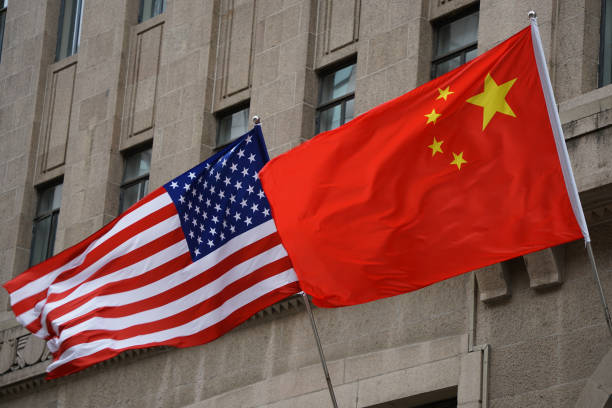
The United States and China have begun high-level economic and trade consultations in New York ahead of Chinese President Xi Jinping’s planned meeting with US President Donald Trump in Washington later this week.
The talks, which began on Sunday, September 20, brought together US Treasury Secretary Scott Bessent, US Trade Representative Jamieson Greer and Chinese Vice Premier He Lifeng, who leads Beijing’s economic negotiations with Washington. The meeting was held at JPMorgan Chase’s headquarters in Manhattan.
The New York discussions are intended to prepare the ground for the Trump-Xi summit scheduled for September 24, with trade, tariffs, critical minerals and artificial intelligence among the major issues under consideration.
Trade Truce Nears November Expiry
One of the most important issues facing the negotiators is the existing US-China trade truce, which is scheduled to expire on November 10.
The agreement has helped reduce some of the tariff and export-control pressures that have characterized the relationship between Washington and Beijing. Both sides are now discussing whether and how to extend the arrangement.
Washington is also seeking progress on Chinese exports of rare-earth magnets and other critical minerals. These materials are essential to several industries, including electronics, electric vehicles, defence equipment and advanced technology.
US officials have previously complained that Chinese supplies of some critical minerals have remained insufficient following Beijing's export restrictions.
The issue has become particularly sensitive because China remains a major player in global rare-earth processing and supply chains.
AI Emerges as Another Major Issue
Artificial intelligence has also become an increasingly important part of the US-China economic relationship.
During the New York talks, the United States proposed establishing a new mechanism for notifying each other about AI-related incidents that could rise to the level of national-security concerns.
Bessent said the two countries had discussed creating a formal US-China AI dialogue, including greater transparency around shared risks and threats.
The proposal reflects the growing overlap between technology competition and national security.
Washington and Beijing are competing for leadership in advanced AI, while both governments are increasingly concerned about the potential use of the technology in areas such as cybersecurity, critical infrastructure and military applications.
The two countries have also disagreed over restrictions on advanced semiconductor technology and access to computing resources needed to develop sophisticated AI systems.
Board of Trade Mechanism
The New York discussions also produced progress on a bilateral trade mechanism known as the Board of Trade.
US and Chinese officials agreed to put the body into operation as a forum for addressing trade issues and identifying opportunities for reducing tariffs on certain non-sensitive products.
Potential areas of discussion include agricultural products, energy, consumer goods and medical devices.
The mechanism is designed to provide a regular channel for economic discussions between the two governments rather than relying solely on high-level presidential meetings when disputes arise.
Rare Earths Remain a Sensitive Issue
Critical minerals are another major area of disagreement.
China's position in global rare-earth supply chains gives Beijing significant influence over materials used in high-technology manufacturing.
US officials have been pressing China for greater reliability in the supply of rare-earth magnets and other strategic materials.
The issue is particularly important for Washington because restrictions on these materials could affect American manufacturers and supply chains.
For Beijing, meanwhile, access to advanced US technology and the broader structure of trade restrictions remain major concerns.
The competing priorities mean that even if the two sides reach agreements on some areas, significant disagreements are likely to remain.
Trump and Xi Prepare for Washington Meeting
The New York talks are taking place only days before Xi is scheduled to meet Trump in Washington.
The upcoming meeting will be Xi's first state visit to the United States in more than a decade, according to reports on the planned visit. Trump is expected to host the Chinese leader at the White House on September 24.
The leaders are expected to discuss trade and tariffs alongside a wider range of strategic issues.
AI, Taiwan, critical minerals and the broader economic relationship between the world's two largest economies are expected to feature prominently in the discussions.
The economic relationship remains highly interconnected despite years of trade tensions and restrictions.
Both Sides Have Incentives to Avoid Further Escalation
The talks come at a sensitive point for the global economy.
Businesses in both countries have faced uncertainty because of tariffs, export restrictions and changes to supply chains. Prolonged tensions between Washington and Beijing can also affect companies and consumers beyond the two countries because American and Chinese firms remain deeply connected to global manufacturing and technology networks.
Maintaining some level of stability could therefore be important for international businesses that depend on predictable trade rules.
However, the talks are not taking place against a backdrop of complete agreement.
The two governments continue to differ over technology controls, industrial policy, market access, rare-earth exports and other strategic matters.
Reuters reported that the New York discussions were intended to lay the groundwork for potential agreements rather than represent the final resolution of those disputes.
AI Cooperation Could Open a New Channel
The proposed AI dialogue is particularly notable because Washington and Beijing have largely approached artificial intelligence through the lens of competition.
The United States has imposed restrictions aimed at limiting China's access to certain advanced chips and technologies, while Chinese officials have rejected some American allegations concerning technology practices.
At the same time, both governments face questions about how to manage risks associated with increasingly powerful AI systems.
The proposed notification mechanism would focus on incidents that reach a national-security threshold, according to Bessent.
It remains unclear how such a mechanism would work in practice or whether China will ultimately agree to the proposal.
Nevertheless, the discussions indicate that AI is becoming part of the broader diplomatic relationship rather than remaining solely a commercial or technological issue.
What Comes Next
The outcome of the New York negotiations could influence the agenda for Trump's meeting with Xi.
US officials are seeking progress on several economic matters, including trade arrangements, critical-mineral supplies and discussions around AI.
China, meanwhile, has an interest in maintaining stable economic relations while protecting its own strategic and technological interests.
The two sides have already demonstrated that they can reach limited agreements even while broader disagreements remain unresolved.
For now, the New York meetings are being treated as preparatory negotiations rather than the final stage of the US-China relationship.
The most significant decisions are expected to come from the Trump-Xi meeting in Washington later this week.
Whether the leaders can extend the existing trade truce, make progress on critical minerals and establish a workable framework for AI discussions will determine whether the latest negotiations produce concrete changes or simply maintain the current uneasy economic relationship.