The United States has commended Nigeria's National Drug Law Enforcement Agency (NDLEA) for dismantling four clandestine methamphetamine laboratories allegedly linked to Mexican drug cartels, describing the operations as evidence of effective intelligence-led investigations and international cooperation.
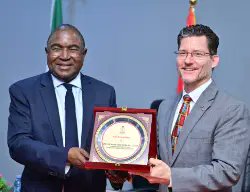
The commendation came from Michael Gonzales, the US Deputy Assistant Secretary of State for International Narcotics and Law Enforcement Affairs (INL) for Africa and the Middle East, during a visit to the NDLEA headquarters in Abuja on October 20, 2026.
Gonzales, who assumed his current position about four months ago, said Nigeria was his first choice for an official visit because of its strategic importance in Africa and what he described as the NDLEA's impressive operational record.
He specifically pointed to the four methamphetamine laboratory operations conducted by the agency during 2026, saying they demonstrated the value of intelligence gathering, cooperation between agencies and countries, operational planning, investigations and prosecution.
The US official's visit also highlighted the increasingly international nature of synthetic-drug trafficking and the growing cooperation between Nigeria and the United States in tackling organised criminal networks.
US praises NDLEA's intelligence-led operations
Gonzales said the four laboratory seizures represented more than individual drug raids.
According to the NDLEA's account of his remarks, he described the operations as evidence of the deployment of effective counter-narcotics practices, including intelligence-based information gathering, coordination across national and agency boundaries, operational execution, interrogation, investigation and prosecution.
The US official said the drug trade does not respect national borders, making international partnerships essential to disrupting trafficking networks.
He also pointed to the direct impact of narcotics trafficking on American communities, arguing that cooperation between the US INL and Nigerian authorities benefits both countries.
The US government has maintained counter-narcotics partnerships with countries around the world for more than four decades, including through training and equipment support.
Gonzales said the partnership with Nigeria was particularly important because of the country's position in West Africa and the NDLEA's role in tackling transnational drug networks.
Four laboratories linked to Mexican cartels
NDLEA Chairman Brig. Gen. Mohamed Buba Marwa (retd.) provided details of the four laboratory operations during the meeting.
According to Marwa, the agency's investigations uncovered what it described as an attempt by Mexican drug cartels to establish Nigeria as a manufacturing base for methamphetamine.
The first major operation took place in a forest in Ijebu East, Ogun State, where NDLEA operatives dismantled what Marwa described as the largest clandestine methamphetamine laboratory ever discovered in Nigeria.
Three Mexican methamphetamine experts and their Nigerian collaborators were arrested during that operation, according to the NDLEA.
Marwa said illicit substances worth more than $360 million were recovered from the facility.
The agency subsequently raided another industrial-scale laboratory in Tapa Village, Oyo State.
A Mexican methamphetamine expert and four Nigerian collaborators were arrested in that operation, according to Marwa.
Two additional facilities were subsequently dismantled in Enugu and Ebonyi states, bringing the number of Mexican-linked methamphetamine laboratories cited by the NDLEA to four.
The agency says the facilities were connected to the same broader Mexican cartel threat, although individual cases remain subject to investigation and prosecution.
NDLEA says Nigeria was being targeted as a manufacturing hub
Marwa warned that the laboratory discoveries should not be viewed simply as isolated Nigerian drug cases.
According to the NDLEA chairman, the operations indicate a deliberate effort by international criminal networks to establish Nigeria as a manufacturing and distribution hub for synthetic drugs.
The significance is partly geographical.
Nigeria's location provides access to West Africa and potentially onward routes into Europe and other international markets.
Marwa argued that the cartels were not establishing production facilities in Nigeria solely to supply Nigerian drug users.
He said the networks were seeking routes through which industrial quantities of methamphetamine could be moved toward Europe, Asia and North America.
The NDLEA therefore views the laboratory seizures as an intervention against an international supply chain rather than simply domestic drug production.
US warns traffickers could seek alternative routes
Gonzales also warned about the possibility of criminal organisations changing their trafficking routes as enforcement pressure increases elsewhere.
He compared the situation to “squeezing a balloon”, explaining that greater pressure on drug cartels operating in the Western Hemisphere could push trafficking activity toward alternative routes through Africa and onward to Europe and Oceania.
That warning is particularly relevant to synthetic drugs.
Unlike plant-based narcotics such as cocaine or cannabis, synthetic drugs can be manufactured closer to their eventual markets using chemical ingredients and specialised production equipment.
This can make traditional interdiction strategies more complicated because authorities are not necessarily intercepting finished drugs at a border or port.
Instead, law-enforcement agencies may need to identify the laboratories, equipment, chemical supply chains, financial networks and individuals involved in production.
Gonzales therefore stressed that the fight against international drug trafficking must go beyond seizing shipments.
It must also target the criminal organisations and financial structures behind those shipments.
Synthetic drugs present a growing challenge
The US official also highlighted a broader shift in the global narcotics market from plant-based drugs toward synthetic substances.
Synthetic drugs can be manufactured in clandestine facilities and transported in different forms, creating new challenges for law-enforcement agencies.
Methamphetamine is particularly significant because its production can be established in locations far from the traditional areas associated with drug cultivation.
The discovery of laboratories in Nigeria therefore illustrates how organised criminal groups can adapt their operations when authorities increase pressure on established trafficking routes.
For law-enforcement agencies, this means intelligence sharing has become increasingly important.
Information gathered in one country can potentially help authorities identify production facilities, suppliers, financiers or trafficking networks operating thousands of kilometres away.
That is one reason the US has emphasised its partnership with the NDLEA.
Marwa asks Washington to maintain US support
While welcoming the American commendation, Marwa used the meeting to request continued or increased US assistance for the NDLEA.
He described the partnership between the NDLEA, the US INL and the US Drug Enforcement Administration (DEA) as a shared investment in the security of both countries.
According to Marwa, American assistance has strengthened the agency's capabilities in areas including forensic and chemical analysis, professional training, financial-crime investigations and equipment maintenance.
He asked Gonzales to communicate to Washington that the NDLEA wants the existing INL support to be maintained and, if possible, increased.
The request reflects the agency's view that drug trafficking cannot be separated completely from other forms of transnational organised crime.
Marwa argued that drug money can finance weapons purchases and that weapons and criminal financing can contribute to the activities of armed groups.
He specifically linked these concerns to wider security challenges in the Sahel and Lake Chad Basin, warning that criminal and terrorist networks operate across national boundaries.
NDLEA reports more than 16,000 convictions
Marwa also used the meeting to outline the agency's broader record over the past five years.
According to figures he presented, the NDLEA has arrested 96,157 alleged drug offenders, including 250 alleged drug barons, during the period.
The agency also reported seizing more than 15.8 million kilogrammes of assorted illicit drugs and securing 16,691 convictions for drug trafficking.
These figures cover the NDLEA's wider counter-narcotics operations and are not limited to the Mexican-linked methamphetamine investigations.
The figures illustrate the scale of the agency's operations as Nigeria attempts to deal with domestic drug consumption while simultaneously preventing the country from becoming an international production and transit centre.
The emergence of clandestine methamphetamine laboratories adds another dimension to that challenge.
Why the Mexican connection matters
The involvement of alleged Mexican cartel-linked operators is significant because Mexican organised-crime groups have long been associated with large-scale synthetic-drug production and trafficking in the Western Hemisphere.
The Nigerian discoveries suggest that international criminal organisations may be attempting to diversify their production and distribution networks.
However, it is important to distinguish between what authorities have established through arrests and investigations and broader conclusions about cartel strategy.
The NDLEA says the four laboratories were linked to Mexican cartels and that the operations demonstrated a deliberate attempt to establish a manufacturing hub.
Those claims form part of ongoing law-enforcement investigations and prosecutions.
The US commendation does not itself constitute a judicial finding that every person arrested or every suspected connection has been proven in court.
That distinction is particularly important as the cases proceed through Nigeria's criminal-justice system.
The fight is increasingly international
The developments underscore how Nigeria's role in the international drug trade is changing.
For decades, Nigeria has been identified as an important transit point in some international narcotics routes.
The discovery of large-scale methamphetamine laboratories adds another concern: local production for international markets.
That creates different challenges for authorities.
Stopping a shipment requires border surveillance, intelligence and physical interdiction.
Stopping a laboratory requires authorities to identify the facility before or during production, trace chemical supplies, identify operators, investigate financing and prevent the network from establishing another facility elsewhere.
International cooperation can therefore play a major role.
The US can provide intelligence, training, equipment and investigative expertise, while Nigerian authorities have jurisdiction and operational access on the ground.
The combination can allow both countries to target different parts of the same transnational network.
US-Nigeria cooperation enters a new phase
Gonzales' visit comes against this backdrop of increasing cooperation between Washington and Abuja on narcotics enforcement.
His decision to make Nigeria his first official destination after taking up the INL role was itself presented as a reflection of the country's strategic importance.
He said he wanted to see firsthand the work being done by the NDLEA and its Nigerian inter-agency partners.
The visit also provided an opportunity for both governments to discuss the challenges facing counter-narcotics operations and the resources required to address them.
For the United States, preventing synthetic drugs from reaching American communities remains a major law-enforcement and foreign-policy concern.
For Nigeria, preventing international criminal organisations from establishing production infrastructure in the country is also connected to domestic security, public health and economic stability.
What comes next for the NDLEA
The dismantling of four laboratories does not necessarily mean the threat has been eliminated.
If criminal organisations have invested in establishing production infrastructure in Nigeria, authorities will likely need continued intelligence gathering to identify other facilities, suppliers and associates.
Marwa's request for continued US support reflects this concern.
The NDLEA has also emphasised the need to target the financial networks that sustain drug trafficking operations.
That approach is important because arresting individual operators without disrupting the money behind a criminal network can allow other members to establish replacement operations.
Gonzales similarly called for sustained action against transnational criminal organisations as networks rather than focusing only on individual drug seizures.
The cooperation between the NDLEA, US INL and DEA is therefore likely to remain important as both countries attempt to identify and disrupt emerging synthetic-drug routes.
A significant warning for West Africa
The latest operations offer both a law-enforcement success and a warning.
The successful dismantling of four suspected cartel-linked methamphetamine laboratories demonstrates that Nigerian authorities have developed the intelligence and operational capacity to detect and disrupt sophisticated drug-production networks.
But the fact that international criminal organisations allegedly attempted to establish multiple production facilities in Nigeria indicates that West Africa is increasingly relevant to the global synthetic-drug market.
For the United States, Europe and Nigeria, the challenge will be ensuring that dismantled networks cannot simply relocate their operations.
That will require intelligence sharing, financial investigations, forensic capabilities, border cooperation and prosecutions that reach beyond the immediate operators.
For now, Washington has publicly backed the NDLEA's efforts.
Gonzales' message was that the four laboratory seizures represented more than individual victories: they demonstrated the value of intelligence-led policing and international cooperation against a criminal market that increasingly operates across borders.
As Nigeria continues to confront the alleged Mexican cartel-linked operations, the country's counter-narcotics campaign is becoming an increasingly important component of the wider international effort against synthetic drugs.