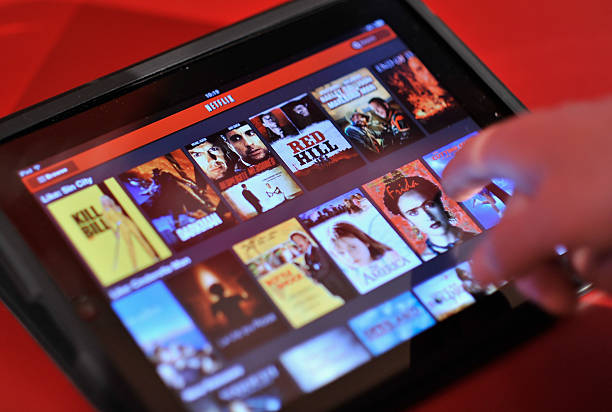
The UK government is considering a major overhaul of the television licence that could require households that currently watch only streaming services such as YouTube, Netflix, Amazon Prime Video and Disney+ to pay the annual BBC TV licence fee.
The proposal would represent a significant change to the way the UK's public broadcaster is funded. Under the current system, households generally do not need a TV licence if they watch only on-demand content on services such as Netflix, Disney+ and YouTube, provided they do not watch live television and do not use BBC iPlayer.
However, the government is reviewing the rules as part of the renewal of the BBC's Royal Charter, which is due to expire at the end of 2027. Ministers are considering whether the licence should cover a wider range of online viewing as audiences increasingly move away from traditional broadcast television.
Reports have described the potential change as a “YouTube tax”, although that is not an official name for the proposal and the government has not yet formally announced the final policy.
A government minister told Parliament on October 19 that the review is still ongoing and that decisions will be set out in a White Paper expected by the end of 2026.
What is the UK government proposing?
The proposal is part of a wider review of how the BBC should be funded after 2027.
The current TV licence costs £180 per year for a standard colour licence. At present, the legal requirement is based primarily on what people watch rather than simply whether they own a television.
A licence is required to watch or record live television on any channel or service, including live television streamed over the internet. It is also required to use BBC iPlayer.
But someone who watches only on-demand programmes on Netflix, Disney+, Amazon Prime Video or YouTube does not currently need a licence.
That distinction has become increasingly important as streaming has transformed the way people consume video.
The government is now examining whether the licence should be expanded so that households could be required to pay even if they do not watch traditional live television or BBC iPlayer.
The Independent reported that a government White Paper expected before Christmas could include plans to extend the licence fee to online platforms including YouTube, Netflix, Amazon and Disney+.
The proposal is intended to address what supporters describe as a growing loophole in the current system: people can consume huge amounts of television-style content online without paying the licence fee if they avoid live broadcasts and BBC iPlayer.
How the current system works
The proposed change is easier to understand when compared with the rules currently in force.
Today, a UK household needs a TV licence if it:
• Watches or records live television on any channel.
• Watches live television through an online streaming service.
• Uses BBC iPlayer.
• Watches live programming on platforms such as YouTube, Amazon Prime Video or other streaming services.
However, a household does not currently need a licence simply because it subscribes to Netflix, Disney+ or Amazon Prime Video.
It can also watch on-demand YouTube videos without a licence, provided those videos are not live television programmes.
The official TV Licensing guidance makes clear that the requirement applies regardless of whether someone watches on a traditional television, computer, phone or another device.
That means the proposed reform would not necessarily be about introducing a completely new concept. Instead, it would potentially remove the distinction between certain types of online viewing.
Why is the government considering the change?
The BBC's traditional funding model is under pressure as viewing habits change.
The number of households paying for television licences has been falling, while audiences increasingly consume content through streaming platforms and social-media services.
The government's own BBC Charter Review Green Paper acknowledged the sustainability challenges facing the licence fee and said ministers were examining reforms to the scope of services for which a licence is required.
The government said it wanted to explore options that could make the BBC's funding model sustainable over the long term while taking the cost-of-living burden on households into account.
It also said the existing licence fee could be retained in its current form, meaning that an extension to streaming is not a settled policy.
The review is therefore considering several possibilities rather than simply announcing that every Netflix or YouTube viewer will immediately have to pay.
The BBC says its funding model is outdated
The BBC itself has argued that the existing system needs reform.
BBC Director-General Matt Brittin has said the corporation is held back by a licence-fee model that no longer reflects how audiences consume media.
He has also argued that BBC content should be able to reach audiences on platforms such as Netflix, YouTube, TikTok, Spotify and Instagram.
The BBC has said it wants a funding arrangement that is sustainable, sufficient and universal enough to allow it to continue providing public-service broadcasting.
That does not necessarily mean the BBC itself is demanding that every Netflix subscriber should pay £180.
The wider debate concerns how the corporation should be funded in an environment where traditional television is becoming less central to people's media consumption.
Parliament has not approved the change
Despite the headlines surrounding the proposal, the new streaming licence has not yet become law.
This distinction is important.
A written parliamentary question asked the government specifically about extending the compulsory television licence to households that only access online streaming services.
The government's response confirmed that the BBC Charter Review is examining options for reforming the licence fee, including potentially changing the scope of services for which a licence is required. However, ministers said they are still considering consultation responses and will announce policy decisions in the forthcoming White Paper.
A debate in the House of Lords on October 19 produced a similar response.
Baroness Mackenzie of Sherwood, the Parliamentary Under-Secretary of State for the Department for Culture, Media and Sport, said the government was keeping an open mind about the options and would set out its decisions before the end of the year.
So, for now, someone in Britain who watches only on-demand Netflix, Disney+ or YouTube content does not suddenly need to purchase a TV licence because of these reports.
The existing rules remain in force.
How much could households pay?
The current standard licence costs £180 annually.
That is the figure generally associated with the proposed expansion because extending the existing licence would potentially bring streaming-only households into the existing system.
But there is an important uncertainty: the final price of any reformed system has not been announced.
The government has previously indicated that reforms could include different rates for different types of users.
The official Charter Review document says ministers are considering differential rates for specific types of users as part of efforts to make the system more sustainable. It also stresses that any reform should take account of the cost-of-living pressures facing households.
There has also been discussion about whether a broader licence could ultimately cost households less per year if more homes were required to contribute.
That is one of the central arguments surrounding reform: expanding the base could potentially spread the cost across more households.
However, precisely how that would work has not yet been determined.
Millions of households could be affected
The potential impact is significant because millions of UK households have shifted toward streaming-only viewing.
A parliamentary committee has separately recommended broadening the licence fee so that it is no longer linked specifically to watching live television or using BBC iPlayer.
According to reporting on the committee's recommendation, around 3.7 million households have formally indicated that they do not require a licence because they only watch on-demand content.
Those households could become liable for the fee under a broader system.
The debate therefore extends well beyond Netflix subscribers.
A future model could potentially capture households that watch online video on smartphones, tablets and computers, depending on how Parliament and the government ultimately define the new system.
Why critics oppose the idea
Critics argue that forcing people to pay for the BBC because they watch commercial streaming platforms would be difficult to justify.
Netflix, Disney+ and Amazon Prime Video already operate through subscription models in which customers pay directly for the services they choose.
A household might therefore question why an additional public broadcasting charge should apply simply because it watches Netflix or YouTube.
Former Culture Secretary Baroness Nicky Morgan has criticised the reported proposal, arguing that some BBC content could instead move toward subscription-based funding.
There are also concerns about affordability.
A £180 annual charge represents an additional £15 per month for a household that previously avoided the licence because it consumed only on-demand content.
For families already paying for several streaming subscriptions, broadband and other household expenses, another mandatory payment could become significant.
Supporters see a changing media landscape
Supporters of reform take a different view.
Their argument is that the old distinction between “television” and “online video” is increasingly difficult to defend.
Someone can watch hours of professionally produced video on a smartphone without owning a television.
Another person can watch live football, news or entertainment through YouTube on a smart television.
From the perspective of public broadcasting, the device used to consume the content has become less important.
The government's Charter Review Green Paper noted that the licence fee has already been adapted to technological changes in the past. BBC iPlayer, for example, was brought within the scope of the licence in 2016.
The question now is whether another major change is required as streaming becomes the dominant way many people consume video.
What happens next?
The government is expected to publish its BBC Charter Review White Paper before the end of 2026.
That document should provide much greater clarity about the future of the licence fee, including whether streaming-only households will be required to contribute.
Until then, the reported “YouTube tax” remains a proposal rather than an implemented charge.
The current rules remain straightforward: watching on-demand Netflix, Disney+, Amazon Prime Video or YouTube does not by itself require a TV licence. Watching live television, regardless of the platform or device, does require one, as does using BBC iPlayer.
The coming decision could nevertheless have major consequences for the UK's broadcasting system.
If the government ultimately expands the licence to cover on-demand streaming, millions of households that have never needed to pay the BBC licence fee could find themselves contributing for the first time.
At the same time, such a change would force a broader conversation about what the licence fee is actually paying for, how public broadcasting should be financed in the streaming era, and whether a system designed around traditional television can remain sustainable as audiences increasingly move online.
For now, however, Britons do not need to buy a new TV licence simply to watch Netflix or YouTube on demand. The government is still reviewing the proposal, with its final decision expected in the forthcoming White Paper.