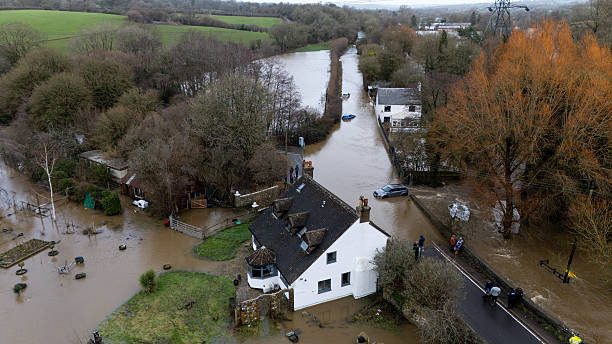
The United Kingdom government is launching a new Flood and Drought Resilience Taskforce to strengthen the country's preparedness for extreme weather, with officials warning of an increased risk of wet, windy and stormy conditions heading into winter.
The taskforce, announced on October 11, 2026, will bring together government departments, weather experts, emergency services, local authorities and representatives from the farming, water and insurance industries to improve coordination and protect communities from flooding and drought. Its first meeting is scheduled for Wednesday, October 14.
The move comes after Britain experienced a wet winter followed by an exceptionally hot, dry summer. The government says the country is now preparing for the possibility of another period of intense rainfall, increasing concerns about flooding in vulnerable communities.
Government Brings Key Organisations Together
The new taskforce will be chaired by Floods and Drought Minister Emma Hardy and include representatives from more than 50 organisations.
Participants will include the Environment Agency, Met Office, mayoral authorities, fire and rescue services, and representatives of the farming, water and insurance industries.
The group's responsibilities will include assessing national preparedness for flooding, identifying weaknesses in emergency responses and developing longer-term strategies to improve the country's resilience to extreme weather.
The government also intends to give communities affected by flooding and drought a stronger voice in future policy decisions, using their experiences to help shape preparations and responses.
Hardy said the country needed a coordinated approach to manage the growing challenges posed by changing weather patterns.
“We’re facing extreme weather, with flood and drought intertwined, but the government is taking decisive action,” she said.
Wet Winter Expected After Record-Breaking Summer
The announcement follows a year of contrasting weather conditions across Britain.
According to the Department for Environment, Food and Rural Affairs, the country experienced a wet winter followed by a prolonged, hot summer that brought the third drought in five years. July was also the driest in almost two centuries, according to the government announcement.
Authorities are now preparing for a potentially wetter and more intense winter, raising concerns about heavy rainfall, overflowing rivers, surface-water flooding and disruption to transport networks.
The Met Office has warned of heightened potential for wet, windy and stormy weather this autumn, while the Environment Agency has urged households to check their flood risk and prepare for possible emergencies.
However, the warnings describe an increased risk rather than certainty that every part of the UK will experience severe flooding. Weather conditions and flood risks can vary considerably between regions.
£10.5 Billion Committed to Flood Defences
The government says its preparations are backed by substantial investment in flood protection.
At least £10.5 billion has been committed between 2024 and 2036 for flood defences intended to protect homes, businesses and critical infrastructure in England.
For the 2026–2027 financial year, the government says £1.4 billion is being spent on building and repairing flood defences. More than 600 flood defence projects are also being delivered across England.
The investment is intended to reduce the damage caused by flooding and strengthen protection for communities exposed to river, coastal and surface-water risks.
The government estimates that every £1 invested in flood defences prevents approximately £8 in economic damage.
Flooding can cause significant losses beyond damage to buildings. It can disrupt businesses, close roads and railway lines, damage farmland, interrupt supply chains and place pressure on emergency services.
The taskforce is expected to examine how existing infrastructure and emergency arrangements can be used more effectively as the country prepares for the winter months.
Authorities Urge Households to Prepare
Alongside major infrastructure projects, the government is encouraging households to take practical steps to prepare for severe weather.
The Environment Agency has urged residents to check whether their properties are at risk, register for flood alerts where available and develop a plan for responding to an emergency.
Preparation can include identifying safe routes away from flood-prone areas, keeping essential medicines and important documents accessible, and knowing how to contact local emergency services.
Residents should also avoid walking or driving through floodwater. Water can be deeper or move faster than it appears, while submerged hazards may make roads and footpaths dangerous.
The government is preparing a wider public awareness campaign to provide households with advice on responding to emergencies, including severe storms and flooding.
Officials say better public awareness can complement physical flood defences and help reduce the risks faced by communities when extreme weather occurs.
Taskforce to Address Both Flooding and Drought
The new initiative expands the government's approach beyond flooding alone.
Britain's recent weather has highlighted the challenge of managing periods of intense rainfall alongside prolonged dry conditions. Drought can place pressure on water supplies, agriculture and ecosystems, while heavy rainfall can overwhelm drainage systems and increase river levels.
The Flood and Drought Resilience Taskforce will work alongside the existing National Drought Group, which will continue coordinating the operational response to drought.
The two groups are expected to share information and expertise to improve longer-term planning for water management and climate resilience.
The government has already introduced measures intended to improve drought preparedness, including requiring water companies to address leaks, providing £65 million in additional support to help farmers build resilience, and making it easier to construct on-site reservoirs.
Officials hope that linking planning for floods and droughts will help the country respond more effectively to changing weather conditions.
Transport and Critical Infrastructure Also Under Pressure
Extreme winter weather can affect far more than homes and businesses.
Heavy rainfall and storms can damage roads, destabilise railway embankments, interrupt electricity supplies and make travel dangerous. Disruption to transport and utilities can also affect access to hospitals, schools and essential services.
The government has highlighted investment in transport infrastructure as part of its broader winter preparations.
It has committed £2.6 billion through Network Rail for improvements intended to strengthen railway infrastructure, alongside £24 billion for road maintenance and improvements over four years.
The government says work is also being carried out to protect vulnerable transport routes and maintain electricity networks ahead of the winter season.
The new taskforce will bring together organisations responsible for different parts of the country's emergency response, helping them share information and identify where further coordination may be needed.
First Meeting Scheduled for October 14
The taskforce's first meeting will focus on the country's preparedness for possible flooding this winter and the improvements made since last year's severe weather.
Participants will also examine lessons from the recent drought and consider whether changes are needed to improve the UK's resilience to both flooding and water shortages.
The meeting is expected to provide an opportunity for government agencies and industry representatives to assess risks, review emergency arrangements and identify areas requiring further action.
The government says the overall aim is to strengthen cooperation between national and local authorities, emergency services and communities.
Whether the new arrangements lead to better outcomes will depend on how effectively the recommendations are implemented and whether investment reaches the areas most exposed to flooding.
For households and businesses, the immediate priority remains preparation for potentially unsettled weather, while authorities work to strengthen flood defences and emergency response systems.