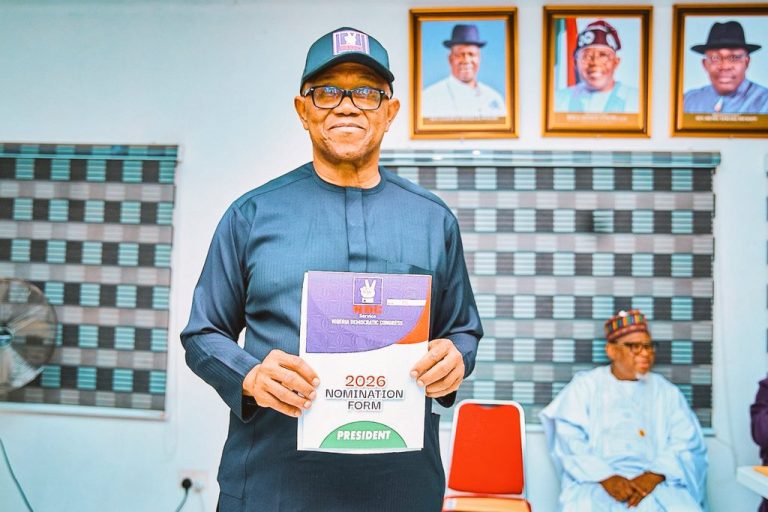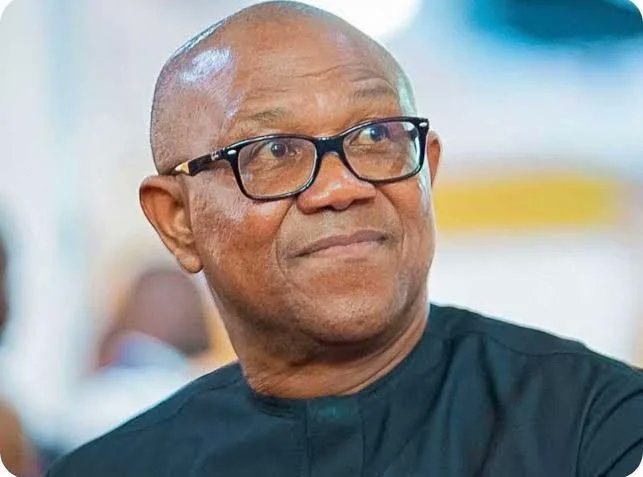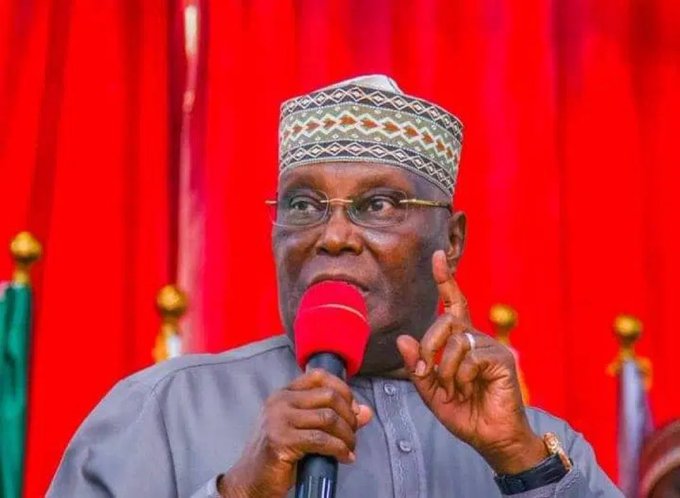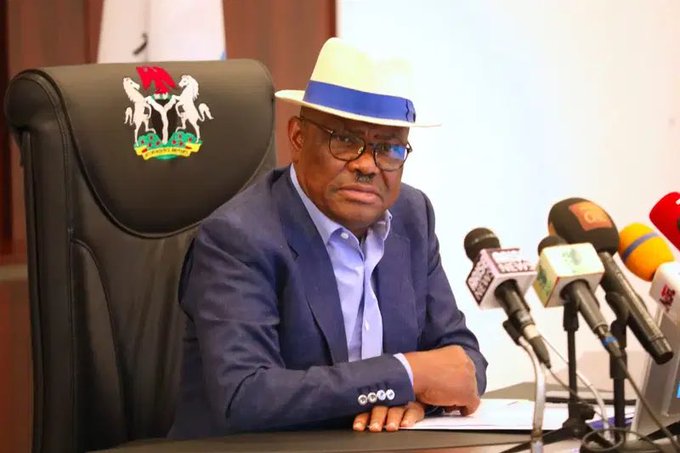
FCT Minister Nyesom Wike has rejected claims by Peter Obi’s supporters that the Labour Party candidate won Rivers State in the 2023 presidential election, saying the assertion exists only in their imagination.
Minister of the Federal Capital Territory and former Rivers State governor, Nyesom Wike, has dismissed claims that Peter Obi won Rivers State in the 2023 presidential election, challenging supporters of the Labour Party candidate to produce official evidence for their assertion.
Wike made the comments during an appearance on TVC’s Journalists’ Hangout on Monday, September 21, while responding to questions about his political influence in Rivers State and the continuing dispute over the 2023 presidential election results.
The former governor directly rejected the narrative promoted by some members of the “Obidient” movement that Obi won the state but was denied victory during the collation of results.
“They won by their own imagination. Who did INEC declare to have won?” Wike said.
Wike challenges Obi supporters to produce evidence
Wike argued that an election result should be determined by results from polling units, their collation and the declaration made by the Independent National Electoral Commission (INEC).
He challenged those disputing the declared Rivers result to produce the result sheet that, in their view, demonstrates that Obi won the state.
“Let them produce that result sheet that says Obi won,” Wike said.
The FCT minister also questioned why the claim was not successfully established during the legal challenges that followed the 2023 presidential election.
He argued that political support displayed at selected locations or claims circulating on social media could not, by themselves, establish the winner of an election.
“You can win on social media,” Wike said, adding that he was concerned with the officially collated results.
What the official 2023 Rivers result showed
According to the result declared after the February 25, 2023 presidential election, Bola Tinubu of the All Progressives Congress (APC) was declared the winner in Rivers State.
The official figures were:
| Candidate | Party | Votes |
|---|---|---|
| Bola Tinubu | APC | 231,591 |
| Peter Obi | Labour Party | 175,071 |
| Atiku Abubakar | PDP | 88,468 |
| Rabiu Kwankwaso | NNPP | 1,322 |
The figures were collated from the state's 23 local government areas. Tinubu won 14 LGAs, Obi won five, while Atiku won four. Tinubu's declared margin over Obi was 56,520 votes.
The result therefore provides the basis for Wike's argument that, in the officially declared election, Tinubu was the winner of Rivers State.
Why the Rivers result remains disputed
Although the INEC-declared result is clear, the Rivers election has remained controversial because of disputes over some individual polling-unit results and the figures recorded during collation.
Some supporters of Obi have conducted alternative tallies using results available from polling units and the INEC Results Viewing Portal (IReV), arguing that the declared figures did not accurately reflect the results from all polling units.
Premium Times recently reviewed results uploaded to IReV and reported a significant discrepancy involving Obio/Akpor Local Government Area, where the figures declared by INEC differed substantially from its tally of results from most of the area's polling units.
According to the newspaper's review, the officially declared figures for Obio/Akpor gave Tinubu 80,239 votes against Obi's 3,829.
However, Premium Times said its examination of results from 1,116 of the area's 1,211 polling units produced a different tally: 73,311 votes for Obi and 17,158 for Tinubu.
The newspaper also reported instances of apparent alterations or mutilations on some result sheets. It cautioned, however, that some results were missing, illegible or improperly uploaded and that it could not independently reconstruct every polling unit's result.
These findings have been cited by those who continue to dispute the officially declared result.
Obi supporters' alternative collation
The dispute is not entirely new.
Following the 2023 election, supporters of Obi carried out their own alternative collation of results. The Cable reported at the time that their tally produced different figures for Rivers from those announced by INEC, with the supporters claiming that Obi had received more votes than the official result showed.
However, an alternative tally conducted by political supporters is different from an official election result. The legally recognised result remained the one declared by INEC.
This distinction is central to Wike's argument.
His position is that regardless of alternative calculations or individual polling-unit results circulated online, the election outcome was determined through the official collation process and declaration.
Wike points to Rivers' 23 LGAs
Wike also argued that claims based on results from isolated areas cannot establish the overall outcome of a statewide election.
Rivers has 23 local government areas, and the 2023 presidential result was based on the collation of results from across the state.
He questioned the idea that a candidate could be considered the winner based on what supporters observed in one part of Port Harcourt or at selected polling units.
The minister's argument was therefore not simply about which candidate had greater visible support in particular communities. His emphasis was on the complete set of results used for the official declaration.
Wike's role in the 2023 election
The dispute also has a political dimension because Wike was Rivers State governor when the 2023 presidential election took place.
Although he was a member of the Peoples Democratic Party at the time, Wike supported Tinubu's presidential bid after falling out with the PDP's leadership over issues surrounding its presidential campaign.
Tinubu subsequently won Rivers according to the result declared by INEC.
Wike has since maintained that his political structure and relationship with voters in the state contributed to the result.
His latest comments come as political activity intensifies ahead of Nigeria's 2027 general elections, with Rivers expected to remain an important political battleground.
The legal question remains separate from the political argument
Wike also referred to the legal process that followed the 2023 presidential election, questioning whether those disputing the Rivers result were able to establish their alternative claim before the election tribunal.
The distinction is important because allegations concerning election irregularities and alternative vote calculations are separate from the question of which result was formally declared and whether a court subsequently overturned that declaration.
The official Rivers result was not overturned through the election litigation process, meaning Tinubu's 2023 victory remains the formally declared outcome.
At the same time, the documented discrepancies reported in some polling-unit materials explain why the Rivers result continues to be debated by supporters of Obi and other observers.
Rivers remains politically significant ahead of 2027
The argument over the 2023 result is resurfacing as politicians and political movements position themselves for the next presidential election.
For Obi's supporters, the Rivers dispute remains part of a broader argument about the accuracy and transparency of the 2023 election.
For Wike, the issue is settled by the result officially declared by INEC, and he has challenged those who disagree to produce documentary evidence supporting their claim.
The disagreement therefore reflects two different ways of assessing the 2023 Rivers election: the officially declared result, and alternative interpretations based on individual polling-unit records.
As the 2027 election approaches, the Rivers dispute is likely to remain part of the wider political debate over voting patterns, electoral administration and the strength of competing political structures in the state.
For now, the formal 2023 result remains: Tinubu 231,591, Obi 175,071 and Atiku 88,468. Claims that Obi actually won the state remain disputed and are based on alternative analyses of polling-unit materials rather than the result declared by INEC.