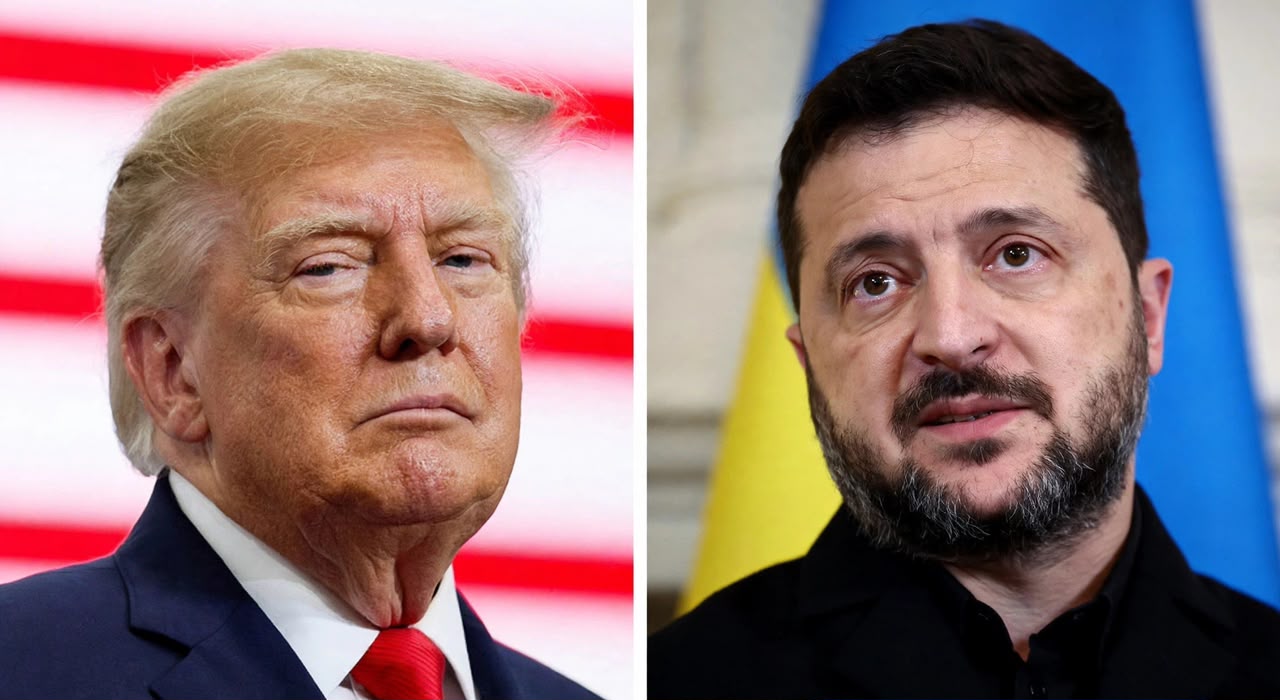
US President Donald Trump and Ukrainian President Volodymyr Zelensky remain sharply divided over how to end the war in Ukraine, even as talks in Oslo produced signs of renewed diplomatic engagement between Kyiv, Washington and European allies.
The latest diplomatic push to address the war in Ukraine has produced a striking contrast: Ukrainian officials and European leaders emerged from meetings in Oslo with cautiously positive messages, while President Donald Trump continued publicly pressuring Volodymyr Zelensky to reach a deal with Russia.
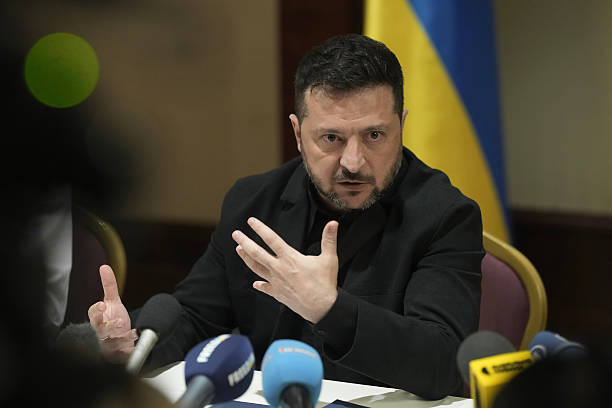
Zelensky travelled to Norway on Tuesday for talks with US special envoy Steve Witkoff, Norwegian Prime Minister Jonas Gahr Støre and Finnish President Alexander Stubb. Trump's son-in-law, Jared Kushner, also participated remotely. The meetings were intended to put diplomatic efforts surrounding the war on a more constructive path.
Yet Trump's comments from Washington underscored how difficult that objective may be.
Shortly after the Oslo discussions, Trump again urged Zelensky to make a deal with Russia, saying that the United States had received little in return for its support of Ukraine. He argued that Ukraine needed to reach an agreement rather than continue the war.
The contrasting messages have highlighted the continuing gap between Trump's approach to the conflict and Kyiv's priorities.
Oslo talks offer a more positive tone
The Oslo meeting was designed partly to repair relations between Washington and Kyiv, which have deteriorated considerably in recent weeks.
Norwegian Prime Minister Jonas Gahr Støre said the purpose of the gathering was to steer diplomatic efforts towards a more constructive path. The discussions included security guarantees for Ukraine and possible steps towards a future negotiated settlement.
Zelensky also struck a considerably more positive tone after meeting the American delegation.
He said his discussions with US Secretary of State Marco Rubio had been constructive and reported that American intelligence-sharing with Ukraine was functioning again, particularly early-warning systems that can alert Ukrainian authorities to incoming Russian ballistic missiles.
That issue is particularly important for Kyiv because Russia has continued launching missile and drone attacks against Ukrainian cities and infrastructure.
Zelensky also said the talks addressed the supply of Patriot missile interceptors and the restoration of US satellite support that Ukraine uses for military operations.
The Ukrainian president said security guarantees were also discussed, including arrangements resembling NATO's Article 5 commitment. He said different forms of guarantees had been included in a document that Witkoff was expected to take to Russia.
Trump continues to pressure Kyiv
Despite the more encouraging atmosphere in Oslo, Trump has continued to publicly criticise Zelensky.
Before the Oslo meeting, Trump said that Russia had been "fine" regarding Ukraine and accused Zelensky of not helping the situation. He also suggested that Ukraine should find someone else to negotiate on its behalf.
Trump subsequently said it was time for Ukraine to make a deal.
His comments underline a fundamental difference between the two governments.
The Trump administration has increasingly focused on getting the war brought to an end through negotiations, while Kyiv continues to seek military support and security guarantees that would prevent another Russian attack after any settlement.
The disagreement is therefore not simply about whether negotiations should happen. It also concerns the terms of a potential settlement and the security arrangements that would follow it.
US-Ukraine relations have deteriorated
The Oslo talks come after a particularly difficult period in US-Ukraine relations.
Kyiv has complained about delays in US military assistance and restrictions affecting intelligence and satellite support. Zelensky has also accused Washington of delaying the delivery of Patriot interceptor missiles that European countries had already paid for through arrangements designed to support Ukraine.
The Trump administration has rejected the suggestion that it is deliberately withholding assistance.
Secretary of State Marco Rubio said there was nothing being deliberately denied to Ukraine, explaining that the United States had to balance its commitments to Ukraine with its own military requirements and obligations to other partners.
The issue of intelligence sharing also appears to have improved, at least temporarily.
Zelensky said early-warning information was working again, allowing Ukraine to receive warnings of incoming ballistic missiles. That represents a significant practical development for a country facing continued Russian attacks.
Russia remains central to the diplomatic effort
While Zelensky and Witkoff met in Oslo, the US envoy was preparing to travel to Russia.
Witkoff is expected to meet Russian officials in St Petersburg and brief them on proposals and ideas discussed with Ukrainian and European representatives.
Norwegian officials said the purpose of the diplomatic sequence was to exchange ideas and potentially create the conditions for a future leaders' meeting involving the United States, Russia and Ukraine.
That possibility is significant because direct negotiations between the three countries at the highest level would represent a major diplomatic step.
However, there is no indication that the parties have resolved the central disagreements that have prevented a lasting settlement.
Zelensky wants security guarantees
For Kyiv, any peace agreement would have to address what happens after a ceasefire.
Ukraine has repeatedly argued that a settlement without credible security guarantees could leave the country vulnerable to another Russian attack in the future.
During the Oslo discussions, Zelensky said Ukraine had discussed several possible forms of security guarantees and described the American position as strong. He also referred to the possibility of guarantees resembling NATO's Article 5 framework.
Such guarantees are politically and strategically significant because Ukraine is not a NATO member and therefore does not have the alliance's collective-defence guarantee.
The exact nature of any future security arrangement remains unresolved.
Trump and Zelensky have different priorities
The current disagreement reflects a broader difference in priorities.
Trump has increasingly emphasised ending the war and has argued that Ukraine should negotiate.
Zelensky, meanwhile, has focused on maintaining Ukraine's ability to defend itself while securing conditions that would prevent another conflict.
The two positions can overlap in one important respect: both Washington and Kyiv publicly say they want the war to end.
The disagreement concerns how that outcome should be achieved and what guarantees should accompany it.
That distinction is crucial because a ceasefire alone would not necessarily resolve the wider dispute between Russia and Ukraine.
European leaders seek to keep diplomacy moving
Norway and Finland have become increasingly involved in efforts to maintain diplomatic communication between Ukraine, the United States and European governments.
Støre and Stubb participated in the Oslo discussions alongside Zelensky and Witkoff, reflecting Europe's concern about the direction of US policy towards the war.
European governments have generally supported Ukraine's territorial integrity and continued defence against Russia, while also seeking a diplomatic path towards an eventual end to the conflict.
The Oslo meeting therefore provided an opportunity to bring several of those perspectives into the same discussion.
Støre described the meeting as an effort to make diplomacy more constructive, while Stubb said he was attending to discuss Russia's war and the broader security situation in Europe.
The battlefield continues to complicate diplomacy
Diplomatic discussions are taking place while fighting continues.
Russian strikes have continued targeting Ukrainian infrastructure, including energy and transport facilities. Recent attacks have caused deaths and further pressure on Ukraine as winter approaches.
Ukraine has also continued targeting Russian energy infrastructure.
Trump has criticised Ukrainian attacks on Russian oil refineries, arguing that such actions contribute to the wider energy-price problem. Kyiv, however, has presented its strikes as part of its effort to respond to continued Russian attacks.
That disagreement adds another layer to the diplomatic tension.
While Washington is pushing both sides towards negotiations, Ukraine continues to argue that it needs sufficient military capability to protect its population and maintain leverage in any negotiations.
A cautiously positive meeting, but no breakthrough
The Oslo talks nevertheless produced some indications of diplomatic movement.
Zelensky said the meeting was constructive and reiterated Ukraine's desire for peace. He also highlighted the restoration of intelligence-sharing and continued discussions about missile defence and security guarantees.
Witkoff's planned trip to Russia also means that proposals discussed in Oslo are expected to be communicated directly to Moscow.
But those developments should not be confused with a peace agreement.
Trump's comments after the meeting demonstrated that Washington continues to press Kyiv to move towards a settlement, while Ukraine remains concerned about the conditions under which such a settlement would occur.
The two governments therefore appear to be communicating and negotiating, but significant differences remain.
What happens next?
The next stage of the diplomatic process will depend partly on Witkoff's discussions with Russian officials.
The US envoy is expected to take ideas from the Oslo meeting to Russia and discuss them with Russian leadership. Any response from Moscow could determine whether the diplomatic process gains momentum or encounters another obstacle.
A potential meeting involving Trump, Zelensky and Russian President Vladimir Putin has also been discussed, although such a meeting would require agreement among the parties and resolution of major outstanding issues.
For now, the Oslo meeting has demonstrated that diplomatic channels remain open.
But the public disagreement between Trump and Zelensky shows that the central question remains unresolved: how to end the war while addressing Ukraine's security concerns and Russia's demands.
The positive atmosphere reported from Oslo may therefore represent a reopening of diplomatic space rather than evidence that the parties have reached a settlement.