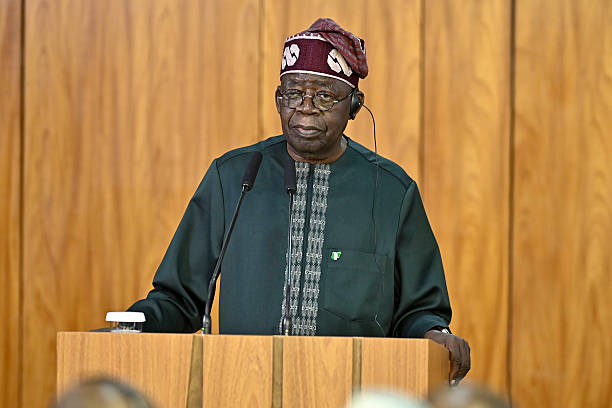
President Bola Ahmed Tinubu has assured local and international investors that Nigeria remains open for business, saying his administration is working to make the country's business environment more predictable, competitive and supportive of investment.
Tinubu made the statement on Monday, September 14, 2026, during the 75th anniversary flagship event of the Nigerian Bottling Company Limited (NBC) in Abuja.
The President was represented at the event by the Secretary to the Government of the Federation, Senator George Akume.
Tinubu said the Federal Government recognises the practical challenges facing businesses in Nigeria and is addressing them through economic reforms under his administration's Renewed Hope Agenda.
“Nigeria is open for business, and we are working to make the business environment more predictable, more competitive and more supportive of investment.”
The President's message comes as the Federal Government continues to promote investment, domestic manufacturing and local production as key elements of its strategy for building a more productive Nigerian economy.
Tinubu identifies key conditions investors need
Tinubu said businesses require several basic conditions to operate successfully and make long-term investment decisions.
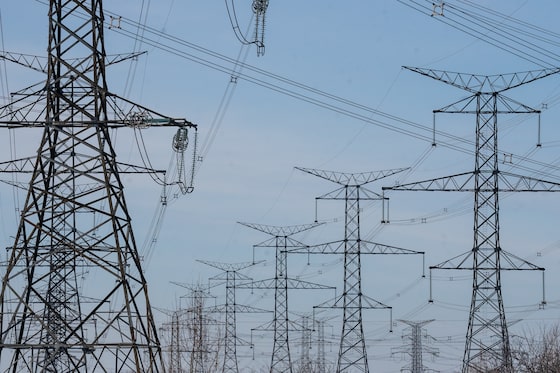
Among the issues he identified were reliable electricity and infrastructure, clear and consistent regulations, efficient ports and logistics, access to foreign exchange and a tax system that encourages productive enterprise.
According to the President, these factors directly influence whether companies decide to expand factories, introduce new production lines or create additional employment.
The government therefore has a role in creating the conditions under which businesses can invest with greater confidence.
The President's remarks reflect one of the central arguments behind the administration's economic reform programme: that Nigeria needs to address structural weaknesses that have historically limited domestic production and discouraged some forms of investment.
Tinubu said the objective is not simply to attract capital into the country but to create an environment where investment translates into productive economic activity.
Government wants less dependence on imports
Tinubu said his administration's reforms are intended to build a more productive and competitive economy while reducing Nigeria's dependence on imported goods.
He argued that the country cannot achieve sustained economic growth by relying excessively on imports while domestic productive capacity remains underdeveloped.
The President said Nigeria needs to produce more, manufacture more and add more value locally.
The strategy, according to him, is also intended to create more opportunities for Nigerians through expanded production and employment.
The reforms have nevertheless required adjustments from households and businesses, with the President acknowledging that the process has not been easy.
He said Nigerians and businesses have made sacrifices as the government confronts longstanding economic problems.
Tinubu maintained that those structural problems cannot simply be ignored if Nigeria is to build a stronger and more competitive economy.
Coca-Cola's proposed $1 billion investment
The President used the Nigerian Bottling Company's anniversary event to highlight the importance of long-term private-sector investment in Nigeria.
He welcomed the Coca-Cola System's announcement in 2024 of a potential $1 billion investment in Nigeria over five years.
Tinubu described the commitment as a vote of confidence in Nigeria's economy, particularly following approximately $1.5 billion invested by the Coca-Cola System in the country during the preceding decade.
The President said the Federal Government is interested not only in how much money companies invest but also in what those investments accomplish inside Nigeria.
He identified job creation, skills development, local sourcing, technology transfer and increased domestic production as important measures of the value of an investment.
That approach means the government wants foreign and domestic investors to contribute to the development of Nigerian businesses and workers rather than simply use Nigeria as a market for imported products.
'Nigeria should not be seen only as a market'
Tinubu urged investors to view Nigeria as more than a large consumer market.
He said the country should increasingly be regarded as a place where companies can establish production facilities, develop local talent, build supply chains and compete in African and global markets.
That vision places greater emphasis on Nigeria becoming a production and manufacturing base.
For the government, increasing domestic manufacturing could help reduce import dependence while creating demand for locally produced goods and services.
It could also create opportunities for Nigerian companies to become suppliers to larger domestic and multinational businesses operating in the country.
Tinubu therefore called for increased local content and stronger connections between major manufacturers and Nigerian suppliers.
NBC expansion cited as an example
The President pointed to continued investment by Nigerian Bottling Company as an example of the type of private-sector activity he wants to see more widely across the economy.
NBC has continued to expand its production capacity, including new production lines at Asejire in Oyo State and Challawa in Kano State.
Tinubu said such investments are important to strengthening Nigeria's productive base.
He also challenged businesses and policymakers to find more ways to develop Nigerian companies into reliable suppliers for major manufacturers.
This, he said, should be accompanied by greater investment in training young Nigerians to operate and maintain modern industrial equipment.
The ultimate objective is to gradually replace imported products with goods manufactured competitively in Nigeria.
Government cannot do it alone
Tinubu stressed that creating a stronger economy is not solely the responsibility of government.
He said the government must provide appropriate policies, infrastructure and regulations, but the private sector also has a critical role.
According to the President, businesses must invest, innovate, take risks and create jobs.
The government's responsibility, he said, is to create an environment where those activities can take place.
This division of responsibility is particularly important because private companies make many investment decisions based on factors beyond the size of Nigeria's market.
Companies also consider infrastructure, regulatory certainty, taxation, foreign-exchange availability, logistics, energy costs and the ability to operate efficiently.
Tinubu's remarks therefore amounted to both an invitation to investors and a commitment from government to continue addressing those factors.
Human capital remains a major priority
The President also emphasised the importance of developing Nigeria's human capital.
He said investment ultimately becomes more valuable when it creates opportunities for people.
Tinubu highlighted the Nigerian Bottling Company's Supply Chain Academy, which was established in 1996 and has trained more than 1,400 young people.
He also commended the company's programmes supporting women and its community interventions in areas including water and hygiene.
The President said Nigeria's large youthful population could become a major economic advantage if young people receive the education, technical skills and opportunities needed to participate effectively in the economy.
He said young Nigerians should have opportunities to become entrepreneurs, engineers, technicians, professionals, innovators and manufacturers.
Human capital development, enterprise and job creation remain important elements of the Renewed Hope Agenda, according to the President.
Nigeria's youth population as an economic opportunity
Nigeria has one of the world's youngest populations, giving the country a potentially large labour force and consumer market.
However, the economic benefits of a young population depend heavily on whether young people have access to education, skills and productive employment.
Tinubu's comments therefore linked investment directly to human-capital development.
A company that establishes a manufacturing plant, for example, can potentially create jobs while also transferring technical knowledge and developing workers who can later contribute to other areas of the economy.
The President wants this kind of multiplier effect to become a more important feature of investment in Nigeria.
Investment should strengthen local businesses
Tinubu also argued that investments should strengthen Nigerian businesses through local sourcing.
Large companies require suppliers for raw materials, packaging, transportation, maintenance, logistics and other services.
If more of those inputs are sourced locally, Nigerian companies can participate more deeply in the value chain.
That can potentially create additional employment and business opportunities beyond the workforce directly employed by the major investor.
The President therefore challenged policymakers and companies to develop systems that enable Nigerian businesses to become dependable suppliers to large manufacturers.
This would support the administration's wider objective of increasing domestic production and reducing reliance on imported inputs.
The challenge of creating a predictable business environment
Tinubu's pledge to make the business environment more predictable is significant because uncertainty can affect investment decisions.
Businesses planning major projects typically need to assess their costs and expected returns over several years.
Sudden regulatory changes, difficulty accessing foreign exchange, unreliable infrastructure or high logistics costs can affect those calculations.
By promising a more predictable environment, the government is seeking to encourage companies to make longer-term commitments.
However, the effectiveness of that promise will ultimately depend on how policies are implemented and whether businesses experience measurable improvements in the areas identified by the President.
Coca-Cola's investment and the wider economy
The Coca-Cola System's proposed investment was presented by Tinubu as an example of the type of long-term commitment the government wants to encourage.
The President said the system generated an estimated $1 billion in value-added economic activity in Nigeria in 2024, supported more than 160,000 livelihoods across its value chain and purchased approximately $601 million worth of goods and services from Nigerian suppliers.
Those figures were cited by the President at the NBC anniversary event.
The figures illustrate the government's preferred way of measuring investment impact.
Rather than focusing exclusively on the headline amount of capital committed, Tinubu wants investment to be assessed through its effects on employment, local suppliers, skills and domestic production.
Businesses have had to adjust to reforms
Tinubu acknowledged that the reform process has created difficulties for businesses.
The administration has implemented major economic changes since taking office, and the President said companies have had to adjust to changing conditions.
He maintained, however, that some of Nigeria's structural problems required difficult decisions.
The government has argued that reforms are necessary to create a stronger foundation for long-term economic growth, even when the adjustment process creates short-term pressure.
Tinubu's latest comments indicate that the administration intends to continue pursuing those reforms while also trying to make the investment environment more attractive.
What Tinubu's message means for investors
For local investors, the President's message is that the government wants to support domestic enterprise and production.
For international investors, it is an invitation to consider Nigeria as a location for long-term operations rather than simply a market for selling finished goods.
The government is particularly interested in companies that are prepared to manufacture locally, develop Nigerian workers, strengthen supply chains and contribute to host communities.
Tinubu said the Federal Government would continue working on policies, infrastructure and regulations that support investment and domestic production.
At the same time, he acknowledged that government alone cannot create economic growth.
A long-term test for the administration
The statement that Nigeria is "open for business" is ultimately a commitment that will be judged by conditions on the ground.
Investors will continue to assess power supply, infrastructure, taxation, regulations, logistics, foreign-exchange access and the wider cost of doing business.
Businesses will also look at whether government policies remain stable enough to support long-term investments.
Tinubu's administration is betting that its economic reforms, combined with improvements in infrastructure and the regulatory environment, can make Nigeria more productive and competitive.
The President's latest message to investors is clear: Nigeria wants capital, but it also wants the jobs, skills, technology, local sourcing and production capacity that can come with that investment.
As the government continues its reform programme, the challenge will be translating that message into an environment where businesses can invest confidently, expand production and create sustainable opportunities for Nigerians.