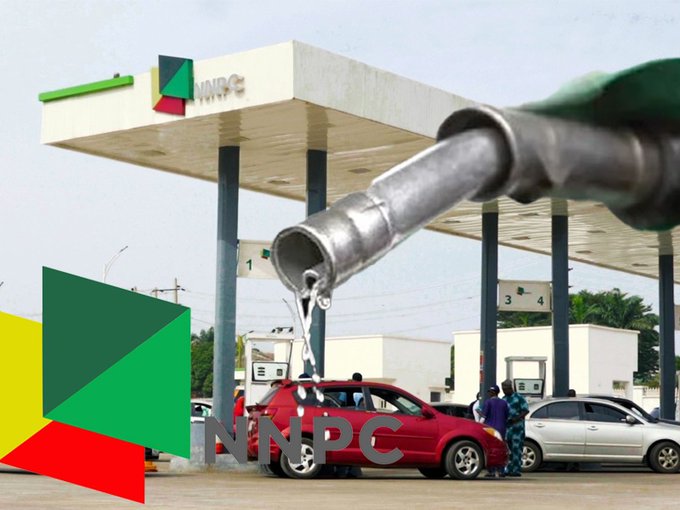
The Nigerian National Petroleum Company Limited (NNPCL) has increased the pump price of Premium Motor Spirit (PMS), commonly known as petrol, to ₦1,405 per litre from ₦1,370, reversing a reduction introduced earlier in the week and renewing concerns about fuel-price volatility in Nigeria.
The latest adjustment represents an increase of ₦35 per litre, equivalent to approximately 2.55 per cent. According to reports citing checks at NNPCL filling stations, the new price was communicated to outlets on Thursday, October 15, and implemented on Friday, October 16, 2026. As of Saturday, October 17, the company had not publicly provided a specific explanation for the latest increase.
The development comes amid renewed attention to the Federal Government's efforts to cushion the impact of rising fuel costs through a temporary discount arrangement involving NNPCL retail outlets. It also follows a proposal to establish a benchmark for petrol wholesale prices as authorities seek to address volatility in the downstream petroleum market.
For motorists, transport operators and businesses that depend on petrol, the latest increase raises fresh questions about how the government's relief measures will work alongside changing retail prices.
NNPCL Reverses Earlier Petrol Price Reduction
The latest increase follows a series of price adjustments at NNPCL filling stations over the past two weeks.
On Monday, October 12, the company reduced its pump price to ₦1,370 per litre after an earlier increase had pushed it to ₦1,405. The reduction represented a decrease of ₦35 per litre, offering motorists some relief after the weekend adjustment.
However, that relief lasted only a few days. NNPCL subsequently restored the price to ₦1,405 per litre, effectively reversing the previous reduction.
The latest adjustment illustrates how quickly retail petrol prices can change in Nigeria's deregulated downstream petroleum market. Prices can respond to changes in supply costs, international crude oil prices, exchange rates, distribution expenses and other commercial considerations.
Although NNPCL is a state-owned company, its retail fuel prices can change in response to market conditions. The Federal Government has also emphasised that its recently announced discount arrangement is not a return to the former nationwide petrol subsidy regime.
The company has not publicly established a specific reason for restoring the higher pump price in the reports available as of October 17. It would therefore be premature to attribute the latest increase to a particular cost factor without an official explanation.
How Much More Will Motorists Pay?
The increase from ₦1,370 to ₦1,405 per litre means motorists buying petrol at the new price will spend more depending on the quantity purchased.
The difference is ₦35 for every litre of petrol.
For motorists buying 20 litres, the additional cost is ₦700. A purchase of 40 litres now costs ₦56,200, compared with ₦54,800 at the previous price, representing an increase of ₦1,400.
The following table illustrates the difference:
| Quantity | At ₦1,370 per litre | At ₦1,405 per litre | Additional cost |
|---|---|---|---|
| 5 litres | ₦6,850 | ₦7,025 | ₦175 |
| 10 litres | ₦13,700 | ₦14,050 | ₦350 |
| 20 litres | ₦27,400 | ₦28,100 | ₦700 |
| 40 litres | ₦54,800 | ₦56,200 | ₦1,400 |
| 50 litres | ₦68,500 | ₦70,250 | ₦1,750 |
For households and commercial drivers who purchase petrol frequently, these differences can accumulate over time.
The effect will depend on individual fuel consumption, driving distances and the extent to which motorists can access available discounts or alternative transportation options.
Government's Petrol Discount Initiative Faces Renewed Attention
The price increase comes shortly after the Federal Government announced measures intended to cushion the impact of rising petrol costs on households and businesses.
On October 8, the Presidency announced that NNPCL Retail would forgo its petrol retail profit margin for 30 days, selling petrol at cost to provide temporary relief, particularly for vulnerable households and commercial transport operators. The arrangement was presented as a response to global crude oil price shocks and market volatility.
The announcement was accompanied by other proposed measures, including forward crude-oil sales to domestic refineries, efforts to reduce logistics expenses, support for vulnerable households and further development of compressed natural gas transportation.
The government also said it was negotiating a proposed ceiling of approximately ₦1,350 per litre for petrol at the gantry or landing-cost level. Under the proposal, refiners and importers would absorb certain temporary cost increases and recover the shortfall when market conditions improved.
However, the proposed wholesale benchmark is separate from the retail price displayed at filling stations. It should not be interpreted as confirmation that all petrol retailers must sell at a uniform nationwide price of ₦1,350 per litre.
The latest pump-price increase has consequently renewed questions about how the different measures will operate together and how much relief motorists can expect.
NNPCL App Discount Remains an Important Distinction
The government-backed relief initiative has also involved a discount accessible through the NNPCL Fuel App.
Reports published during the week indicated that the company's displayed pump price and the effective price available through the application were different. According to a report by Eighteen-Eleven Media, NNPCL had previously explained that eligible customers using the app could receive a ₦66-per-litre discount, while the regular pump price in Abuja stood at ₦1,405 per litre.
If the same discount applies to petrol sold at ₦1,405 per litre, the effective price for an eligible customer would be ₦1,339 per litre. However, motorists should confirm the current terms, participating outlets and eligibility requirements before assuming that the discounted rate is available to every customer.
This distinction matters because a discount accessible through a particular payment or purchasing channel does not automatically change the price displayed at the pump for all motorists.
Customers who purchase fuel without accessing the applicable offer may therefore pay the standard retail price, while eligible users may pay less under the discount arrangement.
The latest adjustment also highlights the importance of clear communication from NNPCL about the current pump price, the duration of the discount, the participating stations and any conditions attached to the offer.
Without that clarity, motorists may find it difficult to determine whether the discount is still available, how to access it and whether the displayed price reflects the latest changes.
Proposed Price Benchmark Adds to Market Uncertainty
The Federal Government's proposed petrol-price benchmark is another factor in the current debate.
Finance Minister Taiwo Oyedele announced plans to negotiate a ceiling of approximately ₦1,350 per litre at the gantry or landing-cost level as part of efforts to moderate the effect of rising fuel prices.
The proposal was described as a way to smooth out temporary price shocks rather than restore the previous petrol subsidy system. Under the approach outlined by the government, refiners and importers would carry certain short-term cost increases and recover them later when market conditions permitted.
The proposal and the NNPCL retail discount serve different purposes.
A wholesale benchmark concerns the price at which petrol enters the distribution chain, while the retail pump price is what consumers pay at filling stations. Transport, storage, distribution and retail expenses can affect the final price paid by motorists.
As a result, the proposed wholesale benchmark does not, by itself, establish the final retail price at every station.
The difference between the proposed benchmark and the latest reported NNPCL pump price may attract further scrutiny as the government works to implement its relief measures.
For the proposal to provide a clear benefit to consumers, the relationship between wholesale costs, retail prices and any temporary discounts will need to be communicated transparently.
Petrol Price Differences Across Filling Stations
NNPCL's latest adjustment is occurring in a market where petrol prices can differ between retail operators and locations.
Reports published on October 17 cited different pump prices at competing outlets, including ₦1,410 per litre at AA Rano and ₦1,390 at BOVAS and MRS in the locations surveyed. Other outlets reportedly sold petrol at prices ranging from ₦1,398 to ₦1,400 per litre. These figures reflect reported prices at specific stations rather than a uniform nationwide market rate.
Such differences mean motorists may not encounter the same price at every filling station, even within the same city.
Retail prices can reflect the cost at which operators obtain petrol, their distribution arrangements and other operating expenses. The location and timing of a price survey also matter because stations can revise their pump prices at different times.
For consumers, checking prices at nearby outlets may help identify available alternatives, although any comparison should account for the distance travelled and the amount of fuel required.
For businesses operating fleets of vehicles, monitoring price differences can also be important when estimating fuel expenses and setting transport charges.
Nevertheless, the existence of different retail prices does not establish that a particular station will maintain its price. Operators can make further adjustments as their costs and commercial decisions change.
Higher Petrol Prices Could Increase Transport and Business Costs
Petrol is an important input for Nigeria's transport sector and many small businesses. Consequently, changes in pump prices can affect household expenses beyond the immediate cost of filling a vehicle's tank.
Commercial drivers may face higher operating expenses when they purchase petrol at a higher price. Depending on their routes, fuel consumption, passenger demand and other costs, some may seek to adjust fares to protect their earnings.
Transport costs can also affect the movement of food, agricultural produce, building materials and other goods. Businesses that rely on petrol-powered vehicles for deliveries may face increased distribution expenses, which could influence the prices charged to customers.
Small businesses that depend on petrol generators may experience additional pressure on their operating budgets. Where electricity supply is insufficient or unreliable, some operators use generators to power equipment, preserve products or maintain daily operations.
The extent of the impact will vary. Not every business will pass higher fuel expenses directly to customers, and the effect on final prices will depend on competition, demand and the availability of alternatives.
However, repeated fuel-price changes can make budgeting more difficult for households and businesses that already face pressure from other expenses.
For commercial transport operators, even a relatively modest increase per litre can become significant when vehicles consume large quantities of fuel every day.
NNPCL Yet to Explain the Latest Increase
Despite the renewed adjustment, the precise reason for the latest increase remains unclear.
Reports published on October 16 and 17 said the new price had been communicated to filling stations and implemented, but NNPCL had not issued a specific public explanation for restoring the price to ₦1,405 per litre.
An official clarification would help motorists understand whether the change reflects adjustments in supply costs, the operation of the temporary discount arrangement or other commercial considerations.
It would also help distinguish the standard retail price from any discounted price available to eligible customers through the NNPCL application.
For now, the reported increase means motorists buying petrol at NNPCL outlets affected by the adjustment should expect to pay ₦1,405 per litre unless a separate discount applies.
The situation remains subject to further clarification from the company and any subsequent changes at individual stations.
What Happens Next?
The immediate question is whether the latest increase will remain in place and how NNPCL will implement its temporary discount during the remainder of October.
The Federal Government has said its relief measures are intended to cushion the impact of energy-market volatility without reinstating the former blanket petrol subsidy. Those measures include the retail margin arrangement, proposed wholesale-price measures and efforts to reduce transport and distribution costs.
The effectiveness of these initiatives will depend on their implementation, the costs facing fuel suppliers and the extent to which the benefits reach households and businesses.
Motorists will also be watching for further changes in pump prices and additional information about eligibility for the app-based discount.
Until NNPCL provides a specific explanation for the latest adjustment, the increase from ₦1,370 to ₦1,405 per litre remains the central development, reversing the reduction introduced earlier in the week.
For Nigerian households, transport operators and businesses, the change is another reminder that fuel costs remain an important factor in everyday spending and the wider cost of doing business.