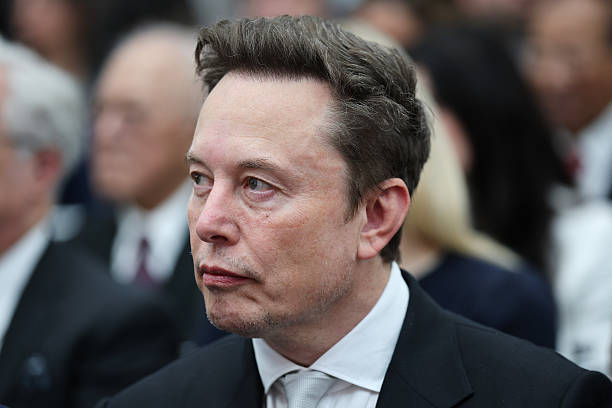
SpaceX CEO Elon Musk says the aerospace company could potentially surpass a $100 trillion market capitalization within the next decade, although he added a major caveat: a large-scale world war could derail that trajectory.
Musk made the prediction on October 15 in a post on X while responding to comments from billionaire investor Ron Baron, who had suggested that SpaceX could eventually be worth between $20 trillion and $50 trillion. Musk indicated that even Baron's upper estimate could prove too conservative.
Musk Puts $100 Trillion Target Within a Decade
“Unless there is a major world war, SpaceX probably gets to >$100T in <10 years,” Musk wrote on X.
The statement represents an extraordinary valuation target for a company that is currently worth roughly $2 trillion following its 2026 public listing.
At its October 14 closing value of about $2.07 trillion, a $100 trillion valuation would require SpaceX's market value to increase by roughly 48 times.
Musk's latest statement is also stronger than his previous comments about the possibility of a $100 trillion SpaceX. He had previously described such a valuation as possible, whereas his latest post said the company would “probably” reach that level within 10 years.
Ron Baron Predicts $50 Trillion
The discussion began with Ron Baron, founder of Baron Capital and a major SpaceX investor.
Baron recently said he expects SpaceX could be worth $20 trillion, $30 trillion or even $50 trillion within the next decade.
He believes Starlink, SpaceX's satellite internet business, could account for a significant portion of that value.
Baron has estimated that Starlink alone could eventually be worth between $14 trillion and $15 trillion, arguing that the business remains relatively early in its growth.
Baron has also pointed to Musk's plans for orbital data centers as a potentially much larger business opportunity.
SpaceX Is Expanding Beyond Rockets
SpaceX is no longer simply a rocket-launch company.
Its businesses now include satellite internet through Starlink, launch services, spacecraft and emerging artificial-intelligence infrastructure.
The company has been investing heavily in computing capacity and is pursuing plans to build large data-center operations connected to its broader AI ambitions.
Reuters reported earlier this month that SpaceX was seeking around $40 billion in financing to purchase Nvidia chips for data-center expansion. The proposed financing reportedly consists of bank loans and investment-grade debt.
SpaceX had about 1.4 gigawatts of computing capacity available at the end of the second quarter, according to the Reuters report, while Musk has discussed increasing that figure to around 15 gigawatts by the end of 2027.
The company is therefore attempting to position itself across several rapidly growing industries rather than relying exclusively on traditional space launches.
Starlink Could Be a Major Driver
Starlink is central to the bullish case surrounding SpaceX.
The satellite network provides broadband internet from low-Earth orbit and has become one of the company's most commercially important businesses.
Baron's $14 trillion-$15 trillion estimate for Starlink assumes significant expansion over the next decade. His broader SpaceX valuation thesis also incorporates future businesses that do not yet have the same level of commercial maturity as Starlink.
Musk has separately outlined ambitions involving data centers in space, which could potentially combine SpaceX's launch capabilities, Starlink network and computing infrastructure.
However, those technologies remain at an early stage.
SpaceX's own public disclosures have acknowledged that orbital AI computing and in-space industrialization involve significant technical complexity and unproven technologies, meaning their eventual commercial viability remains uncertain.
The $100 Trillion Target Is Highly Ambitious
SpaceX's current valuation makes Musk's forecast particularly striking.
The company is already valued at approximately $2 trillion, making it one of the world's largest publicly traded companies. Reaching $100 trillion would require an enormous increase in both revenue and profits, alongside sustained investor confidence in its future businesses.
The company's valuation also reflects expectations about businesses that are still developing.
For example, its AI infrastructure expansion requires enormous upfront investment. SpaceX is reportedly considering billions of dollars in additional debt to accelerate that buildout.
Competition could also become a major factor.
Amazon and other companies are developing competing satellite networks, while the data-center industry includes numerous established technology and infrastructure companies with substantial financial resources.
Reuters Breakingviews noted that SpaceX's advantage in rapidly deploying infrastructure could eventually face pressure as competitors add capacity and customers gain more alternatives.
Musk Adds World War Caveat
Musk's reference to a major world war was the most notable qualification attached to his forecast.
His comment does not provide a detailed economic model explaining how a global conflict would affect SpaceX's valuation. Rather, it highlights the enormous geopolitical risks that could disrupt long-term economic and technological investment.
A major conflict could affect supply chains, capital markets, government spending, international trade, semiconductor availability and access to critical infrastructure.
For a company whose operations depend on advanced manufacturing, launch infrastructure, satellites and global communications networks, such disruptions could have significant consequences.
SpaceX's Future Depends on More Than Starlink
For Musk's $100 trillion prediction to become reality, SpaceX would likely need several of its emerging businesses to become enormously valuable.
Starlink would need to continue expanding its subscriber base and revenue.
The launch business would need to maintain its technological and cost advantages.
Starship would need to achieve reliable and commercially viable large-scale operations.
And the company's AI and orbital-computing ambitions would need to develop into substantial businesses rather than remaining experimental projects.
That combination makes the prediction highly dependent on technologies and markets that are still evolving.
Investors Face a Huge Valuation Gap
SpaceX's current market value provides useful context for Musk's prediction.
At around $2.07 trillion, the company would need to add approximately $98 trillion in value to reach $100 trillion.
That means the company's valuation would have to grow roughly 48-fold from the October 14 level.
The target is therefore not simply a projection of continued growth in SpaceX's existing rocket and satellite businesses. It assumes that the company successfully creates several enormous new markets.
Musk has repeatedly pursued ambitious technological projects through Tesla, SpaceX and other companies, but the timing and scale of his forecasts have often been subject to uncertainty.
As a result, the $100 trillion figure should be viewed as Musk's long-term prediction rather than an established financial forecast.
For now, investors will be watching SpaceX's Starlink performance, launch activity, Starship development, AI infrastructure expansion and profitability to determine whether the company's current valuation can be supported by growing cash flows.