Staff unions at Ondo State-owned universities have suspended their four-week industrial action following a financial intervention by Governor Lucky Aiyedatiwa, with workers directed to resume duties.
Staff unions at three Ondo State-owned universities have suspended their four-week-old industrial action following intervention by the state government to address outstanding financial and welfare issues affecting workers.
The Joint Action Committee of Ondo State-Owned Tertiary Institutions (JAC-ODSTI) announced the suspension on Monday, directing affected workers to return to their duty posts from Tuesday, September 29, 2026.
The affected institutions are Adekunle Ajasin University, Akungba-Akoko (AAUA); Olusegun Agagu University of Science and Technology (OAUSTECH), Okitipupa; and the University of Medical Sciences (UNIMED), Ondo.
The development followed a financial intervention by Ondo State Governor Lucky Aiyedatiwa, according to the unions.
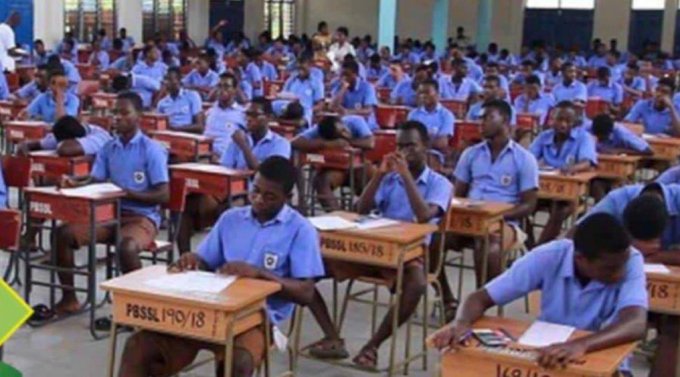
The industrial action had disrupted academic and administrative activities at the institutions since the beginning of September, creating uncertainty for students and staff over the continuation of lectures and other university programmes.
Why the unions went on strike
The JAC-ODSTI strike began on September 2 after the unions said the Ondo State Government had failed to implement agreements reached between the Federal Government and university-based unions.
The action involved members of the Senior Staff Association of Nigerian Universities (SSANU), Non-Academic Staff Union (NASU) and National Association of Academic Technologists (NAAT) across the three state-owned universities.
Among the issues raised were the implementation of the Federal Government/unions agreement, payment of outstanding allowances and arrears, and other staff welfare matters.
The unions had previously issued a 14-day ultimatum to the state government before commencing the indefinite strike.
They argued that the state government had announced a 60 per cent increase in subventions to tertiary institutions and approved implementation of the relevant Federal Government/unions agreement from August 2026, but that the expected funding had not been released as promised.
The unions consequently demanded payment of the Consolidated Tertiary Institutions Teachers' and other relevant allowances, alongside outstanding payments dating back to January 2026.
Governor's intervention leads to suspension
In announcing the suspension, JAC-ODSTI credited Governor Aiyedatiwa's financial intervention with helping to resolve the issues that triggered the strike.
The committee's statement was signed by its chairman, Tayo Ogungbeni, and secretary, Kunle Akinwonmi.
The committee said the strike was suspended with effect from Tuesday, September 29, and directed its members in the affected universities to resume work.
The unions also acknowledged the roles played by the state's Commissioner for Education, Science and Technology, Prof. Igbekele Ajibefun, and the governor's Special Adviser on Special Duties and Union Matters, Bola Taiwo, during efforts to resolve the dispute.
The suspension means workers represented by SSANU, NASU and NAAT are expected to return to their responsibilities at the three institutions.
Strike suspension does not settle every issue
Although the unions have suspended the industrial action, JAC-ODSTI made clear that some issues remain outstanding.
The committee appealed to the managements of the universities to urgently address the non-financial aspects of the Federal Government/unions agreement.
It warned that failure to resolve the remaining matters could create the conditions for another industrial dispute.
The suspension therefore provides an opportunity for negotiations and implementation of outstanding commitments rather than representing a complete settlement of every issue raised by the unions.
This distinction is important because the unions had previously rejected an agreement reached between the state government and some university union representatives, arguing that not all affected unions had participated in the negotiations.
Three universities affected
The industrial action affected three major state-owned universities in Ondo State.
Adekunle Ajasin University, Akungba-Akoko, is one of the state's established public universities and had already experienced separate industrial action by its Academic Staff Union of Universities (ASUU) branch earlier in 2026 over salary arrears.
In July, AAUA ASUU began an indefinite strike after lecturers said they had not received their May and June salaries. The action was later suspended after outstanding salaries were paid following a state government intervention.
Olusegun Agagu University of Science and Technology, Okitipupa, and University of Medical Sciences, Ondo, were also affected by the JAC-ODSTI action.
The September strike was particularly disruptive because SSANU, NASU and NAAT members withdrew administrative, technical and other services in addition to the effect on academic activities.
Students face the task of recovering lost academic time
The return of workers is expected to allow academic and administrative activities to resume at the affected universities.
However, the four-week disruption means university managements will have to determine how to adjust academic calendars, lectures, examinations and other activities that were interrupted.
The precise arrangements will depend on individual university managements and the unions.
At AAUA, the ASUU branch confirmed that financial intervention by the state government had led to suspension of its own strike, with a congress expected to formally direct members to resume academic activities.
The situation at UNIMED has required additional clarification, however.
UNIMED ASUU raises separate concerns
While the broader JAC-ODSTI action was suspended, reports indicate that the ASUU chapter at the University of Medical Sciences, Ondo, separately rejected an agreement reached between the Ondo State Government and ASUU at AAUA.
UNIMED ASUU chairman Abraham Oladebeye said the chapter was not invited to the meeting where the agreement was reached and therefore did not consider itself bound by its terms.
He also said the agreement did not reflect resolutions previously reached by the UNIMED ASUU congress.
This means the headline of a general suspension across all university union activity should be understood carefully: the JAC-ODSTI action involving SSANU, NASU and NAAT was suspended, while the position of individual ASUU chapters has not been completely uniform.
The distinction is significant for students at UNIMED because the broader resumption directive does not necessarily mean that every union dispute at the university has been fully resolved.
Dispute rooted in wider wage and welfare issues
The Ondo dispute is part of a wider series of disagreements between university unions and state governments over implementation of national agreements on salaries, allowances and working conditions.
The Federal Government and university unions reached agreements intended to address various conditions of service and remuneration, but implementation has required individual state governments to make corresponding financial provisions for their state-owned institutions.
In Ondo, the unions had argued that implementation had not occurred as expected and that outstanding payments remained due.
The state government, meanwhile, moved to negotiate with union representatives and provide financial intervention to ease the immediate pressure.
The resulting suspension demonstrates the role that state funding plays in the operation of publicly owned universities, particularly where staff remuneration and allowances depend substantially on state government financing.
What happens next
With workers directed to return, attention will now shift to implementation of the commitments that led to the suspension.
For the unions, the immediate priority will be ensuring that the financial intervention translates into the payments and measures they have demanded.
For university managements, the focus will be restoring normal academic and administrative operations and determining how to make up for time lost during the industrial action.
The unions have also called for the remaining non-financial components of the Federal Government/unions agreement to be addressed promptly.
That could determine whether the current suspension develops into a lasting resolution or whether unresolved issues lead to another confrontation.
For students, the immediate concern is the restoration of lectures, examinations and other academic activities after weeks of disruption.
The September strike began after earlier disagreements over implementation and payments, making the latest suspension another stage in a dispute that has already affected the academic calendar at Ondo's state-owned universities.
The intervention by Governor Aiyedatiwa has therefore created an opening for the institutions and unions to return to work while negotiations continue over the remaining issues.
For now, the official position of JAC-ODSTI is that its four-week industrial action has been suspended and members are to resume duties, while outstanding aspects of the agreements remain subject to further engagement.