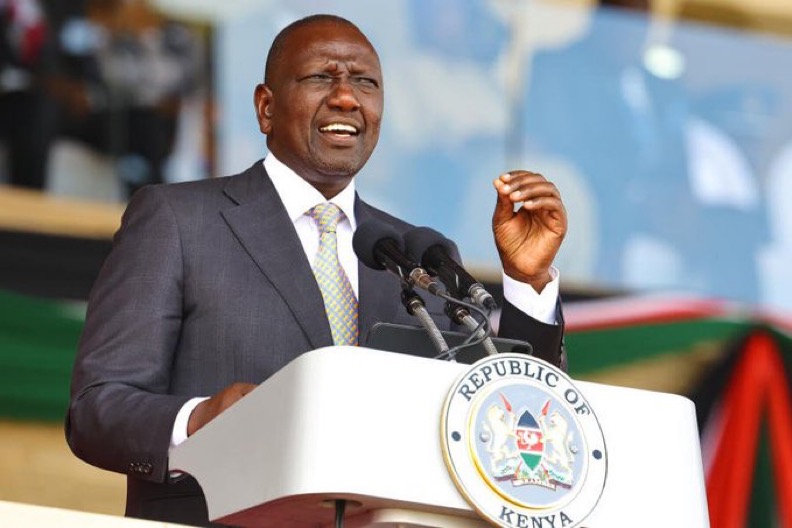
NAIROBI — Kenyan President William Ruto has officially unveiled a nationwide plan to introduce fully government-funded universal higher education. Beginning in September 2026, the ambitious initiative will eliminate tuition fees for all eligible Kenyan students entering public universities, state-run tertiary colleges, and Technical and Vocational Education and Training (TVET) institutions across the country.
President Ruto delivered the landmark policy declaration during a national address broadcast from State House in Nairobi. Framing the educational overhaul as an indispensable economic blueprint, the President asserted that removing financial barriers to tertiary instruction is crucial for democratizing youth opportunities, expanding the national tax base, and establishing Kenya as a premier knowledge-based economy in Sub-Saharan Africa.
Under the newly proposed framework, the Kenyan government will transition away from its previous targeted, band-based financial aid system in favor of a universal state sponsorship model. Under this revised arrangement, the national treasury will directly absorb baseline tuition costs for public post-secondary candidates, while maintaining a provision that allows parents and guardians to make voluntary financial contributions toward campus infrastructure development and student auxiliary services if they choose to do so.
The Strategic Shift: Merging Academic Degrees with Vocational Excellence
The universal funding architecture marks a deliberate departure from traditional educational models by placing vocational and technical training on an equal financial footing with four-year university degree tracks.
By expanding complete tuition coverage to Technical and Vocational Education and Training (TVET) centers alongside prestigious public universities, the administration aims to correct chronic structural mismatches within the domestic labor market. For decades, the East African nation’s tertiary education sector experienced an imbalance toward humanities and theoretical social science degrees, creating a shortage of certified technical specialists in modern agricultural engineering, digital infrastructure maintenance, renewable energy installation, and specialized industrial manufacturing.
The strategic design of the September 2026 rollout focuses heavily on boosting overall post-secondary enrollment by eliminating upfront tuition hurdles that historically forced thousands of qualified high school graduates into premature labor entry. The plan aims to curtail the reliance on heavy student loan debt burdens that previously led to high dropout rates among low-income undergraduates. Furthermore, the reform establishes standardized quality metrics across regional technical centers, ensuring that practical skill certifications meet international industrial benchmarks while aligning university research budgets directly with national economic development targets.
Legislative Pathways and the Abandonment of the Variable Funding Model
Before the universal sponsorship scheme can be fully deployed for the incoming September 2026 academic cohort, the executive proposal must clear significant legislative hurdles within the National Assembly.
Members of Parliament are scheduled to deliberate on major amendments to existing statutory instruments, including sweeping revisions to the Universities Act and the legal frameworks governing the Higher Education Financing scheme. Lawmakers must also construct statutory mechanisms within the national budget to authorize the multi-billion-shilling transfer of funds from the National Treasury directly to receiving public institutions.
The policy shift follows over a year of intense nationwide debate regarding educational equity, systemic debt traps, and campus funding deficits. Prior to this directive, Kenya operated under a variable funding model launched in 2023, which divided applicants into five distinct financial bands ranging from vulnerable to less needy to determine their respective proportions of state grants, government loans, and out-of-pocket family fees.
However, that variable system faced severe friction from student unions, institutional vice-chancellors, and civil society organizations due to widespread administrative delays, misclassification disputes, and persistent treasury shortfalls that left public universities accumulating billions of shillings in operational debt. The move to universal tuition sponsorship completely bypasses the administrative overhead of individual wealth assessments, replacing a bureaucratic system with a predictable, universal state guarantee.
Expert Analysis: Fiscal Sustainability, Infrastructure Readiness, and Economic Impact
While the prospective elimination of tuition fees has drawn widespread praise from youth advocacy networks, student representative councils, and households across Kenya, public finance experts and institutional administrators have voiced measured concerns regarding long-term fiscal execution and campus capacity.
Economists point out that guaranteeing free higher education across both university and vocational sectors will require a massive, recurring financial commitment from the state budget at a time when Kenya is navigating stringent debt-service obligations, structural adjustment programs, and delicate fiscal consolidation targets. Funding this mandate effectively will require either enhanced revenue collection through domestic taxation channels or a significant reallocation of capital away from other public infrastructure initiatives.
Concurrently, higher education administrators have pointed out operational challenges that must be addressed prior to the September 2026 student intake. University administrators highlight the need to protect per-student spending allocations to prevent public institutions from suffering operational deficits or faculty payroll delays. There is also an urgent necessity to expand physical campus infrastructure, including modern laboratory facilities, lecture halls, campus housing, and digital learning nodes, to accommodate the anticipated influx of new students. Finally, establishing transparent, automated fund disbursement channels between the National Treasury and tertiary institutions is vital to prevent mid-semester budget shortfalls.
Regional Context and Africa's Human Capital Imperative
President Ruto’s universal education directive places Kenya alongside a progressive group of African countries using state-backed educational access as a primary engine for long-term socio-economic transformation.
By removing financial barriers to tertiary skill acquisition, the Kenyan government aims to turn its massive demographic dividend into a regional economic asset. With one of the fastest-growing and most digitally connected youth populations on the continent, equipping young Kenyans with recognized academic degrees and accredited technical qualifications is expected to reduce long-term unemployment, stimulate domestic technology entrepreneurship, and position the country as a primary destination for foreign direct investment in technology, finance, and industrial manufacturing.
As the National Assembly prepares to consider the executive bill ahead of the September 2026 implementation date, the execution of Kenya’s universal higher education policy will serve as an important case study for governance and human capital development across developing economies worldwide.