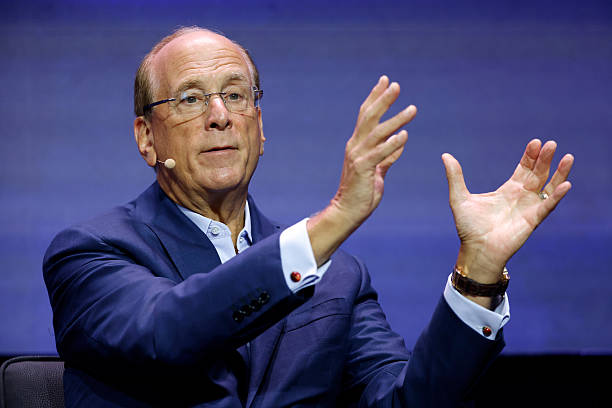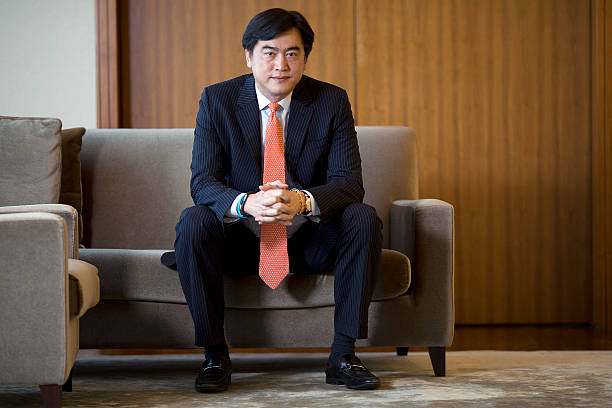
Former UBS Asia investment banking chief Joseph Chee says China could eventually reopen access to cryptocurrency trading under a tightly controlled regulatory framework, potentially triggering a new “supercycle” for Bitcoin and the broader digital-asset market.
Chee, who is now chairman and CEO of Solana Company, made the comments as debate grows over whether Beijing could eventually soften its restrictions on crypto. He said the key condition would be China's ability to manage the risks associated with digital assets.
Chee sees China as a potential catalyst
Speaking on CNBC’s Squawk Box Asia on October 6, Chee argued that the scale of China's market could have a major impact if mainland investors were once again allowed to trade cryptocurrencies through regulated channels.
His view is conditional rather than a prediction that a reopening is imminent. Chee said that if Chinese authorities find a way to manage crypto effectively while controlling the associated risks, the market could enter another major cycle of growth.
China remains one of the world's largest potential pools of crypto demand, but mainland authorities have maintained strict restrictions on cryptocurrency activity.
Hong Kong could provide the testing ground
Chee pointed to Hong Kong as an important part of any potential change in mainland policy.
Unlike mainland China, Hong Kong has developed a regulated framework for digital assets, including licensing arrangements for cryptocurrency platforms and rules covering stablecoins. Chee believes Beijing can observe how those policies work before deciding whether elements of the model could eventually be introduced elsewhere.
Hong Kong's different regulatory approach has therefore made the territory an important reference point for discussions about China's future crypto policy.
China has not announced a plan to reopen mainland cryptocurrency trading, however. Existing restrictions remain in place.
Capital flight remains a major concern
According to Chee, one of Beijing's biggest concerns would be capital leaving China.
The country maintains capital controls, and a broad reopening of cryptocurrency trading could make it more difficult for authorities to monitor money moving across borders.
Chee also identified regulatory knowledge as another obstacle, saying officials responsible for supervising the industry need to understand the technology and its risks before a broader opening can take place.
That means any eventual reopening could look very different from the largely unrestricted crypto markets that existed before China's crackdown.
Beijing could instead limit access to licensed exchanges, financial institutions or approved investors while maintaining strict monitoring of transactions.
What a Chinese reopening could mean for Bitcoin
A reopening would potentially give Bitcoin and other cryptocurrencies access to a huge pool of investors that has been restricted from official mainland trading for years.
That could increase trading activity, liquidity and demand for digital assets.
However, the size of any potential impact would depend heavily on the rules Beijing eventually adopts. A system that allows only institutions to participate would have a very different effect from one that permits millions of individual investors to trade through licensed platforms.
There is also uncertainty over how much additional demand a reopening would actually create. Chinese investors have continued to find indirect ways to access cryptocurrency despite the restrictions, meaning some existing demand could simply move into regulated channels rather than represent entirely new capital entering the market.
Chee's current position in the crypto industry
Chee's comments also come from someone with a direct interest in the expansion of the digital-asset market.
He previously led investment banking and global capital markets activities at UBS Asia and later founded Summer Capital. He is now chairman and CEO of Solana Company, a publicly listed digital-asset treasury company focused on accumulating and managing SOL.
That background gives him significant experience in traditional finance and capital markets, but his current position also means his company could benefit from broader cryptocurrency adoption.
For now, Chee's prediction remains a scenario rather than an announced policy direction. Beijing has not indicated that it is preparing to lift its mainland crypto restrictions.
If China does eventually establish a regulated pathway for mainland crypto trading, however, Chee believes the resulting increase in market access could become a major catalyst for Bitcoin and the wider cryptocurrency industry.