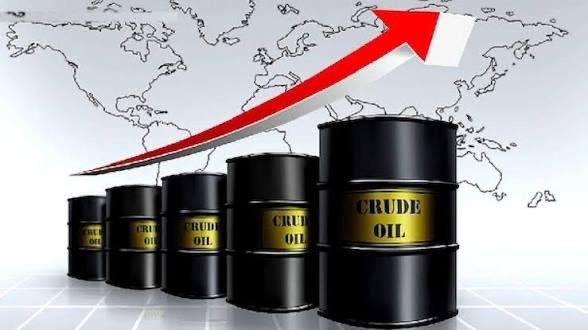
Oil prices climbed above $107 a barrel on Monday as fresh attacks on key energy infrastructure and shipping routes in the Middle East intensified concerns about disruptions to global crude supplies.
Brent crude futures for November delivery rose 2.8% to $107.54 a barrel, while U.S. West Texas Intermediate (WTI) crude for October gained 2.3% to $102.34 a barrel. Both benchmarks extended gains after moving back above the $100 threshold last week.
The latest increase came as traders reacted to growing risks around major oil transportation routes, including the Strait of Hormuz and the Red Sea region.
Saudi Pipeline Attack Adds to Supply Concerns
One of the major developments driving the market was a drone attack on Saudi Arabia's East-West Pipeline, an important alternative route for transporting crude from the kingdom's eastern oil fields to the Red Sea.
The pipeline has traditionally provided Saudi Arabia with a way to move oil towards the Red Sea without relying entirely on shipments through the Strait of Hormuz.
Following the attack, Saudi Arabia shut the pipeline while assessing the damage. The disruption has raised concerns about how much crude can be moved through alternative export routes if repairs take an extended period.
The East-West Pipeline is capable of transporting several million barrels of crude per day, making its disruption significant for global oil markets.
The Associated Press reported that the pipeline could remain largely out of service for three to five weeks, increasing uncertainty over the availability of Saudi crude in international markets.
Strait of Hormuz Remains a Major Risk
The developments have also renewed concerns about the Strait of Hormuz, one of the world's most important energy corridors.
The waterway connects the Persian Gulf with the Gulf of Oman and is used by major oil-producing countries in the region to transport crude to international markets.
Any prolonged disruption would have consequences far beyond the Middle East because Asian economies in particular rely heavily on oil shipments passing through the region.
The latest tensions have already increased shipping costs and forced energy traders to reassess the risks associated with transporting crude through vulnerable routes.
Reuters reported that threats to Gulf oil shipping and attacks affecting alternative routes have contributed to rising tanker rates and tighter availability of shipping services.
Red Sea Attacks Add Another Layer of Risk
The oil market is also being affected by developments around the Red Sea and Bab el-Mandeb Strait.
Attacks and threats involving commercial shipping have raised concerns that vessels carrying oil and other energy products could face greater security risks.
The Bab el-Mandeb is particularly important because it links the Red Sea with the Gulf of Aden and provides a route between the Indian Ocean and the Mediterranean through the Suez Canal.
When shipping companies face increased security risks, vessels can be forced to take longer routes, increasing transportation costs and extending delivery times.
That creates another potential source of upward pressure on energy prices even when crude production itself has not fallen by the same amount.
Oil Has Recovered Above $100
The latest move represents a significant change in the oil market after crude prices spent much of the earlier period below the $100 threshold.
Brent has now climbed more than 20% since the beginning of September, according to market data reported Monday, reflecting the growing geopolitical risk premium being incorporated into crude prices.
The market is particularly sensitive to developments that could remove barrels from international trade.
Oil prices respond not only to actual production losses but also to expectations about future supply. When traders believe that a major producer or transportation route could be disrupted, prices can rise before a significant physical shortage occurs.
That is what makes the current situation particularly important for consumers and businesses around the world.
Why the Price Increase Matters
Higher crude prices can affect economies through several channels.
The most immediate impact is normally felt in petroleum products such as gasoline, diesel and jet fuel.
When refiners pay more for crude, their costs can rise. Depending on local market conditions, those increases can eventually be passed on to motorists and businesses.
Higher fuel prices can also increase transportation costs because trucks, ships and aircraft depend heavily on petroleum products.
For businesses, more expensive transportation can increase the cost of moving food, manufactured goods, raw materials and other products.
Those additional costs can contribute to broader inflationary pressure.
Countries that import large quantities of crude are particularly vulnerable because higher international oil prices can increase their import bills and put pressure on foreign-exchange reserves.
Nigeria Could Feel the Impact
The latest surge is particularly relevant to Nigeria because crude oil remains central to the country's economy and government finances.
Nigeria is an oil-producing country, so higher international crude prices can potentially increase export earnings when production and sales volumes remain stable.
However, higher global oil prices can also affect domestic fuel prices because Nigeria's downstream petroleum market is increasingly exposed to market-based pricing.
For Nigerian consumers, the effect will depend on several factors, including international crude prices, exchange rates, refining costs, transportation expenses and domestic fuel-market conditions.
Nigeria's Dangote Refinery has already increased its petrol gantry price several times in recent weeks amid higher international crude prices and other market pressures.
A sustained rise in Brent crude could therefore add further pressure to the country's petroleum market if global prices remain elevated.
At the same time, Nigeria could benefit from stronger crude export revenues if higher prices persist and production remains near targeted levels.
Global Inflation Risks Increase
The renewed oil rally also presents a challenge for central banks.
Energy is a major component of household and business costs. A sustained increase in crude prices can feed into transportation, electricity generation, manufacturing and food distribution expenses.
That can make it harder for central banks to bring inflation down.
Reuters reported Monday that the oil surge was already complicating the outlook for monetary policy, with investors watching central-bank decisions closely as higher energy costs increase inflation concerns.
The Federal Reserve and other major central banks therefore face a difficult environment if energy prices continue climbing.
Higher interest rates can help contain inflation but may also weaken economic activity. Meanwhile, allowing an oil-driven inflation shock to persist could make price pressures more difficult to control.
Markets Watch for Further Escalation
The direction of oil prices in the coming days will depend heavily on whether attacks continue and whether damaged infrastructure can be restored quickly.
A short-lived disruption could allow prices to retreat if traders become confident that supplies will continue reaching international markets.
A prolonged shutdown of important infrastructure, however, could create a more serious supply problem.
The situation is particularly sensitive because several transportation routes are facing simultaneous security concerns.
The Saudi East-West Pipeline was designed partly to provide an alternative to the Strait of Hormuz. If both major routes remain under significant threat, the ability of producers to redirect crude becomes more limited.
That possibility is one reason traders are closely watching developments across Saudi Arabia, the Strait of Hormuz and the Red Sea.
For now, the market is pricing in a higher risk of supply disruption.
Brent's move to $107.54 a barrel and WTI's rise to $102.34 underline how quickly geopolitical developments can translate into higher energy costs.
Unless tensions ease or disrupted supply routes are restored, oil markets are likely to remain highly volatile, with further price swings possible as traders assess the extent and duration of the disruptions.