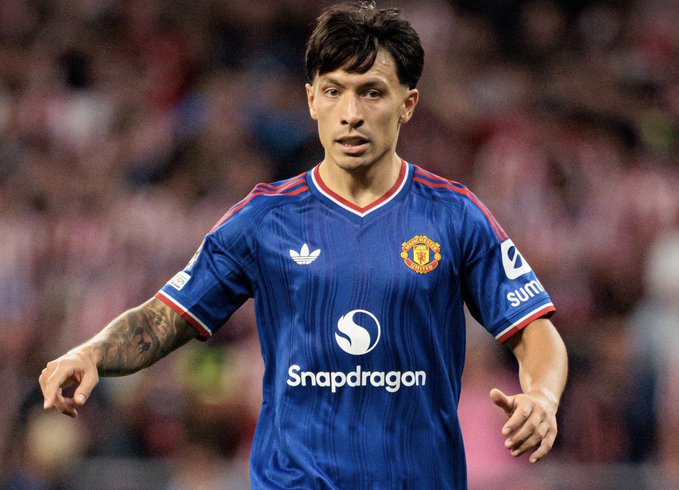
FIFA officials reportedly knew that Democratic Republic of Congo goalkeeper Lionel Mpasi was ineligible to represent the country when he played against Nigeria in a crucial 2026 World Cup qualifying playoff, according to documents reviewed by The New York Times and Le Monde.
The revelations have reopened Nigeria’s complaint over its controversial elimination from the World Cup qualification race and raised fresh questions about how FIFA handled the eligibility case.
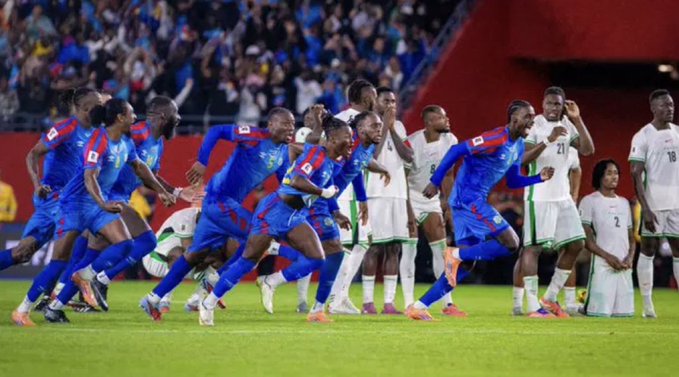
Nigeria lost to DR Congo 4-3 on penalties after a 1-1 draw in the African playoff final in Rabat, Morocco, on November 16, 2025. Mpasi played the entire 120 minutes before DR Congo won the shootout.
FIFA reportedly identified Mpasi's eligibility problem
According to the reports, FIFA's own legal officials determined that Mpasi had not completed the required process to change his international affiliation from France to DR Congo.
Mpasi was born in France and represented the country at youth level, including the France Under-17 team. Although he was eligible in principle to change his international allegiance because he had never played a senior competitive match for France, the necessary change-of-association procedure was reportedly never completed.
The issue reportedly dated back to 2021, when DR Congo began the process to have Mpasi recognised as eligible to play for the national team.
However, according to the documents cited by The New York Times and Le Monde, the process remained incomplete.
That meant Mpasi's appearance for DR Congo was potentially a breach of FIFA's player-eligibility regulations.
Mpasi played against Nigeria
The goalkeeper subsequently became an important part of DR Congo's qualification campaign.
He played against Nigeria in the decisive African playoff final, with DR Congo eventually winning on penalties after the match finished 1-1 following extra time.
Nigeria then filed a formal complaint with FIFA challenging the eligibility of several DR Congo players.
The Nigerian Football Federation had alleged irregularities involving the documentation and international status of foreign-born players representing DR Congo.
FIFA eventually rejected Nigeria's complaint.
At the time, the NFF appealed the decision, saying it was dissatisfied with the ruling by FIFA's Disciplinary Committee.
The latest reports, however, indicate that FIFA's internal legal review had identified the Mpasi problem.
FIFA considered several possible sanctions
The documents reportedly show that FIFA officials considered a number of possible responses to the eligibility issue.
One option was to award the match to Nigeria, which would have dramatically changed the World Cup qualification picture.
Another option involved allowing Nigeria to replace DR Congo in the subsequent intercontinental playoff against Jamaica.
Officials also considered imposing sanctions on DR Congo.
However, another proposed option was to take no action on the basis that Nigeria's complaint had been submitted after the applicable deadline.
FIFA ultimately rejected Nigeria's case on what it described as procedural or technical grounds, rather than imposing a sporting sanction that would have changed the result.
That decision is now at the centre of the controversy.
DR Congo went on to qualify for the World Cup
After defeating Nigeria, DR Congo advanced to the intercontinental playoff.
The team subsequently defeated Jamaica to secure qualification for the 2026 World Cup, ending a 52-year wait for another appearance at the tournament.
Mpasi was allowed to continue playing.
He ultimately featured for DR Congo at the World Cup, including the team's matches against Portugal and England. DR Congo reached the knockout stage before losing 2-1 to England in the round of 32.
The revelation therefore goes beyond Nigeria's original complaint.
If the reports are accurate, FIFA's internal officials were aware of the eligibility problem before DR Congo secured its World Cup place but did not prevent the team from continuing through the qualification process.
FIFA rules allow action even without a complaint
The case has also drawn attention to FIFA's disciplinary regulations.
According to an Associated Press report based on the documents, the relevant section of FIFA's disciplinary code allows the organisation to act ex officio in cases involving an ineligible player.
That means FIFA's disciplinary authorities have powers to initiate action independently rather than relying solely on a formal complaint from an opposing team.
This has raised questions about why Nigeria's complaint was dismissed on procedural grounds when FIFA officials were reportedly already aware of the underlying eligibility issue.
Previous FIFA cases have resulted in sporting sanctions for teams that fielded ineligible players.
In 2016, FIFA awarded Turkey a 3-0 victory over Greece after Greece was found to have used an ineligible player who had previously represented Australia at youth level.
FIFA also changed the results of two Bolivia World Cup qualifiers during the 2018 qualification campaign after finding that Bolivia had fielded an ineligible player who had represented Paraguay at youth level.
Nigeria could seek further action
The latest revelations have reignited anger in Nigeria, particularly because the Super Eagles' defeat against DR Congo directly ended their hopes of reaching the 2026 World Cup.
Nigeria has not been restored to the competition, and there is currently no indication that FIFA will change the qualification outcome.
However, Nigerian officials have indicated that they could pursue further action.
Nigeria Football Federation president Ibrahim Musa Gusau has called for an independent investigation into FIFA's handling of the case. Government representatives have also suggested that Nigeria could consider seeking financial compensation for losses associated with missing the tournament.
The issue is therefore likely to remain a major subject of discussion within Nigerian football.
FIFA rejects allegations of improper influence
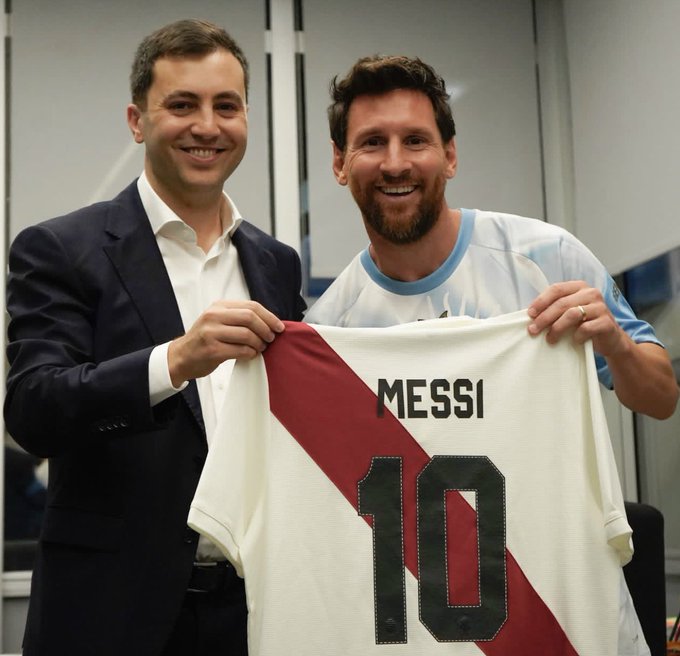
The controversy has also brought FIFA president Gianni Infantino into the discussion because of his relationship with Véron Mosengo-Omba, who became president of the Congolese football federation after DR Congo qualified for the World Cup.
Infantino and Mosengo-Omba have known each other since their university days in Switzerland and later worked together in football administration.
Mosengo-Omba was elected president of DR Congo's football federation in May 2026 after other candidates withdrew or were disqualified following changes to the federation's eligibility rules.
Some critics have questioned whether the relationship could have influenced FIFA's handling of the eligibility dispute.
FIFA has rejected those allegations and said its disciplinary bodies are independent. The organisation has also maintained that decisions are made according to the applicable regulations and the specific facts of each case.
There is currently no established evidence that Infantino personally intervened in the Mpasi case.
What the revelation means for Nigeria
The new reporting does not automatically mean Nigeria will be reinstated at the 2026 World Cup.
FIFA's previous decision against the NFF remains in place unless it is overturned through the relevant legal or disciplinary processes.
However, the reported internal documents could give Nigeria additional grounds to challenge how its complaint was handled.
The central question is no longer simply whether Nigeria submitted its complaint on time. It is whether FIFA's own officials had already determined that Mpasi was not properly eligible and, if so, why the governing body allowed him to continue playing in matches that directly affected World Cup qualification.
For Nigeria, the stakes are significant. The Super Eagles missed their second consecutive World Cup after also failing to qualify for the 2022 tournament.
For FIFA, the controversy creates another test of its disciplinary and governance systems and whether eligibility rules are applied consistently across international football.
As of Tuesday, FIFA, the Confederation of African Football, the Nigerian Football Federation and DR Congo's football federation had been approached for comment on the latest allegations.