One of the United Kingdom’s biggest oil refineries breached environmental permit conditions dozens of times in 2023 and 2024, with documents showing releases of toxic chemicals and oil into local waterways and surrounding areas.
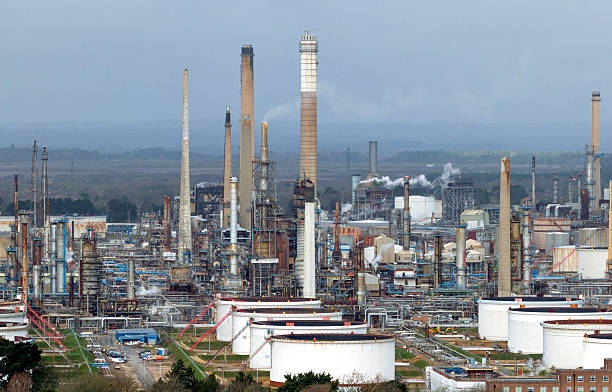
The findings concern the Stanlow oil refinery in Ellesmere Port, Cheshire, operated by EET Fuels, formerly known as Essar. Documents obtained by investigative journalists and reviewed by the BBC show that the Environment Agency (EA) identified 58 permit breaches over the two-year period.
The refinery is one of only four remaining oil refineries in the UK and processes around 10 million tonnes of crude oil annually, producing roughly 18% of the country's road fuel.
Toxic chemicals exceeded permitted levels
The Environment Agency documents show that several pollutants exceeded permitted limits.
Among them were cyanide, benzene, heavy oils and sulphur dioxide. In some cases, the recorded releases were several times higher than the limits established under the refinery's environmental permit.
Sulphur dioxide was released at up to seven times permitted levels, while cyanide discharged into waterways including the River Gowy was recorded at more than eight times the permitted level. Oil releases exceeded permitted levels by more than 13 times in some instances.
The River Gowy and Thornton Brook eventually connect to the Mersey Estuary, an area designated as a Site of Special Scientific Interest (SSSI).
The estuary provides habitat for a range of wildlife, including protected wading birds, Atlantic salmon and the critically endangered European eel.
More than a tonne of oil entered waterways
One of the most serious incidents occurred on 12 September 2024, when more than a tonne of oil was released over approximately 36 hours.
The oil entered Thornton Brook before spreading into the Mersey Estuary.
Natural England warned during an emergency response meeting that the pollution could affect vegetation and salt marshes and potentially expose birds to the oil.
A drone survey subsequently showed the pollution had travelled more than a mile along the river, with brown discolouration visible around a reedbed.
The incident prompted the deployment of a floating barrier and the temporary closure of local cockle beds while water quality was tested.
The beds were eventually cleared for reopening, but remained closed for five weeks, delaying income for local fishers.
The Environment Agency later classified the incident as a minor breach of the refinery's permit.
However, the agency has launched a separate criminal investigation into the September 2024 incident, which remains ongoing.
2023 leak raised groundwater concerns
Another significant incident occurred in July 2023, when rainwater containing oil leaked from the refinery.
The Environment Agency classified that incident as significant and received numerous complaints from local residents about smells coming from the site.
Subsequent investigations indicated that oil had contaminated groundwater.
EET Fuels said the amount of oil involved was small and that the contamination was confined to two boreholes within the refinery site.
Refinery disputes the significance of findings
EET Fuels said it takes its environmental responsibilities seriously and disputed the suggestion that the historical breaches reflect its current operations.
The company said the incidents highlighted in the documents were historical and that its environmental performance and governance had improved.
“Selectively chosen, historical permit exceedances from prior years in no way represent the current operational status, improving environmental performance, or governance of the refinery today,” the company said.
The refinery has also previously faced legal action over environmental breaches.
In 2026, Essar pleaded guilty to 12 charges relating to environmental offences committed between 2018 and 2020. Those charges formed part of a wider set of 491 breaches of environmental regulations recorded over a four-year period.
The company apologised for those historic incidents and said it had taken measures to address the causes of the breaches.
Natural England drops separate investigation
Natural England also investigated the September 2024 incident because of its potential impact on the protected Mersey Estuary.
The agency eventually ended its investigation, saying its assessment found that the environmental impact on the SSSI was minor.
However, internal correspondence showed that Natural England believed the refinery's permit did not specify a limit on the quantity of oil that could be released through a particular storm overflow.
Natural England said questions surrounding compliance with the environmental permit were ultimately matters for the Environment Agency.
Environmental campaigners have questioned whether regulators are doing enough to prevent pollution incidents and ensure that companies are held accountable when environmental limits are breached.
Environment Agency investigation continues
The Environment Agency has confirmed that it is investigating the reported breaches.
It is also conducting a criminal investigation into the September 2024 oil spill.
The agency said it has yet to determine what action will be taken over the 2023 incidents.
The findings have renewed scrutiny of environmental regulation around major industrial sites, particularly those operating close to waterways and protected ecosystems.
For communities around Stanlow and the wider Mersey Estuary, the investigation will determine whether the documented breaches result in further enforcement action and whether additional measures are needed to prevent future pollution.