The $19 million RAFFINOR-BF facility can initially refine 164 tonnes of gold annually, with plans to increase capacity to 515 tonnes as Burkina Faso seeks greater control over its mineral value chain.
Burkina Faso has inaugurated its first-ever national gold refinery, taking a major step toward processing more of its gold domestically rather than exporting the mineral in largely unrefined form.
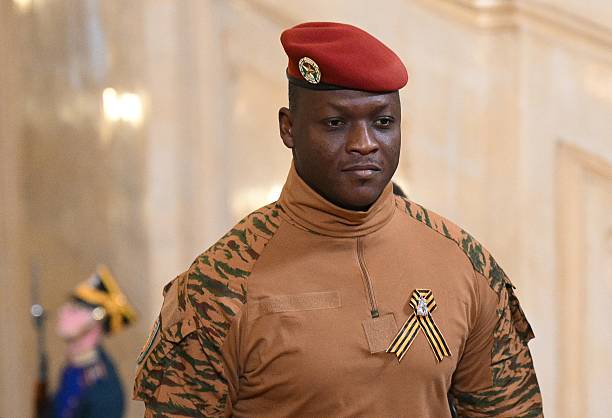
President Ibrahim Traoré inaugurated the Raffinerie Nationale d’Or du Burkina Faso (RAFFINOR-BF) in Ouagadougou on September 28, with the government describing the facility as part of its broader effort to retain more value from the country's mineral resources.
The refinery represents an investment of more than 11 billion CFA francs, equivalent to about $19 million, according to the Burkinabè government. It was financed through the state-owned National Precious Substances Company (SONASP), in partnership with private-sector investors.
Refinery can process 164 tonnes annually
RAFFINOR-BF has an initial refining capacity of 164 tonnes of gold per year.
The facility was designed as a modular operation, allowing additional refining lines to be installed as gold production and processing requirements increase. The government ultimately expects the refinery's capacity to reach 515 tonnes annually.
The five-hectare complex in Ouagadougou includes a foundry, gold-analysis laboratory, secure storage facilities, a jewellery unit and administrative buildings.
The facility is intended to carry out several activities that previously required gold to be sent outside the country, including refining, assaying and certification.
The first phase is designed to process gold from both industrial and artisanal mining operations, according to the government.
Government wants more value retained in Burkina Faso
The refinery is part of Traoré's broader push to increase domestic control over Burkina Faso's natural resources.
At the inauguration, Traoré said the country's objective was to move beyond extracting raw materials and sending them abroad for further processing.
“Our ambition is no longer to be just a country that extracts and takes its raw materials outside,” the presidency quoted him as saying. The government wants the wider mineral value chain to be developed within Burkina Faso.
The policy reflects a broader debate across Africa about whether resource-rich countries capture enough economic value from minerals extracted within their borders.
For Burkina Faso, gold is particularly important because it is one of the country's largest sources of export earnings.
Gold is central to Burkina Faso's economy
Burkina Faso is one of Africa's major gold producers.
The country produced more than 94 tonnes of gold in 2025, according to figures cited by the World Gold Council and reported by the Associated Press and Nigerian media.
The sector includes large industrial mines as well as extensive artisanal and semi-mechanised mining activity.
Government figures cited by People Daily put total gold production in 2025 at between 94 and 100.7 tonnes, with industrial mines accounting for about 58 tonnes and artisanal and semi-mechanised operations contributing more than 42 tonnes.
Gold also accounted for almost 94% of Burkina Faso's export earnings during the first seven months of 2026, according to the same report.
The concentration of export earnings in gold makes the ability to regulate production, sales and processing particularly significant for government revenue and foreign-exchange earnings.
From raw gold to refined bars
Before the refinery opened, much of Burkina Faso's gold was exported as doré, an impure gold-and-silver alloy produced after mining.
The new facility is intended to allow the country to undertake more of the processing domestically before the gold enters international markets.
RAFFINOR-BF is designed to produce fine gold bars, with reports indicating purity of up to 99.9% or higher depending on the processing specification.
Local processing also gives authorities greater capacity to assay and certify gold within the country.
That could help provide better information about the quantity and quality of gold entering the formal market, while potentially reducing the amount of value generated by downstream processing that leaves the country.
Thousands of jobs expected
The government expects the refinery to create approximately 100 direct jobs and more than 5,000 indirect jobs.
The indirect employment could come from activities connected to gold collection, transportation, security, technical services, jewellery manufacturing and other parts of the mining and processing value chain.
Traoré has also called on young Burkinabè to acquire the technical skills required to participate in the country's developing mineral-processing industries.
The government's objective extends beyond simply operating the refinery. It wants more stages of the gold industry — from extraction and processing to certification and manufacturing — to take place domestically.
Burkina Faso seeks greater control of mining sector
The refinery forms part of wider changes to Burkina Faso's mining sector under Traoré's military-led government.
Authorities have sought to increase the state's participation in mining projects and establish greater national control over mineral resources.
The government has increased the state's free-carried interest in mining projects from 10% to 15% and established the state mining company SOPAMIB, according to reports on the country's mining reforms.
The refinery therefore represents more than a new industrial facility. It is part of a broader strategy to change how Burkina Faso manages and benefits from its mineral resources.
A challenge remains: securing enough gold
Although the refinery has an initial capacity of 164 tonnes a year, Burkina Faso's reported annual gold production is below that level.
That means the refinery will need a reliable supply of gold from industrial and artisanal producers if it is to operate close to capacity.
The country's informal mining sector also presents regulatory challenges, including concerns over smuggling and the difficulty of accurately tracking production.
Burkina Faso has additionally faced persistent insecurity linked to jihadist violence, which has affected parts of its mining industry and contributed to challenges in regulating artisanal production.
The success of the refinery will therefore depend not only on its technical capacity but also on how effectively authorities can bring gold production and trading into formal channels.
Burkina Faso targets regional refining role
The government has set an even broader objective for RAFFINOR-BF.
Authorities want the facility eventually to process the country's entire domestic gold production and position Burkina Faso as a regional gold-refining centre in West Africa.
The move comes as several African countries seek to increase local processing of natural resources instead of exporting raw or semi-processed commodities.
For Burkina Faso, the immediate goal is to keep more of the economic value generated by its gold industry inside the country.
With its first refinery now operational, the government has established the physical infrastructure needed for that strategy. The next test will be whether RAFFINOR-BF can attract sufficient gold, operate consistently and translate increased domestic processing into measurable gains for state revenue, employment and the wider economy.