Canadian Prime Minister Mark Carney says Ottawa will use its legal powers to enforce employment commitments made when Cleveland-Cliffs acquired Stelco in 2024.
Canadian Prime Minister Mark Carney has threatened legal action against Cleveland-Cliffs over layoffs announced at its Canadian subsidiary Stelco, saying the U.S.-based steelmaker has binding employment obligations arising from its 2024 takeover of the company.
Carney said the Canadian government would pursue Cleveland-Cliffs “to the full extent of the law” after Stelco announced plans to indefinitely idle cold-rolled and coated operations at its Hamilton Works facility in Ontario. The move is expected to affect hundreds of workers.
The dispute has brought the future of hundreds of Canadian steel jobs into the middle of an escalating trade confrontation between Canada and the United States.
Stelco to idle Hamilton operations
Stelco announced that it would indefinitely suspend its cold-rolled and coated operations at its Hamilton facility, with the wind-down expected to begin around October 9.
The company said the decision was necessary because of difficult market conditions affecting demand for the products made at the facility.
Up to 500 employees could be affected across the Hamilton and Lake Erie Works operations, although United Steelworkers Local 1005 president Ron Wells has estimated that about 350 Hamilton steelworkers could lose their jobs.
Stelco plans to concentrate its steel production at its Lake Erie Works in Nanticoke, Ontario, rather than completely shutting down its Canadian steelmaking operations.
The company has said affected Hamilton employees would be offered opportunities to work at the Nanticoke facility, and Cleveland-Cliffs has said overall Canadian steel tonnage is expected to remain unchanged.
That means the announcement is not a complete closure of Stelco or a withdrawal from Canadian steel production. Instead, it involves the indefinite idling of specific finishing operations in Hamilton and a shift in production toward Nanticoke.
Stelco blames trade disruption and tariffs
In an internal memo to employees, Stelco said U.S. tariffs had significantly damaged the market for its cold-rolled and galvanized steel products.
The company said demand in its traditional markets fell by almost 25% in the second quarter of 2026 compared with the quarterly average in 2024. Demand in Canada itself was reported to have fallen by about 10%.
Reuters reported that the company attributed the decision partly to the impact of U.S. tariffs on Canadian steel. The United States has imposed tariffs of up to 50% on certain Canadian steel and aluminum imports.
Stelco has also pointed to continued steel imports into Canada as another factor affecting its market.
The company says the combination of weaker demand and trade disruption has made it difficult to maintain the Hamilton finishing operations at their previous level.
Why Canada says Cleveland-Cliffs may have legal obligations
The dispute stems from the conditions attached to Cleveland-Cliffs' acquisition of Stelco.
Cleveland-Cliffs agreed to acquire Stelco in 2024 in a deal valued at approximately C$3.4 billion. The Canadian government approved the transaction following a review under the Investment Canada Act.
That approval came with a package of legally binding undertakings lasting five years.
According to the Canadian government's October 2024 ministerial statement, Cleveland-Cliffs committed to maintaining at least the same number of unionized employees and the vast majority of non-unionized employees that Stelco had when the transaction was announced.
The company also committed to honour existing collective bargaining agreements as well as employee benefit and pension obligations.
Other undertakings included maintaining Stelco's head office in Hamilton, continuing operations under the Stelco name and making significant capital and research-and-development expenditures in support of the company's operations.
It is these employment commitments that Carney says give Ottawa a basis for action.
Carney says government will enforce the agreement
Speaking to reporters in Vancouver, Carney said the government would use its available powers to ensure Cleveland-Cliffs meets its obligations.
“The company made representations and has legal obligations for employment,” Carney said, adding that the government intended to pursue the matter “to the full extent of the law.”
Carney also said the federal government had financial assistance available to help protect jobs, although he did not publicly disclose the amount or conditions of the proposed support.
The government therefore appears to be pursuing two avenues: attempting to preserve employment through financial support and examining whether the company's contractual and regulatory commitments can be legally enforced.
However, the government has not announced a specific lawsuit, court filing or final legal remedy against Cleveland-Cliffs.
The current situation is therefore a threat of legal action and enforcement, rather than a completed legal case.
Cleveland-Cliffs CEO says he is prepared to fight
Cleveland-Cliffs CEO Lourenco Goncalves has defended the company's position and indicated that he is prepared to challenge the Canadian government in court.
Goncalves told Bloomberg that if Ottawa decided to pursue the company legally, Cleveland-Cliffs would fight the matter in court.
He has also argued that the problems facing Stelco are linked to the Canadian market and the economics of producing galvanized steel there.
The disagreement therefore goes beyond the number of jobs affected.
At its centre is a question over how the employment commitments made during the 2024 acquisition should apply when market conditions have changed substantially and Stelco says certain operations are no longer economically sustainable.
United Steelworkers examines legal options
The United Steelworkers union, which represents workers at Stelco's Hamilton facility, has also indicated that it is examining possible legal options.
Ron Wells, president of USW Local 1005, has criticized the decision and said the union is prepared to support government action against the company.
For workers, the immediate concern is the number of positions that will actually disappear from Hamilton and how many affected employees will be able to transition to jobs at Lake Erie Works.
Stelco has said it expects a significant number of affected employees to be offered positions at Nanticoke.
The union has raised concerns about whether there will be enough positions for everyone affected.
The broader Canada-U.S. trade dispute
The Stelco dispute is unfolding against the backdrop of a wider trade conflict between Canada and the United States.
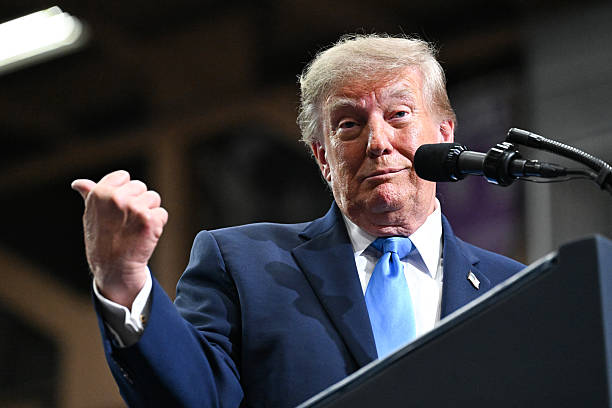
U.S. President Donald Trump has defended the country's steel tariffs as a means of protecting American steel production.
Cleveland-Cliffs has also publicly supported the tariffs. Goncalves has described the 50% U.S. steel tariffs as necessary for protecting American steelmakers.
At the same time, those tariffs have created additional pressure on Cleveland-Cliffs' Canadian operations because Stelco sells steel into markets affected by the trade restrictions.
This has produced competing economic pressures within the company's North American operations.
The company says Stelco must adapt to weaker demand and changing trade conditions, while the Canadian government says Cleveland-Cliffs must honour the employment commitments attached to its acquisition.
What happens next?
The immediate dispute is likely to focus on whether the planned layoffs and restructuring are consistent with the commitments Cleveland-Cliffs made when it purchased Stelco.
The Canadian government has not yet detailed what legal mechanism it would use or what specific remedy it would seek.
Meanwhile, Stelco's Hamilton operations are scheduled to begin winding down around October 9.
The company maintains that Canadian steel production will continue and that production will be concentrated at Lake Erie Works.
For the affected workers and the Canadian government, however, the issue is whether Cleveland-Cliffs can restructure the business while still complying with the five-year employment undertakings attached to the acquisition.
The legal and regulatory response from Ottawa could determine whether the company is required to modify its plans or provide further measures to address the employment commitments.
For now, no court has ruled that Cleveland-Cliffs breached those obligations, and the Canadian government's threatened legal action remains at the enforcement stage.