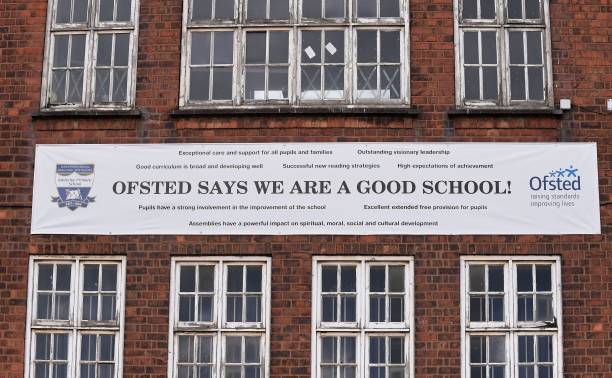
England's school inspection system is facing renewed pressure after two major headteachers' unions called for graded Ofsted inspections to be suspended, warning that the current framework is damaging staff wellbeing and undermining confidence in the education watchdog.
The Association of School and College Leaders (ASCL) has urged the government to pause inspections and review the system, describing the new grading framework as an “overbearing mess”. The union has also raised the possibility of industrial action if meaningful changes are not made.
The National Association of Head Teachers (NAHT) has separately campaigned for graded inspections to be halted, arguing that the process places excessive pressure on school leaders and teachers.
The renewed calls came as an independent evaluation commissioned by the Office for Standards in Education, Children's Services and Skills (Ofsted) highlighted continuing concerns about the impact of inspections on staff mental health.
Headteachers' unions demand an inspection pause
The ASCL said it had passed a motion of no confidence in Ofsted's leadership, expressing concern that the organisation had failed to address the problems associated with its revised inspection framework.
The union's general secretary, Pepe Di'Iasio, said discussions with the inspectorate had not delivered the changes needed to protect members' welfare and morale.
The organisation is calling for the government to suspend graded inspections while a fundamental review takes place. It has also said it will consult members about the possibility of an informal ballot on industrial action if the situation does not improve.
The NAHT has made similar demands, arguing that inspections can leave school leaders feeling anxious, overwhelmed and demoralised.
Its campaign proposes replacing graded inspection reports with shorter narrative assessments that explain a school's strengths and identify areas requiring improvement.
The union believes this approach could preserve accountability while reducing the pressure associated with high-stakes judgements.
Both organisations have stressed that they are not necessarily opposing school inspections themselves. Their principal concern is the way schools are assessed and the consequences that grades can have for staff, pupils and institutions.
New Ofsted framework faces growing criticism
Ofsted introduced its renewed education inspection framework in September 2025, with inspections under the new approach beginning in November that year.
The system replaced the previous single overall school judgement with report cards that assess several aspects of a school's performance.
The framework evaluates schools across multiple areas using a five-point grading scale, intended to provide parents with a more detailed picture of how an institution is performing.
The changes followed widespread criticism of the previous system, under which a single judgement could have significant consequences for a school's reputation and leadership.
However, the new framework has also attracted complaints from school leaders who say that multiple graded categories can create additional pressure rather than reduce it.
The NAHT has argued that the revised approach remains excessively focused on grades and can leave leaders feeling that important aspects of their schools' work are not adequately recognised.
The union has also raised concerns about how inspections account for circumstances such as pupils' special educational needs and the challenges faced by individual schools.
Ofsted survey highlights staff wellbeing concerns
The debate intensified following the publication of an interim evaluation of Ofsted's renewed inspection framework on October 9, 2026.
The research, conducted by independent research agency IFF Research, examined feedback from education providers inspected under the revised system.
According to the findings reported by The Guardian, 88% of school leaders who responded said inspections had negatively affected staff mental wellbeing. Around 29% said the impact had been significant.
The findings have raised questions about whether the revised framework has achieved its objective of making inspections less stressful for education professionals.
School leaders' representatives criticised Ofsted's interpretation of the findings, arguing that the reported effects on staff wellbeing should prompt more substantial action.
The ASCL said the inspection system needed urgent reform, while the NAHT called for a halt to graded inspections to give the government time to develop a different approach.
However, the survey also identified positive experiences. Ofsted said most respondents viewed inspections as respectful and collaborative, and a clear majority believed the process would help their institutions improve.
The research therefore presents a mixed picture: some providers welcomed aspects of the revised approach, while concerns about workload and staff wellbeing remain substantial.
The findings also have limitations. Fewer than one in four schools invited to participate agreed to complete the survey, meaning the responses may not represent the experiences of all schools inspected under the framework.
Ruth Perry's death remains central to the debate
The controversy over Ofsted inspections has been shaped by the death of Ruth Perry, the headteacher of Caversham Primary School in Reading.
Perry died by suicide in January 2023 after an Ofsted inspection downgraded her school from outstanding to inadequate.
An inquest concluded that the inspection had contributed to the deterioration of her mental health.
Her death prompted renewed scrutiny of the consequences of inspection grades and the pressure experienced by school leaders when their institutions are assessed.
Although Ofsted subsequently changed its inspection approach, unions say the latest concerns suggest that significant problems remain.
The NAHT has shared accounts from members who described inspections as deeply distressing. Some school leaders have reportedly considered leaving the profession or retiring early because of the pressure associated with another inspection.
The debate has consequently expanded beyond the technical details of grading to include questions about staff retention, professional wellbeing and the culture of school accountability.
Education Secretary signals willingness to review the system
Education Secretary Lucy Powell has indicated that the government is willing to examine concerns about Ofsted's approach.
According to reporting by The Guardian, Powell wants the inspectorate to reconsider aspects of its framework following complaints that the revised system remains stressful for teachers and school leaders.
The Department for Education has said inspection and accountability are important, but that they must be proportionate, reflect the circumstances in which schools operate and support improvement rather than add unnecessarily to existing pressures.
The government therefore faces a difficult balancing act.
Parents need reliable information about school standards, and inspections can help identify weaknesses that require intervention. At the same time, an accountability system that places excessive pressure on school staff risks damaging morale and making leadership positions less attractive.
A suspension of graded inspections would give ministers time to consider alternatives, but it would also raise questions about how schools should be monitored during a review.
The unions' proposals suggest one possible direction: retain external scrutiny while placing greater emphasis on narrative feedback, professional support and clear recommendations for improvement.
Whether the government adopts that approach remains uncertain.
Ofsted defends the revised inspection approach
Ofsted has defended its reforms, pointing to positive feedback from education providers who took part in the independent evaluation.
Chief Inspector Sir Martyn Oliver said the findings showed the inspectorate was moving in the right direction, while acknowledging that workload and staff wellbeing remained challenges across education.
The watchdog has maintained that inspections are intended to serve the interests of children and learners while helping institutions improve.
Its published findings highlighted positive views about inspectors' conduct, the usefulness of the new report cards and the extent to which inspections considered individual providers' circumstances.
The disagreement centres on whether those improvements are sufficient to address the pressures described by school leaders.
Union representatives argue that positive feedback from some providers does not outweigh the reported harm to staff wellbeing. Ofsted, meanwhile, maintains that the renewed approach has improved aspects of the inspection experience.
The interim evaluation does not settle that dispute. Its findings provide evidence of both positive experiences and continuing concerns, while the limited survey response rate makes it difficult to draw conclusions about every school.
A fuller evaluation is expected to provide further evidence about how the framework is working.
What happens next?
The immediate question is whether ministers will agree to suspend graded inspections while the framework is reviewed.
The ASCL and NAHT want action rather than further assurances, and the possibility of industrial action adds pressure on the government and Ofsted to reach an agreement with school leaders.
Any reform will need to address several competing priorities: maintaining educational standards, providing parents with useful information, identifying underperforming schools and protecting the wellbeing of the professionals responsible for delivering education.
For now, graded inspections remain at the centre of a growing dispute between the inspectorate and school leadership organisations.
The government's response could determine whether the current system is adjusted again or replaced by a substantially different model of school evaluation in England.