France has promised to deploy 3,000 additional substitute teachers to struggling secondary schools in an attempt to ease nationwide student protests over teacher shortages, overcrowded classrooms and deteriorating school facilities.
Education Minister Édouard Geffray announced the measure on Thursday, October 8, after tens of thousands of demonstrators took to the streets across the country demanding increased education funding and better learning conditions.
The announcement represents the government's first major concession to the student movement, but protesters have vowed to continue demonstrations until their broader demands are addressed.
Government Moves to Address Teacher Shortages
Geffray said the additional teachers would be deployed to schools facing the most severe staffing shortages, with assignments scheduled to begin between Friday and Tuesday.
Speaking during a television interview, the education minister said the teachers would be arriving at the affected institutions within hours. He also authorised the recruitment of several hundred additional staff members.
The immediate deployment is intended to help schools where students have experienced prolonged periods without teachers, leaving gaps in their education and placing additional pressure on existing staff.
According to Reuters, the government estimates that the emergency recruitment programme will cost several dozen million euros.
However, student representatives have argued that the shortage of teachers is only one part of a much wider crisis affecting France's public education system.
Why French Students Are Protesting
The protests began on September 21 at a secondary school in Créteil, in the Paris region, before spreading to other parts of France.
Students have raised concerns about vacant teaching positions, overcrowded classrooms, lengthy timetables and school buildings that they say are no longer suitable for learning.
Some have also criticised the Parcoursup university admissions platform, arguing that the system contributes to stress and inequalities in access to higher education.
The movement has grown beyond its original base, with demonstrations and school blockades spreading to cities including Paris, Marseille, Lille and Rennes.
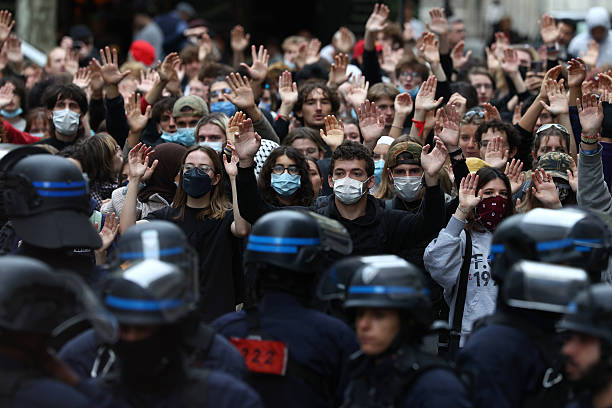
On Thursday, October 8, approximately 71,500 people participated in demonstrations nationwide, according to France's Interior Ministry. Around 24,500 took part in Paris alone. Authorities reported more than 500 arrests that day.
The scale of the demonstrations has increased pressure on President Emmanuel Macron's government to respond to complaints about staffing, infrastructure and education funding.
Students Say More Funding Is Needed
Student organisations have welcomed the commitment to provide additional teachers but insist that emergency recruitment alone will not resolve the underlying problems.
Protesters have called for increased investment in schools, improved classroom conditions and measures to address inequalities between educational institutions.
Some student groups have demanded approximately €10 billion in additional education funding.
Their concerns include deteriorating buildings, insufficient classroom resources and the difficulties teachers face when managing large classes without adequate support.
The government is also under pressure to balance demands for greater public spending against concerns about France's budget deficit and national debt.
Education funding is a major issue in discussions surrounding the country's proposed 2027 budget. The government has argued that additional resources must be allocated while maintaining control over public finances.
Police Response Adds to Tensions
The demonstrations have also become a source of controversy over the police response to school blockades and street protests.
Clashes between demonstrators and riot police have resulted in injuries and arrests. Some protesters and rights advocates have accused security forces of using excessive force, while authorities have pointed to incidents of violence and damage during demonstrations.
Following serious injuries involving crowd-control weapons, the government suspended the use of stun grenades at demonstrations.
Prime Minister Sébastien Lecornu has acknowledged the anger among young people and said the government cannot ignore their concerns. He has also called for dialogue while condemning violence.
Authorities have opened internal investigations into alleged police misconduct, adding another dimension to a dispute that initially centred on conditions inside schools.
The police response has become an important issue for demonstrators, some of whom now want accountability for injuries sustained during protests alongside improvements to education.
Government Faces Pressure to Deliver Lasting Reforms
The promise of 3,000 additional teachers comes as the French government attempts to prevent the protests from spreading further.
The immediate challenge is ensuring that the promised staff reach the schools that need them most. The longer-term challenge is addressing the wider complaints about school infrastructure, class sizes, teaching vacancies and educational inequality.
Student groups have indicated that they do not consider the government's announcement sufficient to end the movement.
A coordinating committee of student and professional organisations has called for another day of action on Tuesday, October 13, signalling that demonstrations could continue despite the concession.
The government must now demonstrate whether the additional teachers will translate into meaningful improvements for students and whether further measures will follow.
For thousands of young people across France, the dispute is about more than staffing numbers. It concerns the quality of public education, equal access to learning and the government's willingness to address problems that students say have persisted for years.