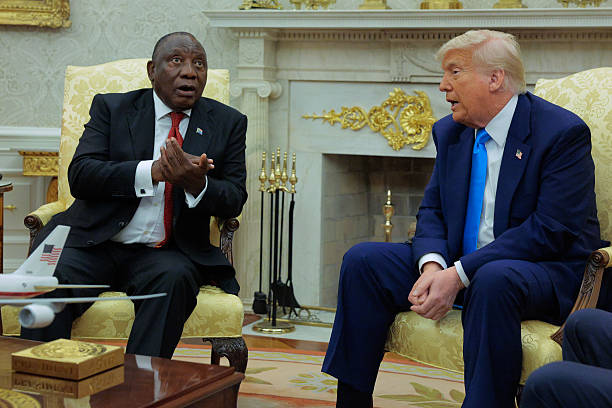
PRETORIA — The United States government has initiated a phased drawdown of funding for HIV/AIDS programs in South Africa, effectively ending two decades of support provided through the President’s Emergency Plan for AIDS Relief (PEPFAR). This decision, which marks the conclusion of an era of American health assistance that historically contributed roughly $400 million annually to South Africa’s public health infrastructure, has sent shockwaves through the nation’s healthcare sector. While the drawdown is framed by the U.S. State Department as a necessary move toward "self-reliance" for a middle-income country, the practical implications for millions of South Africans living with HIV are profound and alarming.
The Scope of the Funding Cut
For twenty years, PEPFAR served as the backbone of South Africa’s HIV/AIDS response. While South Africa largely funds the procurement of its own antiretroviral (ARV) drugs, PEPFAR funding was the critical engine that powered the operational side of the response. This included the salaries of thousands of community health workers, data capturers, and tracing teams who ensure that patients remain in treatment.
As of June 2026, the phased withdrawal is nearing completion. Reports indicate that the loss of this funding has already led to the closure or severe scaling back of programs in vulnerable districts. Organizations such as the Anova Health Institute have reported the layoff of thousands of health workers, which has directly disrupted prevention and treatment services across public clinics. Researchers warn that this disruption is not merely an administrative issue; it threatens to reverse two decades of progress, potentially increasing new infections and leading to the emergence of drug-resistant HIV strains due to interrupted treatment cycles.
Geopolitical Tensions and Diplomatic Context
The reduction in aid is inextricably linked to a broader deterioration in bilateral relations between Washington and Pretoria under the Trump administration. The U.S. State Department has explicitly characterized the funding cut as a response to South Africa’s failure to address specific U.S. policy requests. These tensions have been fueled by a series of contentious diplomatic and economic disputes:
-
Disputed Genocide Allegations: President Donald Trump has frequently championed claims regarding a "white genocide" and the persecution of white Afrikaner landowners in South Africa. These claims have been consistently refuted by the South African government and discredited by international observers, yet they remain a centerpiece of the administration’s rhetoric toward Pretoria.
-
Economic Policy Disagreements: Washington has targeted South Africa’s Black Economic Empowerment (BEE) policies, which Pretoria maintains are essential tools for rectifying the systemic economic inequality inherited from the apartheid era.
-
International Alliances: Bilateral ties have further soured due to South Africa’s legal case against Israel at the International Court of Justice and its strengthening diplomatic engagement with Iran.
The administration’s decision to cut aid is viewed by many as the weaponization of public health assistance. While Pretoria has reaffirmed its commitment to a mature and resilient bilateral relationship, it has also actively sought alternative funding streams from the Global Fund, the World Bank, and UNAIDS to fill the fiscal gap.
The Human Toll and Future of the Response
South Africa continues to hold the world’s highest number of HIV-positive citizens, with approximately eight million people living with the virus. Current estimates show that while roughly 6.2 million people are on antiretroviral treatment, the program's growth has stalled, and the country remains significantly short of its 95-95-95 UNAIDS targets—specifically the goal of having 95% of diagnosed individuals on treatment.
The withdrawal of PEPFAR funding forces a precarious transition. South Africa’s Ministry of Health has insisted that it had long been preparing for a "Plan B" toward fiscal self-reliance, acknowledging that the cut did not come as a surprise given the initial aid freezes. However, the reality on the ground is stark. As resources are reallocated, the government has been forced to prioritize treatment continuity over prevention, which health experts warn will lead to an inevitable rise in new infections among vulnerable groups, particularly adolescent girls and young women.
The ongoing standoff underscores the limits of using foreign aid as a lever of diplomatic influence in an increasingly multipolar world. For South Africa, the challenge is now to sustain a massive public health program under extreme fiscal constraints, while navigating the geopolitical pressures of a strained partnership with its most significant historical donor. The coming months will be a definitive test of the resilience of South Africa’s health system and its ability to absorb the loss of its most critical operational partner.