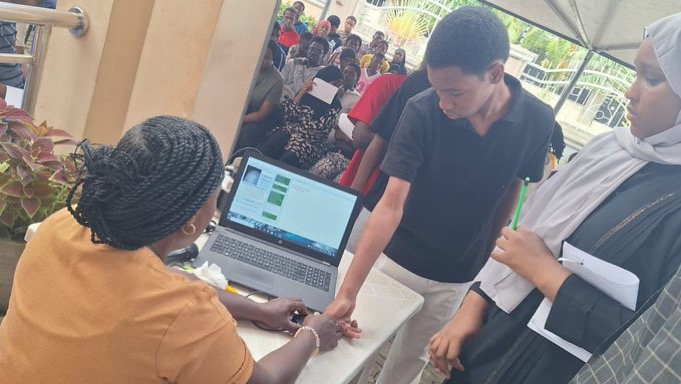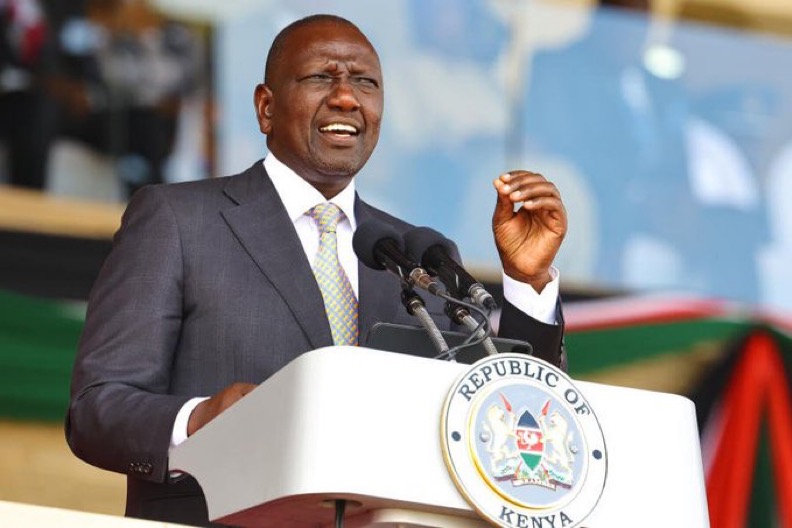
ABUJA — The Federal Government of Nigeria has institutionalized the National Learning Assessment (NLA). Following the successful conduct of the inaugural nationwide exercise held from June 29 to July 3, 2026, Minister of Education, Dr. Maruf Tunji Alausa, confirmed that this diagnostic evaluation will henceforth be a recurring, routine exercise conducted every three years.
A New Era of Evidence-Based Policy
The NLA represents a departure from fragmented educational data collection. By harmonizing multiple existing assessment models into a single, standardized national framework, the government aims to create a reliable benchmark for evaluating the quality of education across all 36 states and the Federal Capital Territory (FCT).
"We need accurate data to benchmark our literacy and numeracy levels and develop targeted interventions that will truly improve learning outcomes," Dr. Alausa stated while monitoring the assessments in the FCT. The data generated from this exercise is intended to provide the Federal Ministry of Education with a clear picture of whether Nigerian pupils are acquiring essential knowledge and skills at critical stages of their development.
The Scope of the NLA
Unlike traditional promotional examinations that determine whether a student moves to the next grade, the NLA is strictly diagnostic. It is designed to evaluate the performance of the education system as a whole, rather than the progress of individual students.
-
Targeted Levels: The assessment focuses on specific transition and milestone points:
-
Primary 3 & 5: To measure foundational literacy and numeracy.
-
Junior Secondary School 2 (JSS 2): To evaluate progress midway through basic secondary education.
-
Senior Secondary School 2 (SSS 2): To assess readiness for final certification and post-secondary transitions.
-
-
Core Competencies: The NLA rigorously evaluates students in:
-
English Language (Literacy)
-
Mathematics (Numeracy)
-
Basic Science and Technology
-
Cognitive and non-cognitive skills
-
Institutionalizing Accountability
The decision to conduct the NLA every three years—with the next major cycle supported by dedicated budgetary provisions through the Universal Basic Education Commission (UBEC) starting in 2029—marks a significant shift in government accountability. This policy aligns with the Nigeria Education Sector Renewal Initiative and President Bola Tinubu’s broader agenda to modernize the nation's educational infrastructure.
By moving away from sporadic, inconsistent testing toward a predictable, three-year cycle, the government intends to track trends in student achievement, identify specific regional learning gaps, and measure the effectiveness of ongoing curriculum reforms.
A Call for Cooperation
The Federal Government has emphasized that the success of the NLA depends on the cooperation of all stakeholders, including school administrators, teachers, and parents. Because the assessment does not impact a student's academic certification or grade promotion, it serves purely as a research tool to improve the system from within.
As the Ministry of Education continues to advocate for stronger regulation—particularly concerning the standards of private schools—the NLA stands as a beacon of the government's commitment to ensuring that every Nigerian child, regardless of their school environment, receives an education that is globally competitive and fundamentally sound.