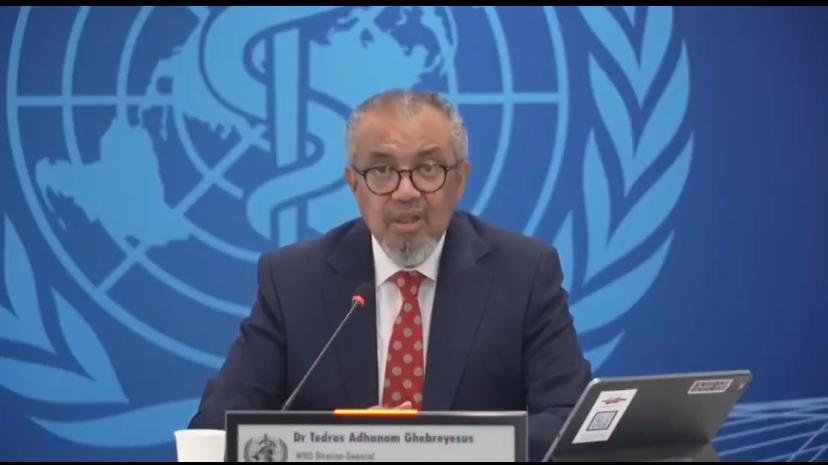
GENEVA — The World Health Organization (WHO) has moved swiftly to calm global anxieties regarding an outbreak of hantavirus aboard a cruise ship in the Atlantic Ocean. During a high-profile press conference in Geneva, health officials emphasized that while the situation involving the MV Hondius is serious, it does not pose a widespread global threat comparable to the SARS-CoV-2 pandemic.
Containment Efforts and Current Case Count
WHO Director-General Tedros Adhanom Ghebreyesus confirmed that eight cases have been linked to the Dutch-flagged vessel thus far. Of these, five have been laboratory-confirmed as the Andes strain of hantavirus, while three remain suspected. The outbreak has already proved tragic, with three recorded deaths among passengers traveling from Argentina toward Cabo Verde.
The international response has been extensive, involving health authorities across three continents. Despite the United States and Argentina withdrawing from the WHO earlier this year, Tedros noted that both nations are "working closely" with the organization to track the virus. This cooperation is vital, as 30 passengers from 12 different countries disembarked from the ship following the first fatality on April 24. Contact tracing is currently active in all involved nations to ensure every traveler is accounted for.
Transmission Realities vs. Pandemic Fears
Dr. Maria Van Kerkhove, WHO’s director of epidemic and pandemic preparedness, was firm in her assessment of the risk. "This is not COVID. This is not influenza," she stated, explaining that hantaviruses typically require extreme close contact for human-to-human transmission to occur. Unlike respiratory viruses that spread easily through the air via asymptomatic carriers, the Andes strain the only hantavirus known to spread between people is generally transmitted through direct contact with infected bodily fluids or deep, prolonged proximity.
CDC Acting Director Jay Bhattacharya echoed this sentiment, reassuring the American public that the risk remains "very low." He emphasized that hantavirus is not spread by people who do not show symptoms, which significantly limits its potential to spark a silent epidemic. Currently, an international team of experts from the WHO, the European Centre for Disease Control (ECDC), and Dutch public health offices are stationed aboard the MV Hondius to oversee the medical response.
The Investigation into the "Bird Watching" Exposure
The investigation into the "index case" is currently focused on an excursion taken in South America before the ship set sail. Tedros indicated that several of the initial patients participated in a bird-watching trip in rural Argentina, an environment where the long-tailed pygmy rice rat the primary carrier of the Andes virus is prevalent.
As a precaution, the WHO has issued the following guidance for those potentially exposed:
• Extended Monitoring: Passengers who were aboard the vessel are advised to monitor their health for a full six weeks, which represents the upper limit of the virus's incubation period.
• Symptom-Based Isolation: Unlike the blanket lockdowns of 2020, individuals do not need to self-isolate unless they begin to develop a fever or respiratory distress.
• Awaiting Results: Authorities are currently awaiting test results for a flight attendant who had contact with an infected passenger, as well as two individuals currently in isolation in Singapore.
While the case-fatality rate for hantavirus is high, the localized nature of the current outbreak and the specific requirements for its spread suggest that the MV Hondius situation will remain a contained maritime health crisis rather than a global public health emergency.