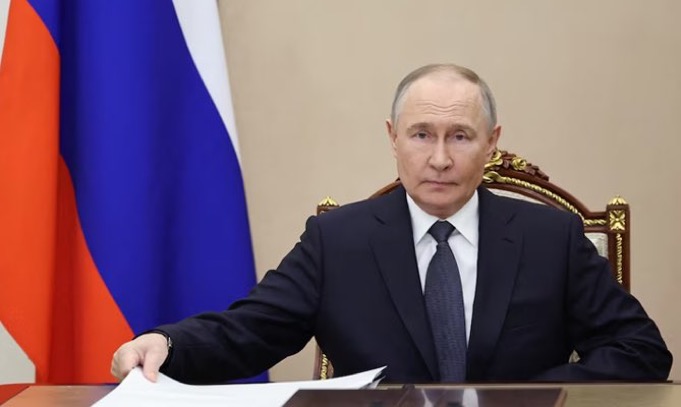
MOSCOW — Russian President Vladimir Putin has committed approximately $26 billion to a massive state-supported national initiative dubbed “New Health Preservation Technologies.” The ambitious program is designed to combat aging, extend human lifespan, and develop revolutionary medical breakthroughs, including organ replacement technologies.
Key Pillars of the Initiative
The program represents one of the most substantial state-led investments in longevity science worldwide. Its research scope covers several high-tech fields aimed at radical life extension and regenerative medicine:
Organ Engineering: Scientists are pursuing two primary strategies for organ replacement: bioprinting (3D-printing living human tissue) and xenotransplantation (cultivating human-compatible organs within genetically modified mini-pigs).
Gene Therapy: Researchers are actively developing gene-therapy treatments intended to slow down the biological aging process at a cellular level.
Regenerative Medicine: The project focuses on enhancing the body’s natural capacity for self-repair, including research into cellular rejuvenation and combating brain aging.
Leadership and Oversight
The initiative is personally overseen by figures close to the Kremlin, reflecting the high priority placed on these advancements by the Russian leadership:
Maria Vorontsova: The President’s eldest daughter, an endocrinologist who leads state-funded genetics programs.
Mikhail Kovalchuk: A physicist and the head of the Kurchatov Institute, often described as the intellectual architect behind the Kremlin’s longevity drive.
While critics and independent scientists have expressed skepticism—noting a lack of peer-reviewed results in international journals and concerns that the research may be driven more by political goals than established science—Russian state officials remain optimistic. Deputy Science Minister Denis Sekirinsky recently highlighted the initiative as a "promising avenue" in the global fight against age-related decline.
Context and Ambition
The initiative has drawn global attention not only for its scale but also for the underlying focus on immortality. In 2025, during a meeting with international counterparts, President Putin discussed the potential for radical organ transplantation, suggesting that medical advancements could one day allow humans to "live younger."
While the stated goal of the program is to improve the quality of life and decrease mortality for the general population, observers suggest that the project also serves as a reflection of the Kremlin's desire to position Russia at the forefront of futuristic health technologies.