Education stakeholders and union leaders have issued a stern call to the Nigerian government to address the escalating insecurity within the nation’s schools. Speaking during a recent panel session in Lagos, representatives from the Nigeria Union of Teachers (NUT), the All Nigeria Confederation of Principals of Secondary Schools (ANCOPSS), and the Teachers Registration Council of Nigeria (TRCN) categorized insecurity as the most critical threat facing the country’s education sector.
Crisis Overview: Schools Under Attack
The stakeholders highlighted a distressing trend of violence, including mass abductions of students and teachers. According to reports cited during the session, an estimated 603 students and teachers have been kidnapped across seven major mass abductions between March 2024 and May 2026. This occurs despite the implementation of the Federal Government's ₦145 billion Safe Schools Initiative, which has now become the subject of calls for a formal investigation into potential fund mismanagement.

Recent high-profile incidents have intensified the crisis:
-
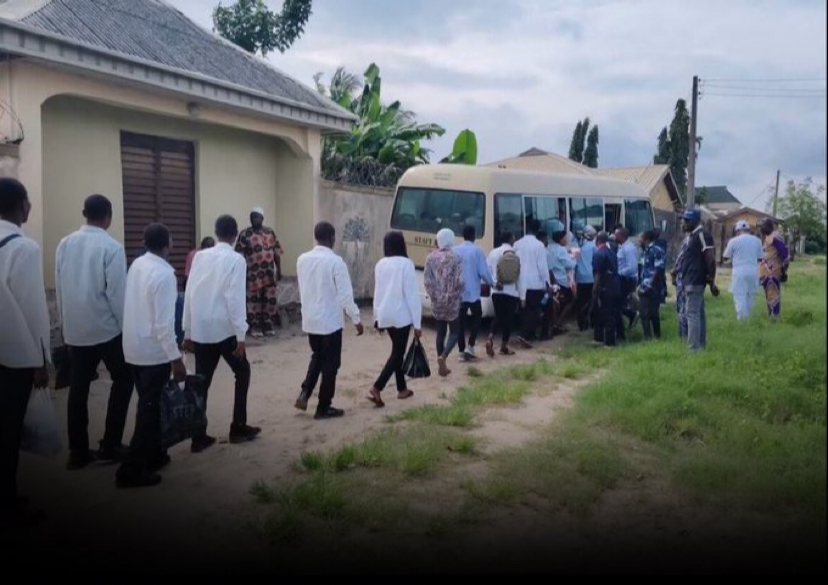
Oyo State (May 15, 2026): Armed men attacked three schools in the Ahoro-Esinle and Yawota communities of Oriire Local Government Area, leading to the abduction of a school principal, seven teachers, and over 30 pupils. Reports indicate one teacher was killed during the assault.
-
Borno State (May 15, 2026): Simultaneous attacks on schools in the Askira-Uba and Chibok Local Government Areas resulted in the abduction of more than 40 pupils.
The Impact on Educators and Students
Union leaders emphasized that the psychological and physical toll on the education workforce is unsustainable.
-
Prioritizing Safety: Gbenga Ayetoba, Lagos NUT Secretary, stated that the debate over teacher remuneration has been superseded by the fundamental need for safety: "It is only when you are alive that you can think of [welfare]."
-
Teacher Vulnerability: Beyond terrorism, leaders decried a growing culture of disrespect and violence against teachers, alleging instances where students sometimes backed by parents harass and threaten educators.
-
Infrastructure Failures: Olushola Masheyi (ANCOPSS) highlighted that many schools are "sitting ducks," citing lack of fencing, security guards, and modern communication infrastructure in schools situated near high-risk zones like national parks.
Demands for Reform
Stakeholders are urging the government to move beyond rhetoric and implement tangible solutions to restore the sanctity of the classroom:
-
Massive Investment: Leaders called for increased funding for infrastructure, security, and teacher development, pointing to the success of rapid-development nations that prioritize education.
-
Restoring Prestige: There is a collective call to improve teacher welfare to attract high-quality talent back to the profession and move away from the current trend where teaching is viewed as a "last resort."
-
Accountability: With allegations of mismanagement surrounding the Safe Schools Initiative, stakeholders are demanding greater transparency and accountability to ensure that security funds actually reach the school level to protect children and staff.