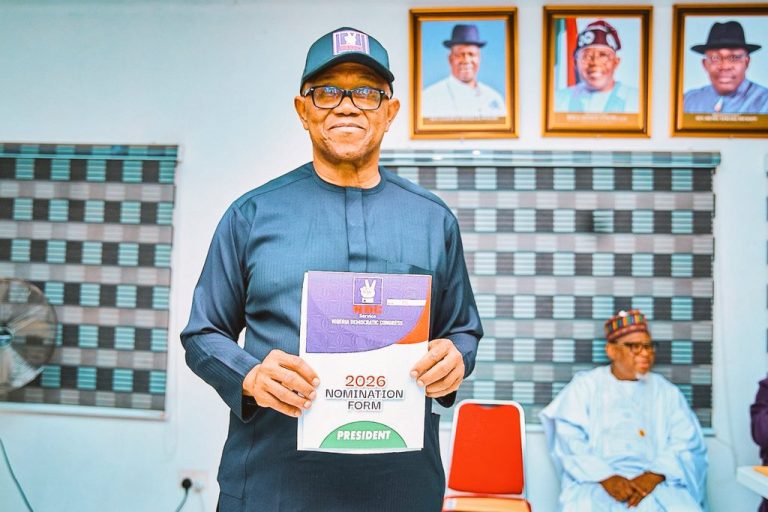
LOKOJA — The Federal High Court in Lokoja has overturned its own previous judgment that had mandated the Independent National Electoral Commission (INEC) to register the Nigeria Democratic Congress (NDC) as a formal political party. The ruling, delivered on Friday by Justice Isah Dashen, effectively vacates the landmark December 10, 2025, decision, forcing the nascent party to face an uncertain future as it grapples with a high-stakes battle over its legal identity and branding.
The Core of the Dispute: Intellectual Property and Procedural Fairness
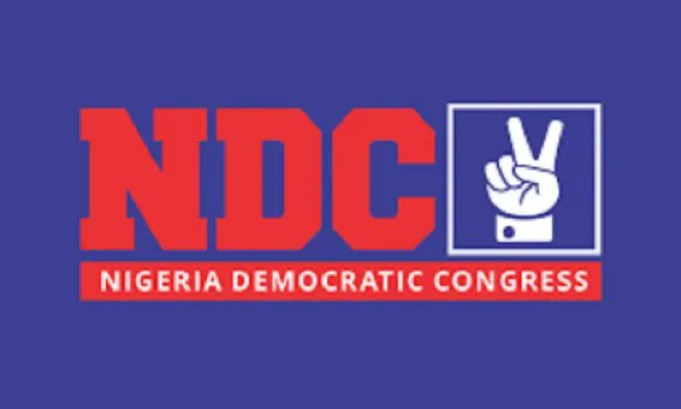
The reversal stems from a robust legal challenge brought forward by the Peace Movement Party (PMP). The PMP, an established entity, sought to block the NDC’s registration by claiming exclusive ownership of the logo—a symbol of peace—which the NDC had adopted in its own registration filings with INEC.
Justice Dashen’s ruling was centered on the concept of procedural fairness. In the original 2025 judgment, the court had ordered INEC to proceed with registration without the presence of the PMP. Justice Dashen found this to be a fundamental error in judicial process. By failing to join the PMP—the acknowledged proprietor of the contested mark—to the initial lawsuit, the court had effectively deprived the PMP of its constitutional right to a fair hearing.
"The initial judgment was fundamentally flawed because the proprietor of the contested mark was not allowed to defend its interests," the court noted. In legal terms, the failure to join a "necessary party" is a fatal flaw that undermines the integrity of the resulting order. Consequently, the court ordered that all administrative actions taken by INEC based on that flawed judgment be set aside, essentially hitting the reset button on the NDC’s official recognition.
INEC’s Mandate: Returning to Status Quo
Following the court's directive, INEC is now legally obligated to revert to the status quo that existed prior to December 2025. This has immediate and severe consequences for the Nigeria Democratic Congress:
-
Withdrawal of Certification: INEC is mandated to immediately withdraw the certificate of registration previously issued to the NDC.
-
Removal from Records: The party must be scrubbed from the commission’s register of recognized political organizations.
-
Ballot Exclusion: The NDC is barred from appearing on any official ballot papers for upcoming local or national elections until the substantive issues of the case are resolved.
Counsel for the PMP, C.S. Ekeocha, hailed the decision as a vindication of their client's intellectual property rights. By forcing the court to acknowledge the missing necessary parties, the PMP has successfully leveraged procedural law to halt the NDC's political momentum.
Implications for the NDC
This development introduces significant volatility for the Nigeria Democratic Congress, which had been actively organizing, conducting primary elections, and building momentum for the upcoming electoral cycle. The ruling does not permanently ban the NDC from existing, but it effectively strips the party of its legal shield.
Read Also: NDC Leadership Dismisses Allegations of Primary Election Irregularities
The party now finds itself in a state of administrative limbo. Being removed from INEC’s records means that any actions the party has taken in the interim—such as conducting primaries or nominating candidates—may face severe legal scrutiny or outright invalidation. For candidates who had pinned their political aspirations on the NDC platform, this is a significant blow that necessitates urgent legal intervention.
The Path Forward: A Fresh Trial
Justice Dashen’s ruling serves to vacate the previous order rather than provide a final verdict on the party's eligibility. This sets the stage for a "fresh substantive trial." In this new phase, all relevant parties—the PMP, the NDC, and INEC—will be required to present their evidence regarding the ownership of the contested logo and the legality of the registration process.
The court has made it clear that this new trial is the only path forward to ensure that all competing claims to the political branding are adjudicated with transparency and fairness. The focus of the upcoming litigation will likely shift to:
-
Copyright and Trademark Validity: Who truly owns the contested peace symbol, and does the PMP’s claim hold legal weight in the context of political registration?
-
Statutory Compliance: Beyond the logo, did the NDC meet all other statutory requirements for registration under the Electoral Act?
-
Judicial Precedence: How will this reversal impact the legitimacy of other political entities formed under similar contested circumstances?
Democracy and the Role of Intellectual Property
This case highlights an often overlooked intersection in Nigerian politics: the convergence of political party registration and intellectual property law. As political parties continue to adopt branding, logos, and slogans to differentiate themselves in a crowded field, the courts are increasingly becoming arbiters of political identity.
As Nigeria approaches its next general elections, this legal battle will be closely watched by political analysts, party strategists, and the electorate. For the NDC, the challenge is clear: they must navigate this judicial hurdle quickly if they hope to return to the political arena in time for the upcoming ballot. For INEC, the situation underscores the complexity of managing registration in a litigious environment where every detail—from a party’s name to its logo—can become a battleground.
Do you think disputes over intellectual property, such as logo ownership, should be enough to halt the registration of a political party, or should the focus remain solely on the party's platform and candidates? Let us know your thoughts below.