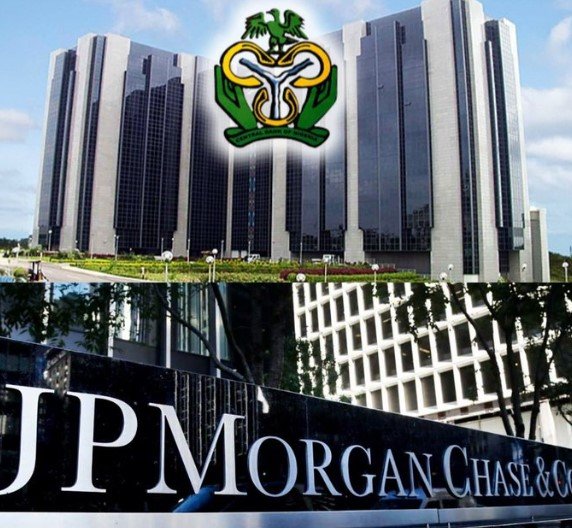
J.P. Morgan plans to establish a merchant bank in Nigeria, with operations targeted to begin before the end of 2026, subject to regulatory approval.
The planned expansion was announced by Dapo Olagunji, Managing Director of J.P. Morgan West Africa, during the Nigeria–Asia Financial Connectivity Dialogue in Singapore on October 8.
The event was convened by the Central Bank of Nigeria (CBN) in collaboration with J.P. Morgan, Nigerian Exchange Group (NGX) and FMDQ Group, bringing together investors, financial institutions and businesses to discuss stronger financial connections between Nigeria and Asian markets.
J.P. Morgan Targets 2026 Launch
Olagunji announced the proposed merchant banking operation while welcoming participants to the Singapore dialogue.
The planned bank would represent an expansion of J.P. Morgan's existing activities in Nigeria and provide the global financial institution with a broader operating presence in the country's financial services sector.
However, the proposed launch is not yet final. J.P. Morgan must obtain the necessary regulatory approvals before the operation can commence.
The bank has targeted a start date before the end of 2026, but no specific launch date has been announced.
The proposed operation is expected to strengthen J.P. Morgan's relationships with Nigerian businesses and deepen its participation in the country's capital markets.
Expansion Comes as Nigeria Seeks More Foreign Investment
The announcement comes as Nigerian authorities seek to attract greater international participation in the country's financial markets.
CBN Governor Olayemi Cardoso has been engaging financial institutions and market participants in Singapore as part of efforts to strengthen Nigeria's connections with Asian financial markets.
During the dialogue, Cardoso highlighted reforms aimed at improving the functioning of Nigeria's financial system, increasing market liquidity and strengthening investor confidence.
He said reforms to the foreign exchange market were designed to remove distortions, improve transparency and create conditions capable of encouraging investors to remain in the country over the long term.
The CBN's engagement in Singapore also included discussions with the Monetary Authority of Singapore and a memorandum of understanding with the Global Finance & Technology Network focused on financial innovation and institutional connections.
J.P. Morgan's planned merchant bank therefore comes within a wider effort to connect Nigerian financial markets more closely with international investors and institutions.
J.P. Morgan Already Has a Presence in Nigeria
The planned merchant bank would not represent J.P. Morgan's first presence in Nigeria.
The financial institution already operates in the country through businesses including asset and wealth management and commercial and investment banking.
J.P. Morgan has maintained links with Nigeria for decades, while its Lagos operations have served corporate and institutional clients.
The proposed merchant bank would nevertheless broaden the firm's direct operating footprint and potentially allow it to provide a wider range of financial services to Nigerian businesses and investors.
Earlier reports indicated that J.P. Morgan had been considering expanding its Nigerian operations and applying for a merchant banking licence from the CBN.
In January 2025, a delegation led by Olagunji also met with Wale Edun, who was then Nigeria's Minister of Finance and Coordinating Minister of the Economy, in Abuja to discuss investment opportunities.
Nigeria Recently Added to J.P. Morgan Bond Index
The planned merchant bank comes shortly after another significant development involving J.P. Morgan and Nigeria's financial markets.
On September 15, J.P. Morgan included Nigeria in its new Government Bond Index–Emerging Markets Edge (GBI-EM Edge), assigning Nigerian securities a 7.4% weighting.
The index tracks local-currency government bonds across emerging and frontier markets and was launched at the end of September.
Nigeria's inclusion came nearly 11 years after the country was removed from J.P. Morgan's earlier Government Bond Index in 2015.
The new weighting increases the visibility of Nigerian government securities among international fixed-income investors and potentially provides another channel through which global investors can assess the country's domestic debt market.
The bank's renewed engagement with Nigeria's debt and banking markets comes as authorities attempt to strengthen confidence in the country's financial system and attract longer-term capital.
What a Merchant Bank Could Mean for Nigerian Businesses
Merchant banks generally focus on corporate and institutional financial services rather than the conventional retail banking services offered by commercial banks.
Depending on the structure and licence ultimately approved by Nigerian regulators, J.P. Morgan's proposed operation could support areas such as corporate financing, capital-market transactions, investment banking and other services for large businesses and institutional clients.
Financial analysts cited by BusinessDay said the proposed expansion could increase access to financing for major transactions and bring international expertise into Nigeria's financial services industry.
Ayodeji Ebo, chief executive officer of MDU Capital, said the move could reflect J.P. Morgan's interest in higher-value transactions in Nigeria, while Ayokunle Olubunmi of Agusto & Co. said the entry could strengthen the range and sophistication of financial services available to Nigerian businesses.
However, the actual impact will depend on the bank's eventual operating structure, the services it offers and the scale of its Nigerian operations.
Regulatory Approval Remains the Key Next Step
Despite the planned 2026 commencement, J.P. Morgan's merchant banking operation remains subject to regulatory approval.
The CBN will therefore play an important role in determining the licensing and operating framework for the proposed institution.
The regulatory process will establish the precise structure of the bank and the activities it will be permitted to undertake in Nigeria.
J.P. Morgan has not announced a specific opening date beyond its target of commencing operations before the end of the year.
Until the approvals are completed, the project should therefore be regarded as a planned expansion rather than an operational banking business.
A Deeper Link Between Nigeria and Global Capital
J.P. Morgan's proposed merchant bank would add another layer to the financial institution's relationship with Nigeria.
Its planned banking presence, combined with Nigeria's inclusion in the GBI-EM Edge, comes at a time when the country is seeking to attract international capital and develop deeper domestic financial markets.
For Nigerian companies, a larger presence by a major international financial institution could potentially provide additional access to global financing networks and expertise in complex transactions.
For international investors, stronger links between Nigerian institutions and global banks could make it easier to participate in the country's capital markets.
The outcome, however, will depend on regulatory approval and the bank's eventual business strategy.
For now, J.P. Morgan is targeting a launch before the end of 2026, marking a potentially significant expansion of its long-standing involvement in Nigeria's financial sector.