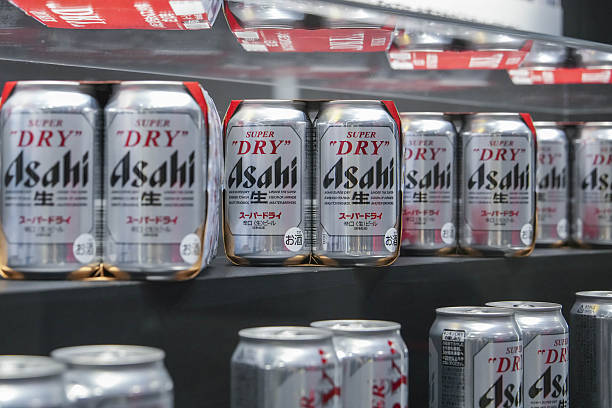
Japan’s four biggest beer manufacturers have been raided by the country’s antitrust regulator over allegations that they coordinated beer prices, in a case that could develop into a criminal investigation.
The Japan Fair Trade Commission (JFTC) conducted compulsory investigations on Wednesday, October 7, targeting Asahi Breweries, Kirin Brewery, Sapporo Breweries and Suntory Spirits over suspected violations of Japan’s Antimonopoly Act.
The four companies dominate Japan’s domestic beer market, collectively controlling more than 90% of the market. Their combined position means any coordinated pricing could have significant consequences for wholesalers, retailers, restaurants and ultimately consumers.
JFTC investigates suspected price coordination
The investigation centres on allegations that the four breweries coordinated the timing and scale of price increases for beer and other beer-like alcoholic beverages sold to wholesalers.
Japanese media reports said company sales executives may have shared information about planned price increases, including the timing and size of increases. The alleged coordination is believed to have continued over several years.
The suspected conduct reportedly involved beer, low-malt beer and other beer-like products. Investigators are examining whether executives from the companies discussed pricing through industry-related meetings and other contacts.
The JFTC's investigation is being conducted under its compulsory criminal investigation powers. That means authorities can search premises and seize evidence as part of an investigation into suspected serious violations of competition law.
The regulator is reportedly considering whether to refer the case to prosecutors for possible criminal charges.
A JFTC official confirmed that the agency was conducting an investigation into suspected price cartel activity involving the four alcohol manufacturers and said authorities would work to establish the facts.
Four companies confirm investigations
All four beer manufacturers confirmed that their businesses had been subject to the investigation and said they would cooperate with the authorities.
The companies involved are Japan's largest beer producers: Asahi, Kirin, Suntory and Sapporo.
The investigation does not mean the companies have been found guilty of price fixing. The allegations remain under examination by the JFTC, which will have to determine whether the companies actually coordinated their pricing in violation of competition law.
The investigation nevertheless represents a significant escalation because it involves compulsory searches rather than a routine regulatory inquiry.
Why the alleged cartel matters
Price fixing is considered particularly serious under competition law because it can undermine competition between companies that would otherwise be expected to independently determine their prices.
If rival manufacturers agree on when or by how much to increase prices, wholesalers and retailers may have fewer opportunities to negotiate lower prices. Higher wholesale prices can also eventually affect what consumers pay.
Japan's beer market is particularly significant because of the dominance of the four companies. The Japan Times reported that the combined market controlled by the four exceeds 90%, while the broader domestic beer and low-malt beer market represents a major segment of the country's alcoholic beverage industry.
According to Japan's National Tax Agency, domestic sales by manufacturers of beer and low-malt beer amounted to about ¥1.61 trillion ($10.1 billion) in 2024, highlighting the size of the sector under investigation.
Price increases had been blamed on rising costs
Japan's major brewers have increased prices in recent years, citing higher costs for raw materials, transportation and other inputs.
The companies all raised prices in October 2022 and April 2025, according to reports on the investigation. Those increases are now among the pricing decisions being examined by regulators.
The investigation will therefore examine whether the companies independently arrived at their pricing decisions based on their own costs and business strategies, or whether there was coordination between competitors.
The distinction is central to the case.
Japan's Fair Trade Commission has stressed that price is an important element of competition and that companies are expected to make pricing decisions independently, based on their own costs and business strategies.
Shares fall after raids
The investigation immediately affected the publicly traded beer companies.
Shares of Sapporo, Kirin and Asahi fell during Wednesday's trading session after news of the raids emerged. Reuters reported that Sapporo shares fell as much as 3.73%, while Kirin briefly lost more than 3% and reached its lowest level in more than three months. Asahi fell nearly 2.5% before recovering some of the decline.
Suntory Holdings is privately held, so it does not have a publicly traded share price that could react in the same way.
Investors are likely to be watching the investigation for signs of potential financial penalties, legal action or reputational damage.
Criminal complaint could follow
One of the most significant aspects of the investigation is the possibility that the JFTC could file a criminal complaint with prosecutors.
Japanese authorities have the ability to impose financial penalties and other measures in competition cases. The size of any potential surcharge would depend on the findings, including the duration and scale of any violation.
Japanese reports said the JFTC is examining documents and other evidence obtained during Wednesday's raids before deciding its next steps.
For now, no criminal charges have been announced against the four companies or their executives.
Investigation comes as beer consumption declines
The investigation comes at a challenging time for Japan's traditional beer industry.
Domestic beer consumption has declined substantially from its peak in the 1990s, with demographic changes, population decline and changing drinking habits contributing to weaker demand.
Brewers have consequently been dealing with a combination of declining domestic volumes and rising production and distribution costs.
The pressure on the industry has made pricing increasingly important for the major companies, while also increasing the importance of competition between the dominant manufacturers.
The JFTC's investigation will now determine whether that competition was compromised.
What happens next?
Investigators are expected to examine documents seized from the companies and question relevant personnel as they attempt to establish whether a cartel existed and how any alleged coordination operated.
If the JFTC finds evidence of unlawful price coordination, the case could result in administrative penalties and potentially a criminal referral to prosecutors.
For the four beer giants, the immediate response has been to confirm cooperation with the investigation.
The case is still at the investigation stage, meaning allegations of price fixing have not yet been proven. Any final determination will depend on the evidence gathered by Japan's competition authorities.
The investigation is nevertheless significant because it involves the country's four dominant beer manufacturers and concerns products purchased by millions of consumers.
With the JFTC now examining whether pricing decisions were coordinated rather than independently made, the findings could have consequences for Japan's beer industry, its leading manufacturers and the way alcoholic beverages are priced across the country.