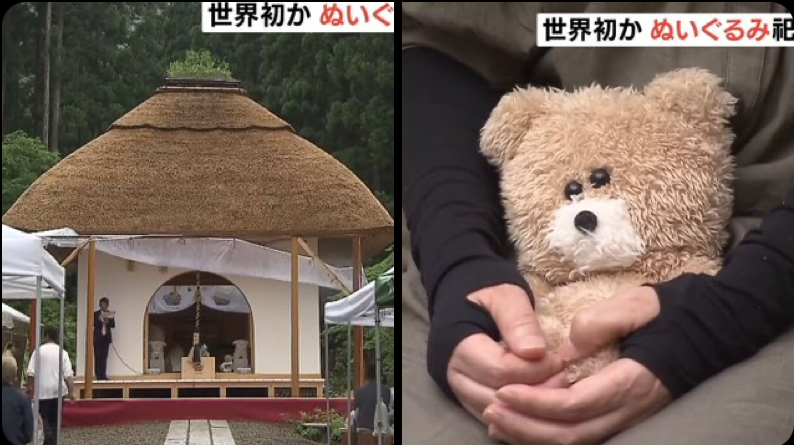
KYOTO — In a quiet, forested corner of the Miyama area in Nantan City, Kyoto Prefecture, a unique site of spiritual reflection has officially opened its doors. The Nuigurumi Jinja (Plush Toy Shrine), which held its founding ceremony on June 20, 2026, serves as a sanctuary dedicated entirely to the memorialization and care of plush toys. While the concept of a shrine for inanimate objects may seem unusual to some, the site acknowledges a profound reality: for many, stuffed animals are not merely toys, but lifelong companions, confidants, and essential anchors of emotional support.
The Origin: From Hospital to Holy Ground
The shrine was established under the guidance of Komichi Horiguchi, the visionary founder of the Osaka-based Nuigurumi Byoin (Plush Toy Hospital). Horiguchi’s hospital has spent years providing “medical care” to more than 26,000 stuffed animals, repairing everything from worn-out seams to missing limbs. Through this experience, Horiguchi witnessed the deep, often unspoken, emotional bonds that form between owners and their plush companions.
Recognizing that even the most skilled repairs eventually reach their limits, Horiguchi envisioned the Nuigurumi Jinja as a sanctuary for plushies that have reached the end of their lives or are beyond restoration. The shrine is rooted in the indigenous Shinto belief that all things—including inanimate objects that have shared a life with humans—possess a spirit or life force and deserve to be farewelled with grace, respect, and profound gratitude.
Architecture and Atmosphere: A Connection to Nature
The shrine’s design is a deliberate reflection of its purpose. Set within the lush Miyama forest, the site utilizes organic materials like wood and bamboo, topped with a thatched roof that blends seamlessly into the surrounding environment. The architecture is whimsical and inviting, featuring bear-shaped windows and a torii gate uniquely adorned with bear ears, signaling to visitors that they have entered a space specifically designated for their furry companions.
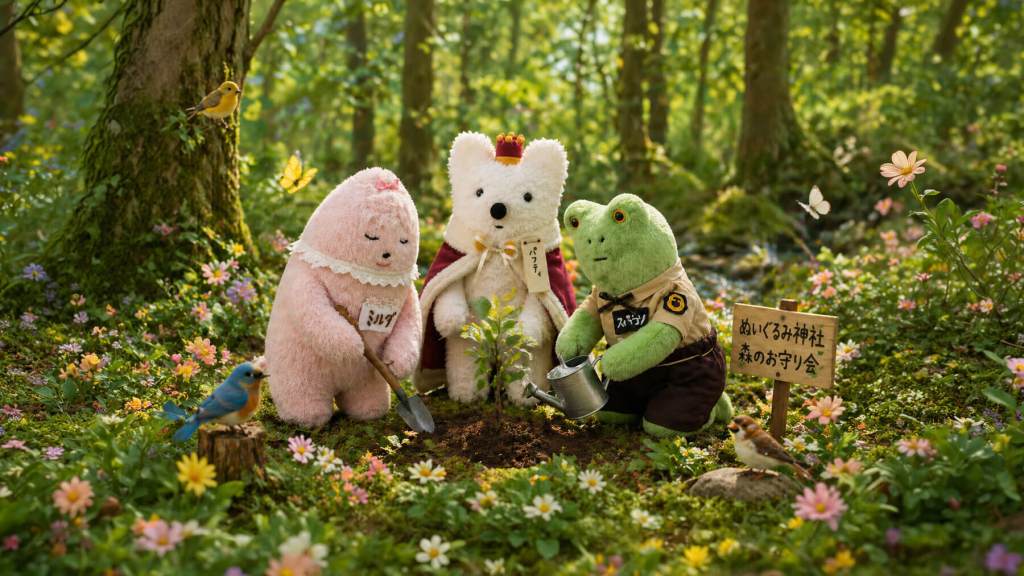
Unlike traditional Japanese shrines that house statues of ancient deities, the Nuigurumi Jinja is “inhabited” by a cast of plush characters. The site is under the watchful care of “King Puffty,” a courageous polar-bear-like guardian, and “Milda,” a kind-hearted peach fairy who serves as a caretaker. Together, these plush guardians are said to guide departed toys from the human world into the next realm, ensuring they remain protected within the forest’s embrace.
Rituals of Gratitude and Remembrance
The Nuigurumi Jinja functions as a recognized religious space, following traditional Shinto protocols adapted for this unique purpose. Visitors are invited to participate in several key memorial practices:
-
Spiritual Visits: Owners are encouraged to bring their living companions to the shrine for a spiritual visit, strengthening their bond within a sacred environment.
-
Words of Gratitude: Central to the shrine’s mission is the “words of gratitude” service. Owners can write messages of thanks to their departed toys, which are then placed in an offertory box to be delivered to the gods by a Shinto priest on an auspicious day.
-
Memorial Rites: Future plans for the site include dedicated facilities for ceremonial burnings and the respectful interment of remains, providing owners with a physical space to mourn and seek closure.
A Date Rooted in Celestial Connection
The shrine officially opened to the public on July 7, 2026, a date specifically chosen to coincide with Tanabata, the traditional Japanese Star Festival. This festival celebrates the celestial meeting of two star-crossed deities, Orihime and Hikoboshi, who are separated by the Milky Way for most of the year. The timing is deeply symbolic; much like the festival, the Nuigurumi Jinja serves as a bridge, reminding us that the bonds formed in life can transcend the physical realm.
For the visitors who gathered on the opening day, the shrine is not a place of sad farewells, but a space for celebrating the love and comfort their companions provided. As the Nuigurumi Jinja begins its life as a landmark in Kyoto, it stands as a gentle reminder of the human capacity to imbue the world around us with meaning, love, and a sense of the sacred—even in the soft, stuffed seams of a cherished childhood friend.