Before the camera lens became the definitive tool for documenting the exoticized landscapes of the British Raj, the visual history of the subcontinent was captured by the stroke of a brush. Among the most evocative and historically significant of these observers was Emily Eden, an Englishwoman whose sketches from the 1830s provide a window into a world caught between the twilight of independent Indian kingdoms and the encroaching dawn of Victorian colonial hegemony.
Her work, recently revitalized in the exhibition Princes & People at DAG in New Delhi, stands as a testament to an artist who navigated the complex intersection of curiosity, political privilege, and colonial ideology.
The Architect of an Imperial Gaze
Emily Eden did not arrive in India as a typical colonial tourist. As the sister of George Eden, the first Earl of Auckland—who served as the Governor-General of India from 1836 to 1842—she occupied a position of supreme social and political influence. This proximity to the pinnacle of British administration granted her access to the highest echelons of Indian nobility, from the opulent courts of Maharajas to the secluded world of Afghan and Sikh leaders.
However, it was not merely her access that defined her art, but her ambition. While many British contemporaries focused on reproducing sanitized landscapes of castles and churches that mirrored the comforts of home, Eden turned her gaze toward the "other." Her portfolio is populated not just by princes and generals, but by the mosaic of humanity that sustained the imperial machine: the fakirs, the ayahs, the mountain communities, and the Akali warriors. She captured the vibrant chaos of the Indian bazaar, the intricate textiles of the Punjab, and the architectural grandeur of Varanasi with a precision that transcended the standard colonial tropes of her era.
From Homesickness to Artistic Awakening
Eden’s arrival in Calcutta in March 1836 was far from the romanticized image of exploration. Like many expatriates of the Victorian age, she was initially repelled by the unfamiliarity of the climate and the social landscape. Her journals, later published as Up the Country, reveal a woman grappling with intense homesickness, the biting annoyance of insects, the suffocating heat, and a profound cultural disorientation.
For the first two months, she barely sketched, paralyzed by the "cultural gulf" between her sensibilities and the reality of life in India. Yet, as the months passed, the rhythm of colonial travel—the river journeys along the Ganges, the processions of state, and the slow, rhythmic pace of the imperial camp—began to reshape her outlook. According to art historian Mary Ann Prior, the curator of the current exhibition, this transition was pivotal. The diversity of the people she encountered acted as a catalyst, shifting her from a passive observer to an active chronicler of an unfamiliar world.
A Rare Glimpse into the Twilight of Kingdoms
The historical significance of Eden’s work cannot be overstated. Her travels coincided with a transformative moment in South Asian history. She was present at the twilight of the reign of Maharaja Ranjit Singh, the "Lion of Punjab," whose kingdom was a formidable power before its eventual annexation. Through her sketches, we see the court of the Punjab at its peak—the intricate turbans, the ornate jewelry, and the dignified postures of a nobility that was about to be subsumed by the British Empire.
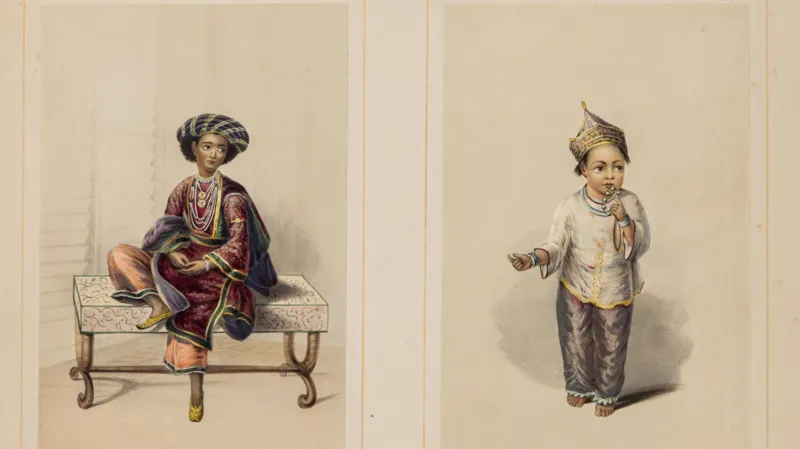
Her ability to capture the nuance of these settings makes her work a primary source for historians today. While her brothers were busy navigating the political machinations of the First Afghan War, Emily Eden was recording the human cost and the cultural richness of the people caught in the slipstream of those wars. Her hand-coloured lithographs, published in 1844 as Portraits of the Princes and People of India, are not merely art; they are ethnographical documents of a period on the brink of profound change.
The Paradox of Observation
It would be an analytical failure, however, to view Eden’s work through a purely celebratory lens. Her remarkable observational powers existed alongside an unshaken belief in the British "civilizing mission." She viewed her time in India as an "unwelcome ordeal"—a necessary sacrifice for a higher political purpose. She framed the colonial project as a moral obligation, and her sketches, while beautiful, were often framed by this binary view of the "civilized" British traveler and the "other" she was tasked to document.
This paradox is essential to understanding the Regency and Victorian female artist. Eden was a product of her time, yet she surpassed the limitations of her gendered and colonial upbringing by showing a genuine interest in the lives of those she painted. She did not merely see her subjects as passive props; she engaged with them as individuals, whether they were the servants who kept her camp running or the high-ranking courtiers with whom she exchanged diplomatic pleasantries.
Legacy: From the Sketchbook to the Printed Page
Upon returning to Britain in 1842, the urgency that had fueled Eden’s artistic output in India began to fade. The familiar landscapes of England did not command the same level of intellectual and artistic rigor as the vibrant, unpredictable streets of Benares or the royal courts of Punjab. Her later works, while competent, lacked the fire of her Indian period.
Instead, Eden turned to the written word to cement her legacy. Her published letters and journals, Up the Country (1866) and Letters from India (1872), bridged the gap between her artistic endeavors and the British public, who were ravenous for information about their eastern territories. She transitioned from being a colonial artist to a literary witness of the Raj.
Emily Eden’s place in history is now firmly established. She ranks among the finest British women artists of her time, comparable only to the botanical precision of Charlotte Canning or the later journeys of Marianne North. Her sketches serve as a vital link between the pre-photographic age of India and the modern visual record.
Conclusion: The Enduring Power of the "Broad Gaze"
The exhibition of Eden's complete published series at DAG provides a rare opportunity to engage with an artist who saw India with an eye that was uniquely her own. Despite her adherence to the imperial ideologies of the mid-19th century, Emily Eden’s willingness to look—and to look closely—has provided us with a visual record that is both aesthetically stunning and historically invaluable.
In an age of rapid digitization, where visual information is ubiquitous, Eden’s work reminds us of the value of the "broad gaze"—the ability to witness the stranger, the animal, and the stranger's world not merely as a background to our own narrative, but as a central part of the historical experience. She was a woman of empire, yes, but she was also an artist of the world, and her sketches remain a fundamental piece of the puzzle in understanding the complex tapestry of India’s past.
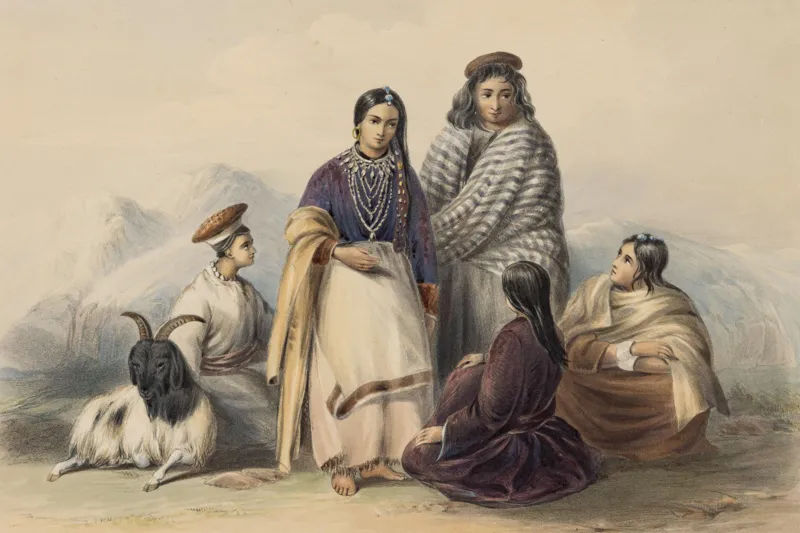
Sketched in Shimla, this family is believed to be from Ladakh. Their dress and jewelry reflect those of Himalayan traders who crossed the mountain passes each summer.
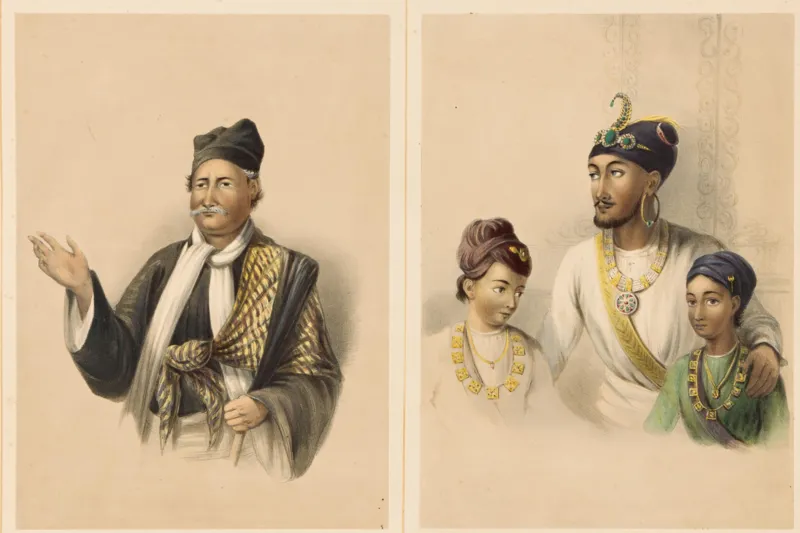
On the left, Eden depicts Anand Masseh, a Christian convert and teacher. On the right is King Fateh Prakash with his sons, dressed in traditional clothing and jewelry. Together, the portraits show Eden’s interest in the diverse people she met across northern India.
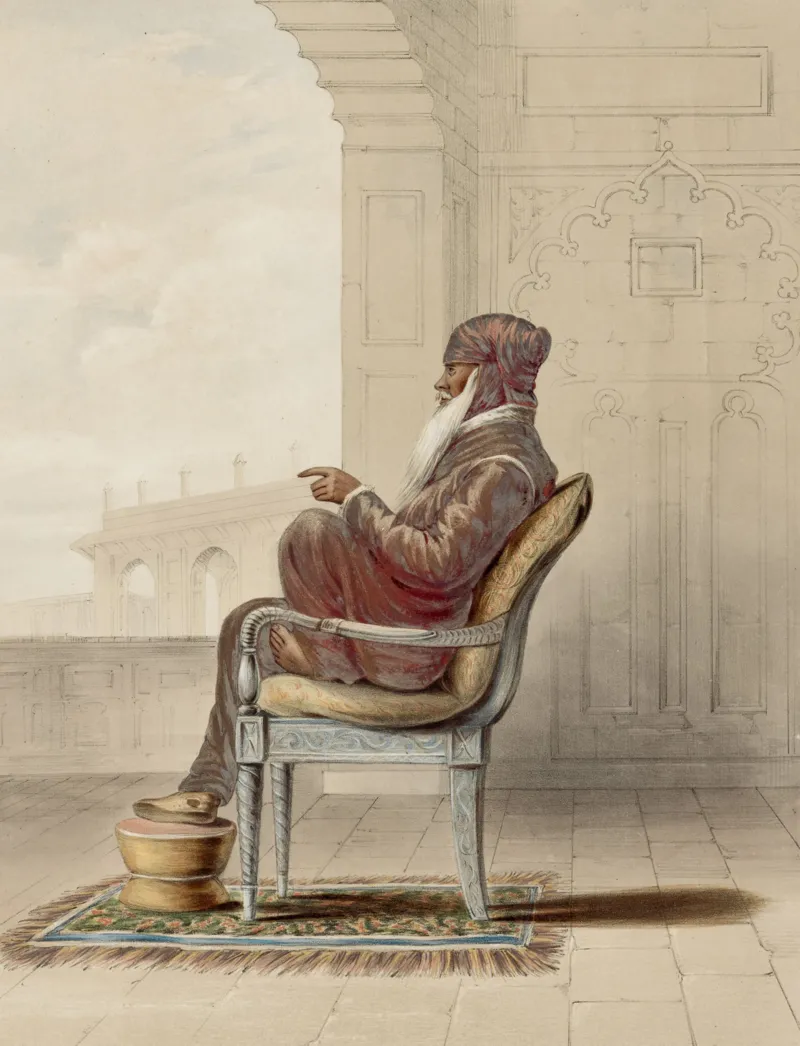
In 1838, shortly before his death, Eden sketched Ranjit Singh, the founder and first maharaja of the Sikh Empire, capturing both his quiet dignity and lasting authority.
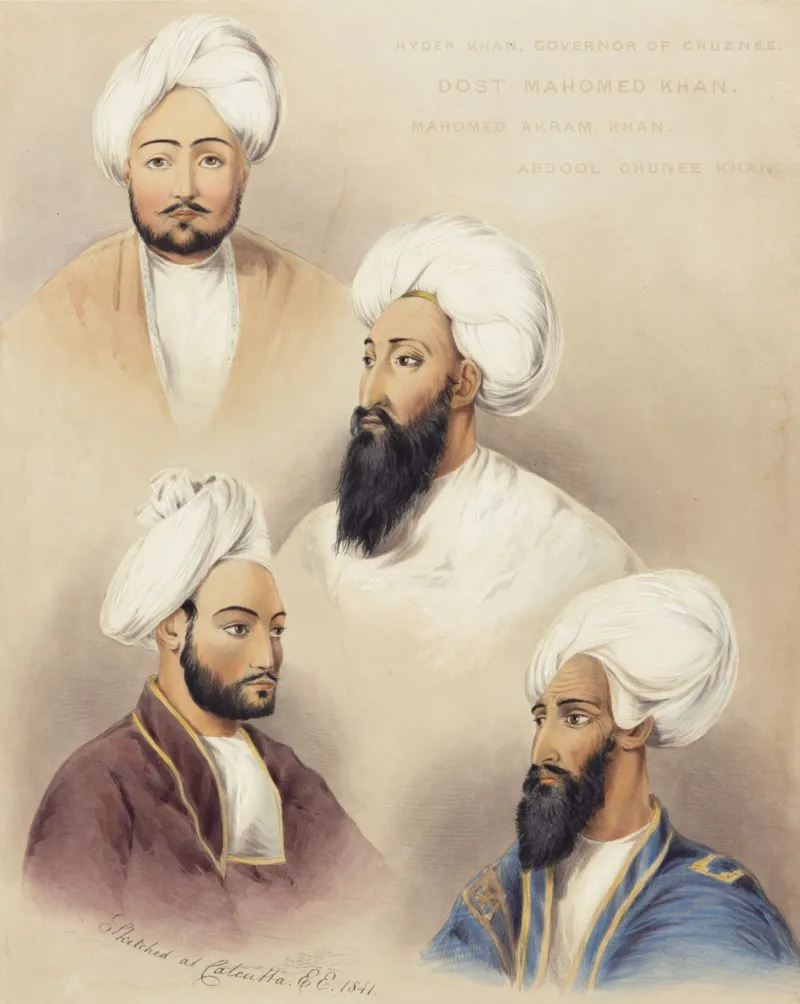
Dost Mohammad Khan, the exiled Amir of Afghanistan, was a central figure in the 19th-century "Great Game" — the political rivalry between Britain and Russia for control of Central Asia. While in exile in India following British intervention in Kabul, Eden sketched this portrait of Khan at the top right with his family: two of his sons and a cousin.
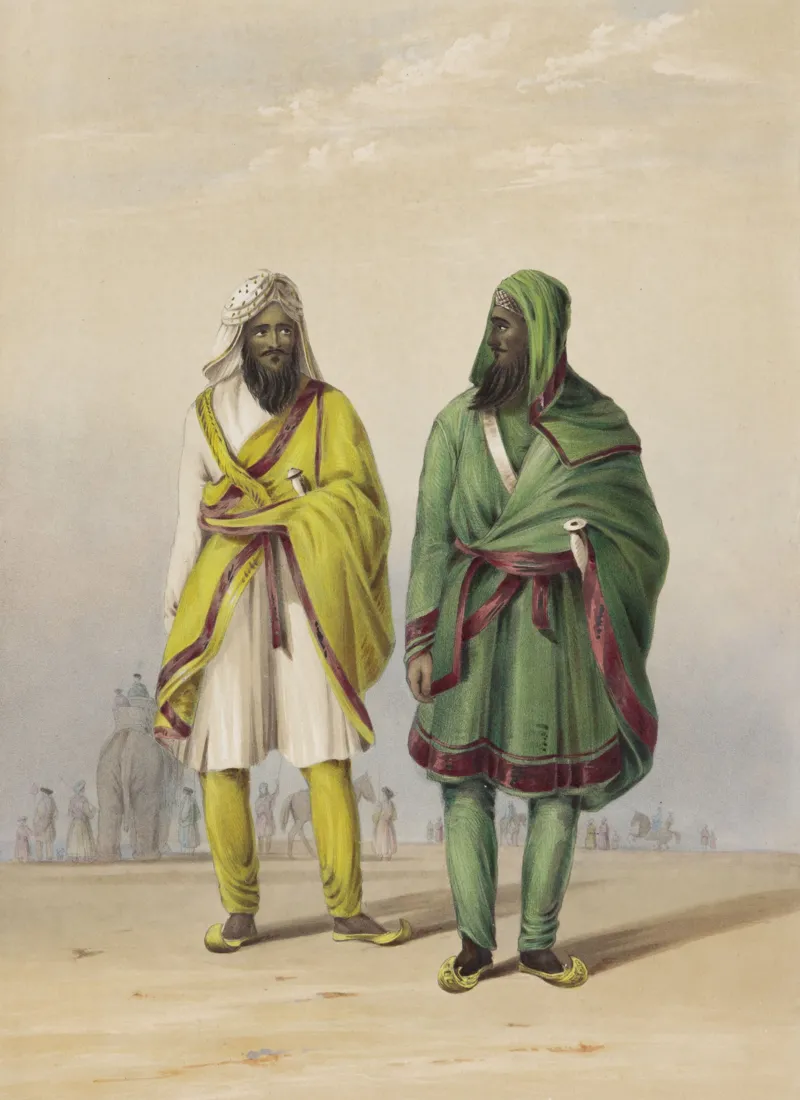
This sketch shows attendants of Kharak Singh, Maharaja Ranjit Singh’s eldest son, and was done after Eden’s 1838 visit to the Sikh court. Their elegant robes, turbans, and embroidered shoes reflected the distinctive dress that captivated her. That same year, Eden called the Sikhs "picturesque" in her letters, admiring their "beautiful figures."
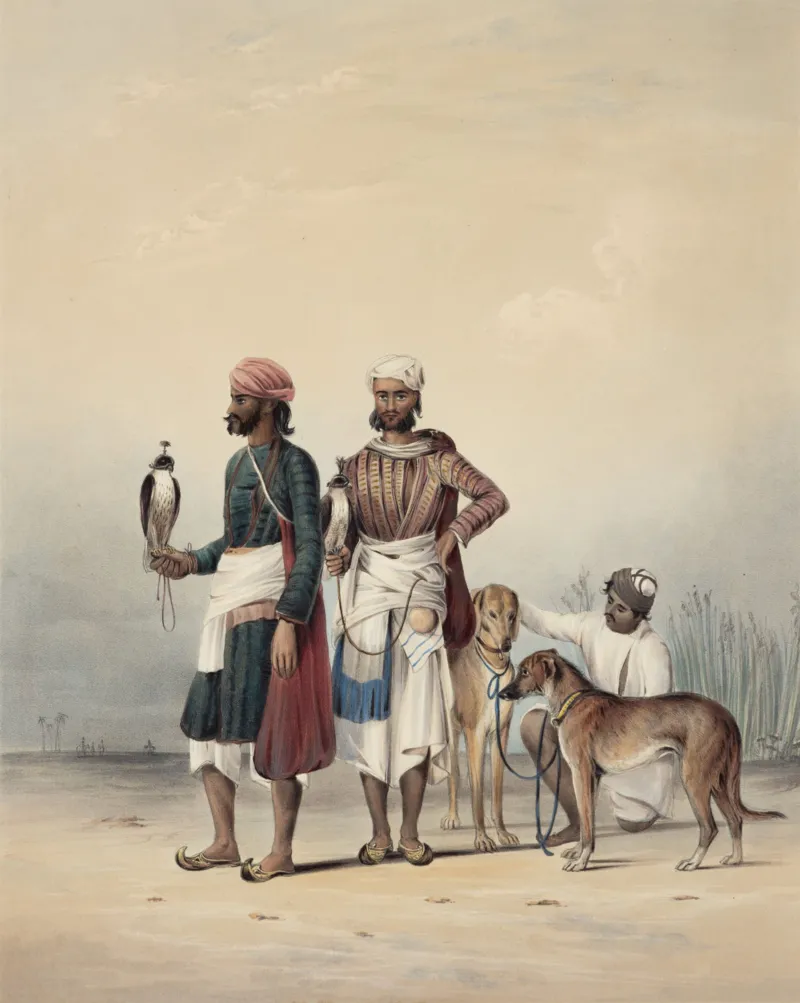
Eden was fascinated by animals, especially exotic species and those with elaborately dressed handlers. These included the King of Oudh’s hunting leopards, hawks, and hounds.
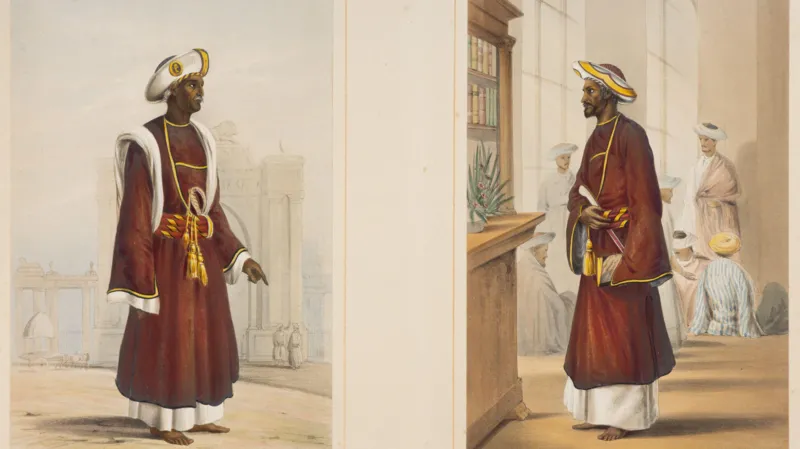
Eden drew Dhullo on the left and Dedar Khan on the right, the head servants at Government House in Calcutta, wearing their winter livery. As Lord Auckland’s senior attendants, they carried daggers at their waists but went barefoot indoors.
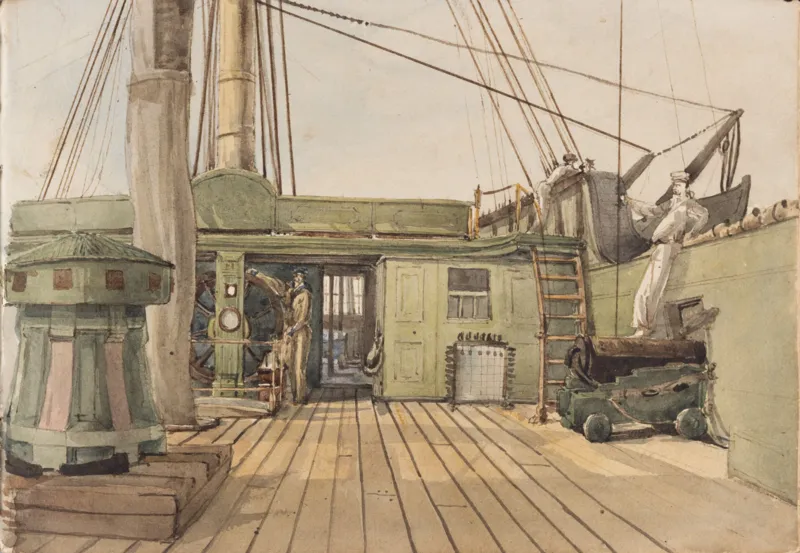
During her voyage to India aboard HMS _Jupiter_, Eden filled a sketchbook with watercolours of the sailors, finding in them a welcome brightness during a difficult journey.
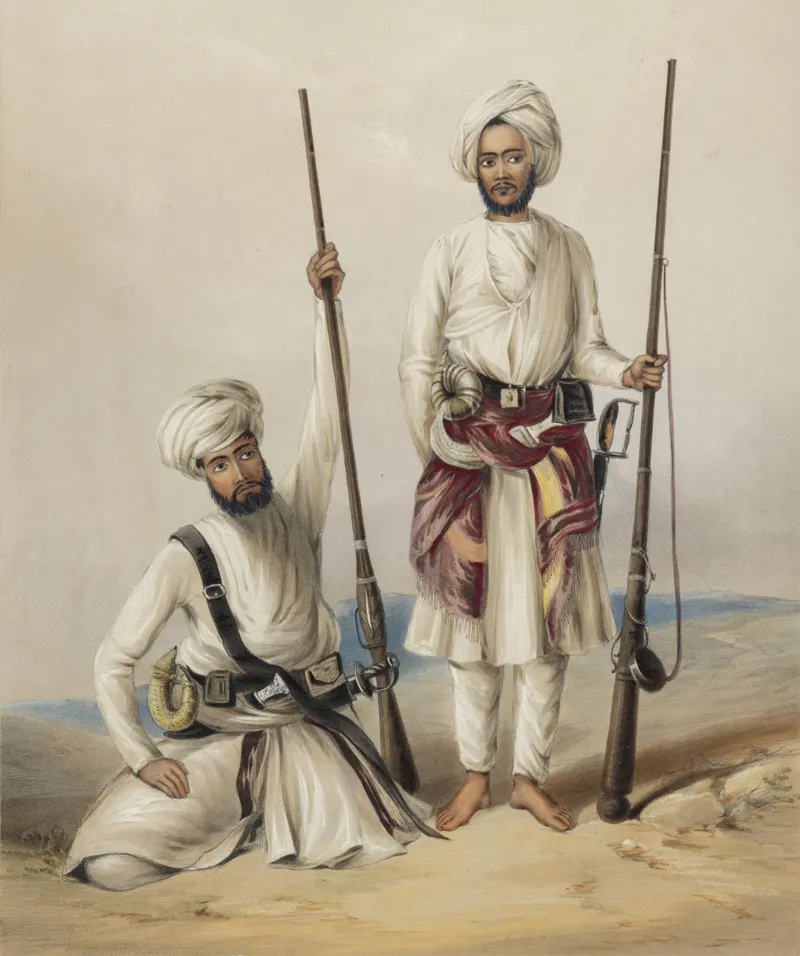
Eden sketched these Pashtun men who had come from Kabul to Shimla with a British officer. Dressed in Afghanistan’s traditional white shalwar kameez and turbans, she mistakenly described them in her notes as "two Arabs."
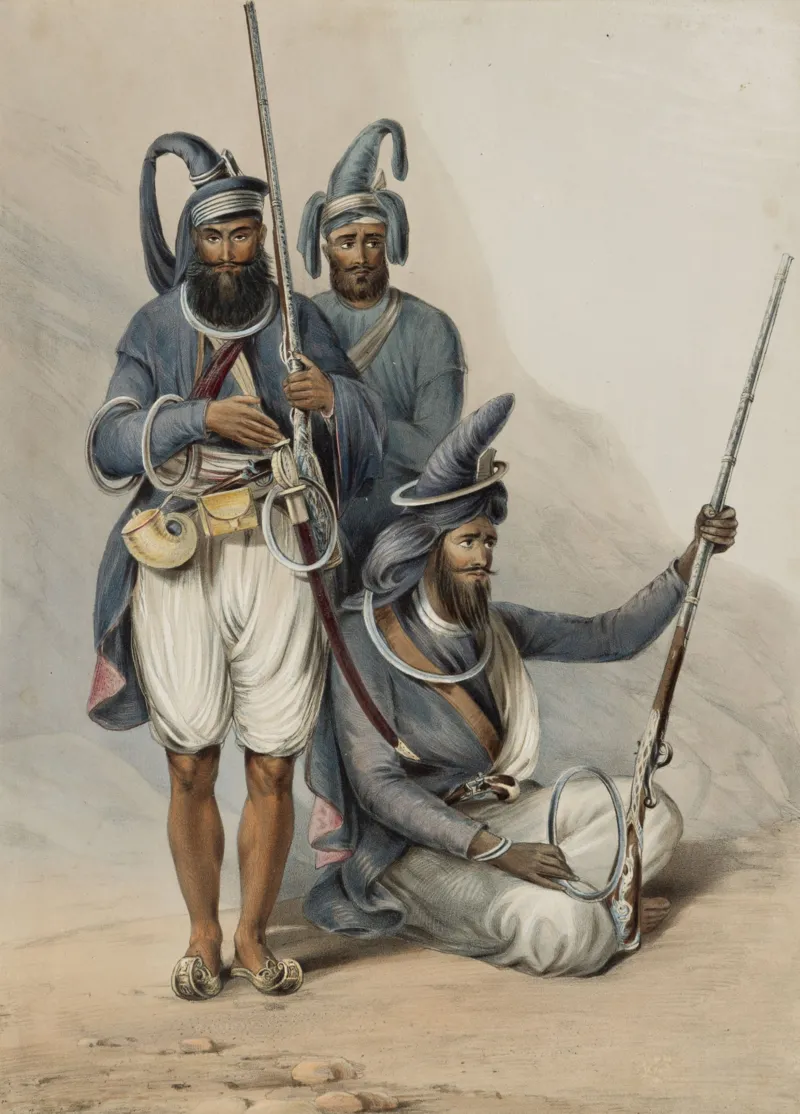
Eden’s portrait of the Akali Nihang warriors shows the Sikh army’s elite fighting order, recognizable by their tall turbans, blue robes, and steel throwing weapons.
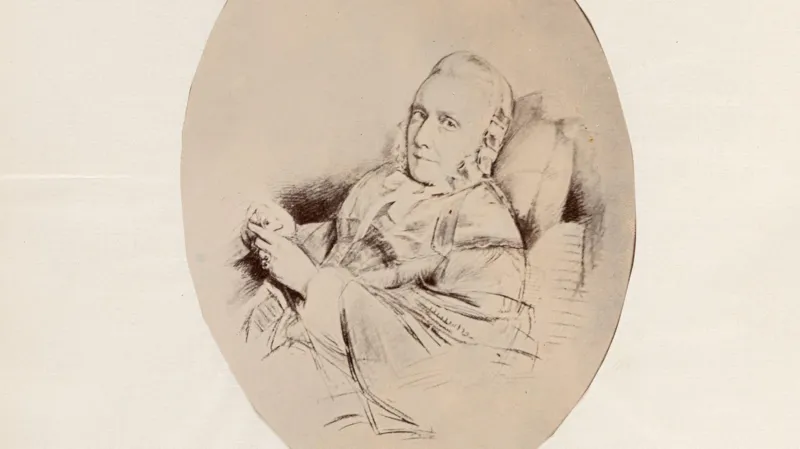
Eden was not only a prolific artist, but also a witty writer.