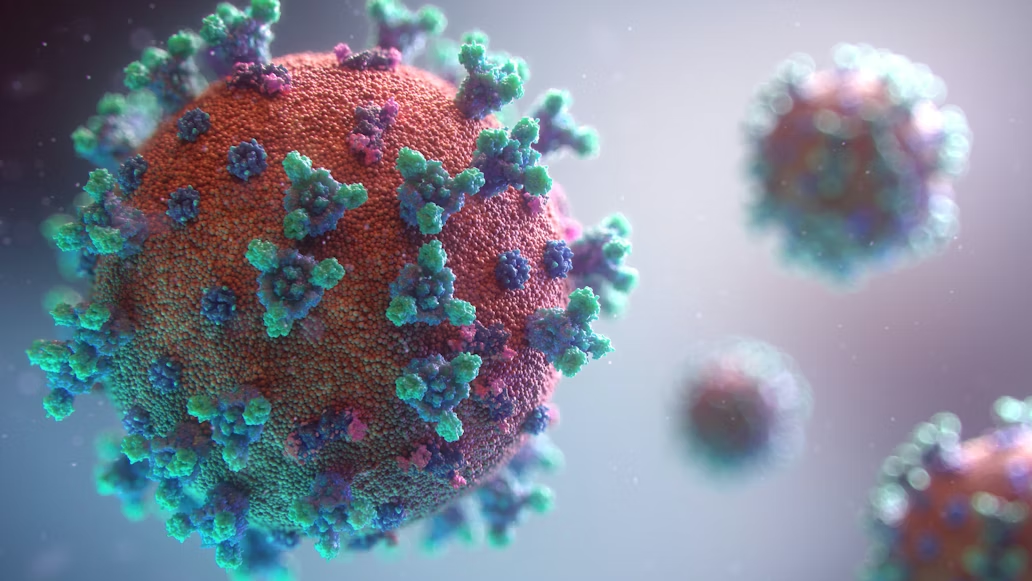
A newly identified COVID-19 strain known as BA.3.2 nicknamed “Cicada” has been detected across at least 25 states in the United States, raising concerns among health experts about a possible rise in infections during the summer months.
Health officials say the variant has been quietly circulating for some time before gaining attention. According to infectious disease specialist Robert H. Hopkins Jr., the strain was first identified in a traveler entering the US in June 2025 but remained largely under the radar.
“It was named ‘Cicada’ because it stayed hidden for a long time, much like the insect,” he explained.
Spread and Detection
The first confirmed case in a US resident was recorded in January 2026. Since then, the variant has been detected through wastewater monitoring and voluntary testing across multiple regions.
Data from the Centers for Disease Control and Prevention shows the variant has appeared in over 100 wastewater sites nationwide, indicating a wider spread than initially thought. Globally, BA.3.2 began gaining ground in late 2025, with some parts of Eastern Europe reporting a significant share of infections linked to the strain.
Why Experts Are Concerned
Scientists are paying close attention to BA.3.2 because of its unusually high number of mutations. Reports suggest the variant carries over 70 mutations, which may help it partially evade immunity from previous infections or vaccinations.
Despite this, experts say there is no clear evidence yet that it causes more severe illness than other variants.
Common symptoms remain similar to earlier COVID-19 strains, including:
• Fever
• Cough
• Fatigue
• Sore throat
• Runny or blocked nose
• Muscle aches
• Loss of taste or smell
Some patients have also reported an intense sore throat, sometimes described as a “razorblade” sensation.
Preventive Measures Still Key
Public health experts continue to stress the importance of basic precautions. Rajendram Rajnarayanan highlighted that vaccination and early response remain the best defense against emerging variants.
Recommended steps include:
• Staying home if you feel unwell
• Wearing high-quality masks in crowded spaces
• Keeping indoor spaces well-ventilated
• Staying up to date with vaccines and booster shots
• Practicing good hygiene, including frequent handwashing
Outlook
While the emergence of the “Cicada” variant has raised concerns, health authorities are still studying its full impact. For now, vigilance and preventive measures remain essential as the situation continues to evolve.