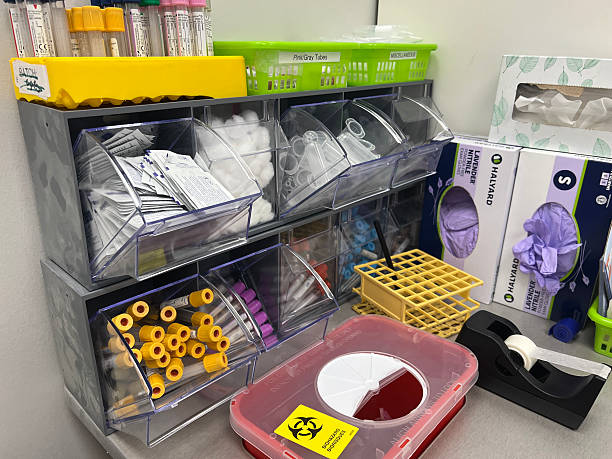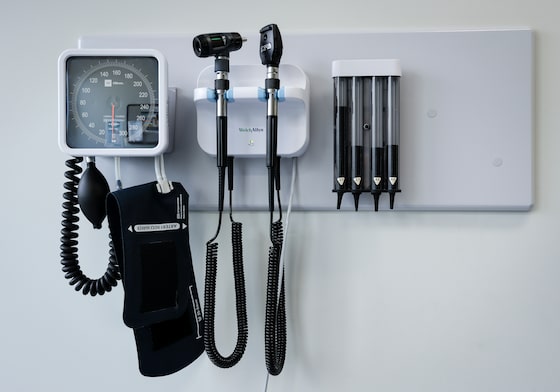
UMUAHIA — In a strategic move designed to completely eliminate the chronic breakdown of clinical infrastructure across public health institutions, the Abia State Government, through the Abia State Ministry of Health, has officially established a dedicated Biomedical Unit.
The specialized engineering division is statutorily tasked with the absolute installation, regular maintenance, and rapid repair of high-tech medical equipment across all state-run hospitals, effectively introducing a sustainable maintenance culture into the state's public healthcare architecture.
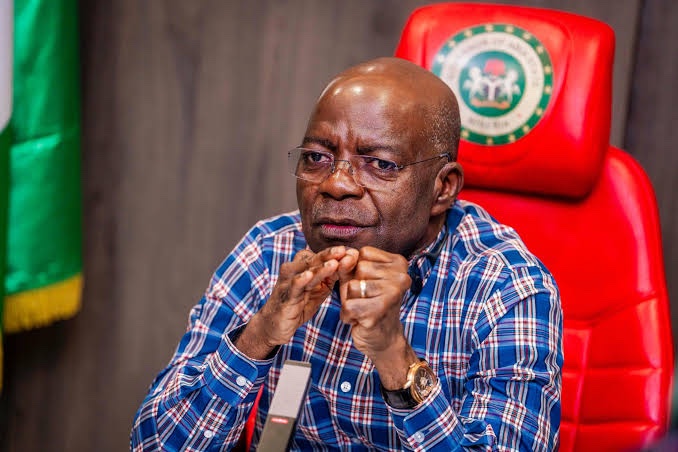
The core policy shift was formally made public by the Commissioner for Information, Prince Okey Kanu, during a comprehensive press briefing at the Government House in Umuahia. Speaking on the outcomes of the week’s State Executive Council meeting, which was presided over by Governor Alex Otti, Kanu emphasized that the unit will serve as a structural shield against equipment obsolescence and operational downtime in public wards.
International Technical Partnerships and Institutional Capacity Building
To ensure the newly formed unit operates at the highest level of international proficiency, the state government has backed the initiative with an intensive, hands-on technical training program. The capacity-building drive is being executed in a strategic operational partnership with top-tier medical engineering experts from MedStar USA and CPR USA, who are currently deployed across the state.
The specialized training program was officially flagged off on May 12, 2026, by Governor Otti, who was represented at the opening ceremony by the Secretary to the State Government, Dr. Emmanuel Meribole. Running consecutively through May 22, 2026, the technical syllabus successfully equipped local biomedical engineers and Ministry of Health staff with the critical diagnostic skills required to calibrate, maintain, and fix sophisticated life-support systems, radiology gear, and laboratory tools without relying on slow, expensive external service contracts.
This infrastructural overhaul directly coincides with the upcoming third-anniversary celebrations of the Otti-led administration later this month, during which several landmark health facilities are slated for formal commissioning. Chief among these projects is the completion of Phase 1 of the long-awaited Obingwa General Hospital and the comprehensively renovated Arochukwu General Hospital.
Simultaneously, the administration is functionalizing and commissioning 15 newly equipped Primary Health Centres (PHCs) while aggressively onboarding four additional rural facilities onto the state's innovative Digital Health Project to expand telemedicine coverage.
Public Health Surveillance: Aggressive Malaria Suppression and Ebola Watch
Beyond rebuilding physical hospital infrastructure, the State Executive Council reviewed extensive public health metrics, highlighting a massive drop in the state's malaria burden. Driven by a aggressive multi-year intervention framework, malaria prevalence across Abia State plummeted from 16.5 percent in 2024 to 11.5 percent in 2025.
To consolidate these gains and push for single-digit numbers, the Ministry of Health has finalized logistics to execute a massive distribution of three million insecticide-treated mosquito nets to vulnerable households by September 2026.
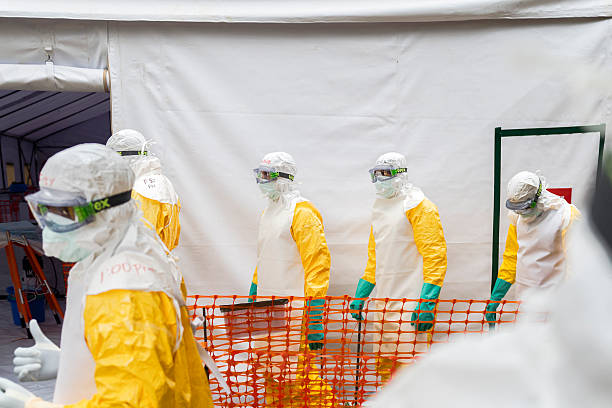
On epidemiologic safety, Commissioner Kanu revealed that the state's disease surveillance teams are on high alert following recent global health advisories issued by the World Health Organization (WHO) and the Nigeria Centre for Disease Control (NCDC) regarding a fresh Ebola outbreak in the Democratic Republic of Congo and Uganda.
The Commissioner strongly reassured the public that there are absolutely no confirmed or suspected cases of Ebola, COVID-19, Lassa fever, Mpox, diphtheria, yellow fever, cholera, or rabies anywhere within the borders of Abia State. However, residents are urged to maintain strict personal and environmental hygiene, completely avoid contact with wild rodents, and immediately present themselves to the nearest functionalized health facility if they experience any sudden illness.
Cross-Sectoral Innovations: Biogas Energy, STEM Expansion, and Road Infrastructure
The State Executive Council briefing also highlighted major development milestones across alternate ministries. The Ministry of Science, Technology, and Innovation announced the successful completion of plans for a five-day STEM week aimed at showcasing cutting-edge educational technology solutions, launching a centralized digital STEM platform, and establishing active Girls in ICT Clubs across 30 premier secondary schools.
In a parallel green-energy push, the ministry has deployed a pilot biogas digester at a secondary school in Owerenta to demonstrate the real-world viability of harvesting renewable energy directly from organic waste. The performance data generated from the Owerenta pilot will inform a potential large-scale municipal rollout across public schools and agricultural hubs.
Furthermore, in direct alignment with the Federal Government's Innovation Commercialisation (ECON) program, Abia State has inaugurated a specialized committee to drive the commercialization of local research. The committee is tasked with identifying grassroots innovators, preparing market-ready research outcomes, strengthening academia-industry-government linkages, and promoting youth and women participation under a new state research and innovation policy.
To wrap up the massive anniversary rollout, Governor Otti is scheduled to personally commission over 25 major infrastructural projects across the state. The infrastructure blitz includes the newly constructed Onu Imo Tower Road, the Abiriba Ohafia Road, the Nunya Isiukwuato Road, and the strategic Umuahia Okuta Road.
To guarantee the long-term sustainability of these state assets, the State Executive Council has issued a direct mandate to all political appointees, instructing them to take physical ownership of public projects within their immediate communities by personally leading sanitation drives, supervising minor repairs, and ensuring absolute cleanliness in neighborhood schools and medical centers.