KINSHASA — Facing a dangerous new epidemiological challenge, the Africa Centers for Disease Control and Prevention (Africa CDC) has officially confirmed a new outbreak of the Ebola virus in the northeastern Ituri Province of the Democratic Republic of Congo (DRC). Public health officials have already registered 246 suspected cases and at least 65 deaths, triggering an immediate, high-stakes international containment effort to prevent a major regional catastrophe.
The development marks the DRC’s 17th recorded Ebola outbreak since the deadly virus was first identified on its soil in 1976. However, this specific activation is causing extreme concern among global health experts. Unlike the vast majority of the country's previous outbreaks, which were driven by the well-studied Zaire strain, laboratory testing by the DRC’s National Institute of Biomedical Research (INRB) has confirmed the presence of the Bundibugyo strain in 13 out of 20 primary blood samples. Crucially, there are currently no approved vaccines or targeted antiviral therapeutics available anywhere in the world to combat the Bundibugyo variant, leaving health workers entirely dependent on supportive care and strict physical containment.
Ground Zero: Cross-Border Risks and an Imported Case in Kampala
The epidemiological epicenter of the outbreak is heavily concentrated within the mining and rural hubs of Mongwalu and Rwampara, though health authorities have frantically flagged suspected transmissions in Bunia, the highly populated capital of Ituri Province.
Because Ituri Province shares porous, highly active borders with both Uganda and South Sudan, the geographic location of the cluster has elevated the situation to a top-tier regional security threat. The high volume of daily cross-border traders, miners, and displaced populations creates an ideal pathway for rapid international transmission.
Proving that the virus has already breached domestic containment lines, health ministry officials in neighboring Uganda officially confirmed the death of a Congolese national in the capital city of Kampala. The case has been formally classified as an imported infection of the Ebola Bundibugyo strain, forcing Ugandan authorities to rapidly deploy contact-tracing teams across its central and western transport corridors.
The Ebola virus remains one of the world's most lethal pathogens, carrying case fatality rates that can skyrocket up to 90 percent if left unchecked. The virus is transmitted to humans from wild animals and subsequently spreads through direct, human-to-human contact with the blood, secretions, organs, or other bodily fluids of infected persons, as well as via contaminated surfaces and bedding.
The Logistics of Containment: The Race for PPE
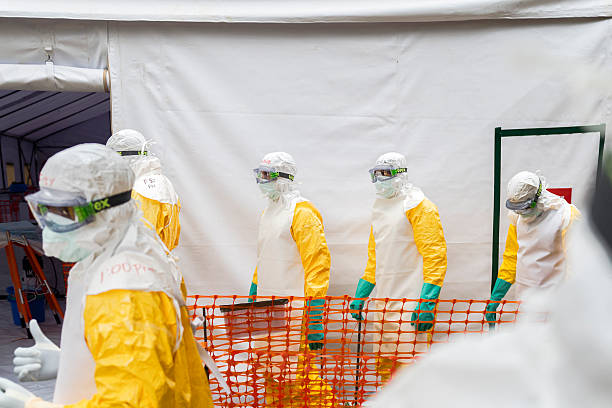
Because of this highly infectious transmission pathway, the immediate safety of frontline healthcare providers has become the primary operational priority. Without immediate access to specialized Personal Protective Equipment (PPE)—including fluid-resistant gowns, face shields, double-gloving configurations, and respirators—treatment centers can rapidly transform into amplification hubs for the disease.
In response to the escalating biological threat, international medical relief organization Direct Relief has formally stepped in, activating its emergency response networks to support Africa CDC, the International Organization for Migration (IOM), and local clinical operators like the Jericho Road Community Health Center in eastern DRC.
Direct Relief brings extensive institutional memory to the current crisis, having served as a major medical logistics anchor during the catastrophic 2014 West Africa Ebola outbreak, which claimed over 11,000 lives across the region. During that historic mobilization, the organization funneled approximately $40 million in medical aid and shipped 476 tons of critical emergency supplies and heavy protective gear to frontline staff across Liberia, Guinea, and Sierra Leone.
The NGO confirmed it is forensically monitoring the tracking data coming out of the INRB labs in Kinshasa and has pledged to deploy tailored pallets of emergency medications, sanitization chemicals, and protective equipment as specific logistical needs are mapped out by the emergency response coalition.