ABUJA — In a decisive move to safeguard public health, the Federal Government of Nigeria, under the leadership of President Bola Ahmed Tinubu, has launched a comprehensive emergency response strategy to prevent the importation of the Ebola Virus Disease (EVD). Amidst the ongoing Bundibugyo ebolavirus outbreak affecting parts of Central and East Africa—specifically the Democratic Republic of the Congo (DRC) and Uganda—the administration has approved an emergency intervention fund of ₦10 billion to significantly bolster the nation’s defensive capabilities.
A Unified Response: The Presidential Task Force
Recognizing that public health threats of this magnitude require a coordinated, cross-sectoral approach, President Tinubu has inaugurated the Presidential Task Force on Ebola Virus Disease Preparedness and Emerging Public Health Threats. Chaired by the Chief of Staff to the President, Femi Gbajabiamila, this task force brings together a high-level coalition of experts from key Ministries, Departments, and Agencies (MDAs), as well as critical state-level stakeholders.
The task force was established following high-level strategic consultations involving leaders from the Federal Airports Authority of Nigeria (FAAN), the Nigeria Immigration Service (NIS), the Nigerian Civil Aviation Authority (NCAA), and the Lagos State Government. By centralizing decision-making under this task force, the government aims to ensure that response protocols are executed with speed, precision, and nationwide consistency.
Enhanced Border and Airport Protocols: Fortifying the Perimeter
The most visible aspect of the government's preparedness strategy is the tightening of border and airport security. With international travel identified as a primary pathway for potential virus importation, the President has mandated stringent measures at all major entry points:
-
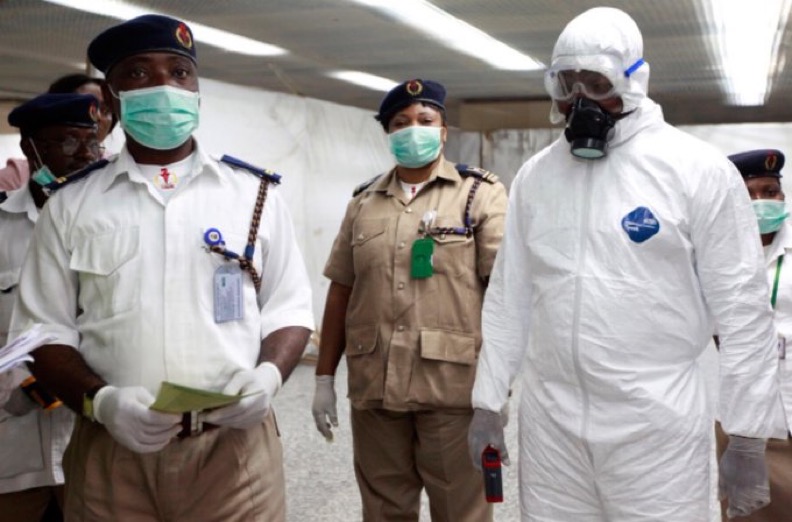
Intensified Passenger Screening: Authorities have ramped up surveillance at all international airports.This includes enhanced temperature checks and rigorous crowd-control protocols to ensure that potentially symptomatic passengers are identified immediately upon arrival.
-
Targeted Surveillance for High-Risk Routes: Monitoring has been significantly increased for flights arriving from regions identified as high-risk. This includes specific scrutiny of routes originating from or transiting through countries currently experiencing transmission.
-
Infrastructure Readiness: The government has prioritized the immediate activation of dedicated referral and isolation centers at the Lagos and Abuja international airports, with plans to extend similar, functional facilities to other major points of entry across the country.
-
Digital Health Surveillance: A major innovation in this response is the mandatory implementation of a QR code-based pre-arrival health declaration system. This digital tool allows health officials to pre-screen passengers arriving from designated high-risk zones, streamlining the identification process before they even disembark.
-
Environmental Sanitation: As a precautionary measure, the administration has ordered the mandatory disinfection of departure halls, baggage claim areas, and cargo handling facilities to mitigate environmental transmission risks.
Controlled Flight Management and Operational Coordination
To further minimize exposure, the Presidential Task Force has been granted the authority to regulate flight operations from affected regions. This includes the power to designate specific airports or terminals to handle high-risk flights, allowing for more controlled screening, isolation, and rapid response procedures.Furthermore, the task force is actively reviewing flight schedules to ensure that high-risk passenger groups have minimal interaction with the general traveling public.
Beyond federal airports, the government has reached out to state authorities. Every state hosting international airports or major land border corridors is now required to submit localized operational and funding plans.These plans are currently being reviewed by the task force to ensure that state-level capabilities—such as contact tracing, isolation, and clinical management—are aligned with the national emergency strategy.
A Sustained Commitment to Public Health
The ₦10 billion emergency fund is being channeled directly toward strengthening the operational capacity of the Nigeria Centre for Disease Control and Prevention (NCDC). This funding is critical for bolstering diagnostic capabilities, stockpiling essential medical countermeasures, and training the frontline specialist workforce required for emergency disease control.
As the NCDC continues to emphasize, Nigeria currently has no confirmed cases of Ebola. However, the government’s shift into "preparedness mode" reflects a commitment to institutionalizing readiness rather than relying on reactive measures. By reinforcing laboratories, tightening border surveillance, and fostering cooperation between state and federal actors, the administration is building a resilient, multi-layered shield intended to detect and neutralize any potential health threat before it can escalate into a national crisis.