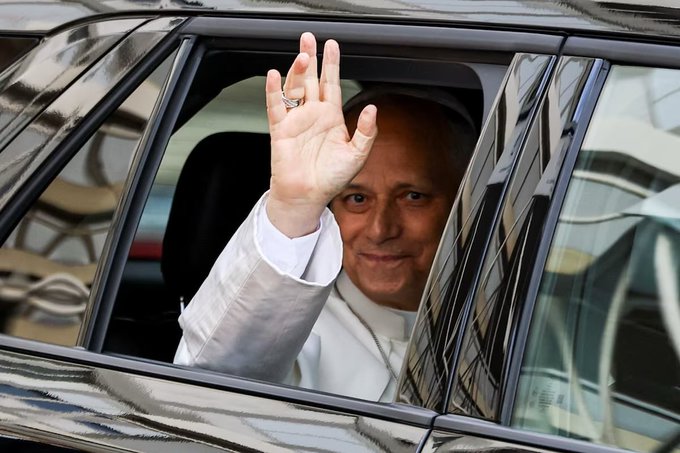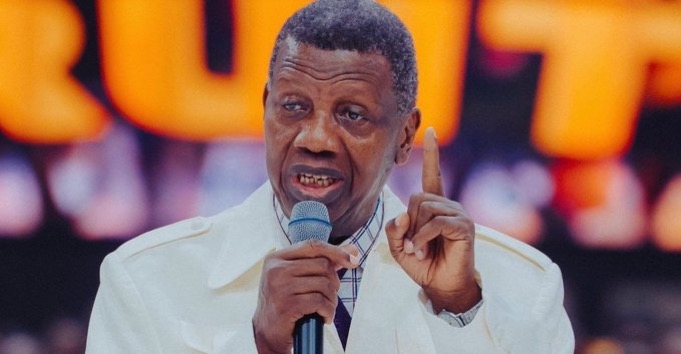
WASHINGTON, D.C. — The General Overseer of the Redeemed Christian Church of God (RCCG), Pastor Enoch Adeboye, the General Overseer of the Redeemed Christian Church of God (RCCG), has stepped into the center of the ongoing national debate. Speaking at the US-Nigeria Faith Heroes Award gala held in Washington, D.C., on June 23, 2026, the respected cleric offered a nuanced defense of President Bola Tinubu’s leadership, even as he issued a stern challenge to the nation's military hierarchy to reclaim the country from the grip of insecurity.
Addressing the Nature of Presidential Responsibility
A focal point of Pastor Adeboye’s address was the common public criticism leveled against President Tinubu regarding his perceived lack of visibility in the fight against insurgency and kidnapping. Critics have often suggested that the President should be more personally involved in overseeing military operations. Pastor Adeboye, however, sought to clarify the constitutional and functional boundaries of the Presidency.
He argued that the President has fulfilled his core constitutional duty by directing the armed forces and setting the strategic agenda. "When the commander-in-chief has given instructions to his subordinates, he has done his bit. You don’t expect him to put on khaki and fight," Adeboye stated, drawing a stark line between the role of a policymaker and a combatant.
By comparing the Nigerian Presidency to the administrative power of an American president who commands military action from the White House, Adeboye sought to shift the public discourse away from the President's personal involvement and toward the efficacy of his subordinates. In his view, the failure is not one of presidential intent, but of execution and accountability within the lower tiers of the military command structure.
The Migration of Terror and the Crisis of Sponsors
Despite his defense of the President, Pastor Adeboye did not mince words regarding the worsening reality on the ground. He acknowledged that the threats of terrorism and mass kidnapping—once largely concentrated in the Northern regions of Nigeria—have migrated southward, now reaching what he described as his own "doorstep." This acknowledgement serves as a powerful testament to the perceived failure of existing security measures to contain the spread of violence.
The core of the problem, according to Adeboye, lies not just with the foot soldiers of terror, but with the "financiers of evil." He identified influential businessmen and powerful political actors as the hidden architects of the nation’s insecurity. "If you do not deal with those who are supplying these people with arms and ammunition, the problem will continue," he warned. The cleric’s assertion highlights a common grievance among Nigerians: that the conflict is sustained by individuals who benefit from the chaos and remain shielded by their socioeconomic and political influence.
Read More: President Tinubu Projects $20 Billion in FDI for Nigeria in 2026, Blasts Western Rating Agencies at Kigali CEO Forum
A 90-Day Ultimatum for Military Leadership
Perhaps the most striking component of Pastor Adeboye’s address was his call for decisive action. He revealed that he has engaged in private discussions with both President Tinubu and the First Lady, Pastor Oluremi Tinubu, during which he proposed a radical solution: a 90-day ultimatum for the military leadership.
Under this proposal, the President would issue a clear directive to the service chiefs: neutralize the threat of terrorism and kidnapping within 90 days or face immediate resignation. Adeboye believes that such a deadline would inject a necessary sense of urgency into the military’s operations. It is a call for a results-oriented approach that holds the heads of security agencies personally accountable for the success or failure of their strategies.
International Cooperation and the Path Forward
Reflecting on the trajectory of Nigeria’s security situation over the past few years, Pastor Adeboye admitted that conditions have become "far, far worse" than in previous eras. His remarks were not just a critique of domestic policy, but an appeal for an expanded international security framework.
He concluded his address with a passionate plea for enhanced collaboration between the United States and Nigeria. By urging the U.S. to work more closely with Nigerian authorities and global partners, Adeboye signaled his belief that the scale of the terror threat—which now involves complex supply chains for arms and international funding—is beyond the capacity of a single nation to solve.
As the debate continues, Pastor Adeboye’s position represents a complex stance: a defense of the institutional authority of the Presidency paired with an uncompromising demand for operational success from those tasked with protecting the citizenry. For the administration, the challenge now lies in navigating this high-stakes environment where the expectations of religious leaders, the demands of the public, and the realities of military strategy converge. Whether the government will adopt his ultimatum and aggressively target the alleged sponsors of terror remains a pivotal question for the months ahead.