KIGALI — Asserting that bold macroeconomic interventions are yielding historic financial fruit, President Bola Ahmed Tinubu has projected that Nigeria is firmly on track to attract nearly $20 billion in Foreign Direct Investment (FDI) over the course of the 2026 fiscal year. The President attributed this massive influx of international capital to his administration’s aggressive, systematic removal of regulatory bottlenecks, fiscal stabilization strategies, and institutional transparency overhauls designed to restore global investor confidence.
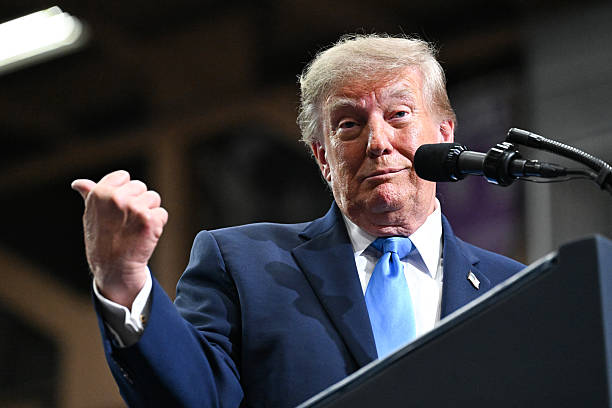
President Tinubu made these high-profile disclosures while serving as a headline speaker at the annual Africa CEO Forum in Kigali, Rwanda. Speaking during a premium presidential panel moderated by renowned international journalist Zainab Badawi, alongside Gabonese President Brice Clotaire Oligui Nguema, Tinubu delivered a passionate defense of pan-African self-reliance, value addition, and resource integration. He argued forcefully that African nations must flatly refuse the legacy economic model of exporting raw mineral commodities while simultaneously importing expensive finished goods from western nations.
"Removing all the operational bottlenecks gives you the necessary institutional incentives for direct foreign investment into the country," President Tinubu stated during the plenary session. "This year alone, I can beat my chest that Nigeria is successfully attracting close to $20 billion in foreign direct investments."
The Death of Raw Resource Exportation: Value Addition is Law
Fielding sharp questions from Badawi regarding Africa's historical economic trap selling raw wealth cheaply to foreign firms only to buy back processed products at astronomical premiums,Tinubu declared that the era of exporting unprocessed natural resources from Nigeria is officially over. He revealed that new statutory frameworks are being enforced to compel local processing and manufacturing across the industrial and mining sectors.
"No corporate entity can take metal or raw materials out of Nigeria without adding value locally," the President asserted firmly. "You can excavate the dust, all the minerals, and try to leave, but the answer is no. I can produce batteries for electric cars right here with my country's minerals. Rare earth minerals are incredibly valuable, but if we properly value what is on the ground as a balance sheet item capable of funding and raising capital for exploration and production of our resources, why not do it for ourselves rather than outsourcing our wealth?"
The Dangote Refinery Model and the Naira-Crude Formula
Addressing the operational scale of the newly minted Dangote Petroleum Refinery which Badawi noted processes an astonishing 650,000 barrels of crude oil per day and currently satisfies roughly 70 percent of Nigeria’s domestic fuel demands Tinubu maintained that such massive industrial feats are only achievable through aggressive state-backed public-private partnerships.
"Nigeria could not survive with over 200 million people living in peace without functional domestic refining infrastructure," Tinubu explained. "A bold corporate risk-taker like Aliko Dangote must be fully encouraged and protected by the state. What my administration did was provide absolute institutional support, grant him free trade zone status, issue his operational licenses, and back his team in seamlessly sourcing the massive volumes of crude necessary to feed the plant. Today, he has transitioned into a dominant net exporter of premium motor spirit (PMS), aviation fuel, and other vital petrochemical commodities."
The President also opened up about his administration's unconventional, highly debated formula to completely bypass cross-border payment frictions, eliminating the need for letters of credit (LCs) or international bank scrambling when supplying crude oil to the local refinery.
"My formula is very simple: what is the legally denominated currency in Nigeria? That is the Naira. I possess crude oil that the global market expects me to export, so instead, I give it to my local refinery in exchange for Naira. This eliminates the need for international letters of credit, prevents domestic banks from scrambling for foreign exchange, and protects our economy from foreign exchange rate instability."
Challenging Western Credit Bias and Driving Tax Digitization
President Tinubu used the global platform to launch a fierce critique against the dominance of Western credit rating agencies, accusing them of utilizing biased, out-of-touch metrics that consistently undervalue and misrepresent robust African economies.
"I recently wrote a detailed analytical article in the Financial Times addressing this exact bias," Tinubu noted. "Have these rating agencies actually visited Rwanda to see the immense economic potential, the booming tourism, and the spectacular 9.4 percent economic growth recorded last year? Investment capital is naturally very cowardly; it will flee unless you are completely transparent, accountable, and forthright. That is precisely why we must aggressively recapitalize all our regional financial institutions."
Transitioning to domestic revenue mobilization, the President highlighted his administration's ongoing sweeping tax reforms, which he noted were adapted directly from the successful "Lagos Model" that transformed Lagos State into the fifth-largest economy on the African continent.
"Tax reform must be written in plain, clear English. It must be completely understandable, not Japanese written in English a standard that every ordinary citizen is easily able to read and pay," Tinubu explained. "The goal is not to encourage tax avoidance, but to foster the genuine, patriotic commitment of citizenship. Write it simple, but do not write it stupid. I have completely reformed that structure in Nigeria. Today, you can pay your taxes seamlessly from your mobile telephone. You can access the national portal and evaluate your civic financial obligations entirely from your smartphone."
Agricultural Logistics, 90,000km Fibre Networks, and the Youth Vote
Detailing his administration's major investments in food security, Tinubu pointed to the establishment of 6,000 mechanized agricultural zones across the federation, supported by a structured government buy-back program designed to protect rural farmers from predatory pricing and market gluts. He highlighted the ongoing construction of the historic Sokoto-Badagry road—a massive 1,000-kilometer concrete highway designed to link the northern agricultural hubs directly to the West African trade corridor.
"Gone are the days when agriculture was no longer considered sexy or profitable," the President smiled. "Government must step in to identify reliable energy sources for the preservation of perishable items, buy back crops directly from farmers when market prices are frustratingly low, and maintain strategic grain storage silos. When the market conditions improve, we help the farmers redistribute. It is simply not possible for an ordinary farmer to take a commercial loan and think it will be profitable without high-yield seedlings being provided by the state."
On the digital economy and technological infrastructure, Tinubu disclosed that Nigeria has successfully laid over 90,000 kilometers of high-capacity fibre optic cables across the country to bridge the digital divide.
"That massive network is the only logical way we can bring digital lessons to children in rural areas and communicate seamlessly with farmers and ordinary traders. Africa must be able to put collective funding together to completely surpass the level of primitive telecommunication. We must bring in Artificial Intelligence (AI) and e-commerce; we need to leapfrog legacy systems."
Concluding his speech with a humorous yet candid political observation regarding Nigeria's vibrant, tech-savvy youth demographic, Tinubu acknowledged the immediate electoral pressures driving his digital push. "I am a politician," he stated bluntly. "If I don’t get our youths ready for that digital revolution, they will simply vote me out of office."
The President closed by calling for an immediate, active transition of the African Continental Free Trade Area (AfCFTA) from a conceptual document into an operational reality. He urged African states to stop working in isolated geopolitical silos and instead embrace aggressive, cross-border corporate and resource collaboration, stating: "I believe in Africa first, because I started with Nigeria first."