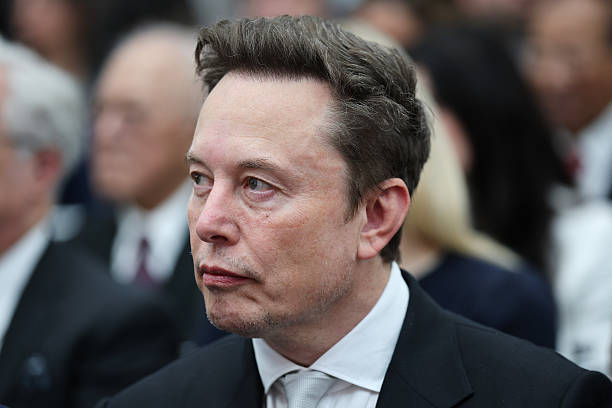
Elon Musk has said that SpaceX could eventually achieve a valuation exceeding $1 quadrillion, describing the extraordinary financial milestone as a possible outcome despite the enormous gap between the company's current value and that target.
The billionaire entrepreneur made the remarks in a post on X on October 9, 2026, responding to discussions about the long-term financial potential of his aerospace company. Musk said a valuation above $1,000 trillion was now within the range of possible outcomes, although he acknowledged that the probability remained very small.
The statement has drawn attention to Musk's ambitions for SpaceX, whose businesses include rocket launches, satellite communications through Starlink and the development of spacecraft intended to support missions to the Moon and Mars.
However, the scale of the proposed valuation raises significant questions about the company's future revenue, the economics of space exploration and whether commercial activity beyond Earth could eventually support a business worth many times the current size of the global economy.
What Musk Said About SpaceX's Future Valuation
Musk's latest comments followed an earlier post in which he said he could see a path for SpaceX to become worth orders of magnitude more than the current global economy.
He subsequently clarified that believing such a path exists should not be interpreted as strong confidence that the outcome will happen. Rather, he said he believed the probability of achieving it was not zero.
In a follow-up comment on October 9, Musk said a valuation exceeding $1,000 trillion had entered the range of possible outcomes, adding that the rate at which he viewed its probability as increasing was accelerating from a very small base.
His comments did not establish a timetable for reaching that valuation or provide a detailed financial forecast showing how the company would achieve it.
The distinction matters because Musk was describing a possible long-term scenario rather than announcing a confirmed corporate target.
A quadrillion dollars is equivalent to $1,000 trillion. Such a valuation would be vastly larger than the market value of any company in today's financial markets.
SpaceX's Current Valuation Provides Perspective
SpaceX already commands an enormous valuation following its stock-market listing in June 2026.
According to Reuters, the company targeted a valuation of approximately $1.77 trillion for its initial public offering, while subsequent market coverage placed its valuation at around $2.2 trillion in October.
Even at that level, reaching $1 quadrillion would require an extraordinary increase in the company's value.
Using a hypothetical starting valuation of $2.2 trillion, a $1 quadrillion valuation would represent an increase of approximately 455 times. The calculation illustrates the scale of Musk's ambition, although actual returns would depend on future share issuance, corporate changes and market conditions.
Musk's broader comments about SpaceX's potential have gone even further. In his October post, he suggested that the company could eventually become worth orders of magnitude more than the entire global economy.
Business Insider reported that this interpretation could imply a valuation exceeding $12 quadrillion if SpaceX became at least 100 times more valuable than an economy projected to produce approximately $126 trillion in output during 2026.
That is a much more ambitious scenario than a $1 quadrillion valuation.
Starlink and Rocket Launches Form the Business Foundation
SpaceX's existing operations provide the foundation for Musk's long-term ambitions.
The company has established a major position in commercial rocket launches and satellite deployment, serving commercial customers, governments and other organisations that need access to space.
Its Starlink satellite network has also become an important part of the business, providing internet connectivity in locations where conventional broadband infrastructure can be difficult or expensive to deploy.
These activities offer commercial revenue today, unlike some of Musk's more ambitious plans, which depend on technologies and markets that have yet to reach large-scale commercial viability.
SpaceX is also developing Starship, a reusable spacecraft system intended to support missions beyond Earth's orbit. The programme is central to Musk's vision of making space transportation less expensive and enabling more ambitious exploration.
If reusable spacecraft substantially reduce launch costs, they could make additional commercial activities possible, including larger satellite networks, orbital infrastructure and eventually industrial operations beyond Earth.
However, lower launch costs alone would not automatically produce the revenue needed to justify a quadrillion-dollar valuation.
The company would also need to develop profitable markets on an unprecedented scale.
Musk's Vision Extends Beyond Earth's Economy
Musk's long-term argument rests partly on the possibility that humanity could eventually establish industrial operations beyond Earth.
In earlier comments, he suggested that factories on the Moon and Mars could be necessary for achieving extraordinary levels of personal wealth and economic expansion. He also argued that the monetary systems used in such a future might differ from those used today.
The broader vision involves using space infrastructure to expand access to energy, materials, manufacturing capacity and economic activity.
In theory, a company that controlled essential transportation infrastructure, communications networks and industrial systems operating across multiple locations in space could serve markets far larger than those available to businesses operating exclusively on Earth.
Yet this remains a highly speculative scenario.
Establishing factories on the Moon or Mars would require substantial investment in transportation, energy generation, robotics, life-support systems and infrastructure capable of operating in extremely hostile environments.
There would also need to be customers willing and able to pay for the resulting products and services.
The commercial case for extracting resources from asteroids or manufacturing goods in space remains uncertain, particularly when the costs of transporting equipment, maintaining operations and returning products to Earth are considered.
Financial Experts Urge Caution
Musk's comments have attracted both interest and scepticism from market observers.
Business Insider reported that analysts questioned the costs and practical obstacles involved in building a large-scale economy beyond Earth.
Russ Mould, investment director at AJ Bell, said the idea appeared to depend on SpaceX opening up new economic opportunities beyond the planet, including access to resources and energy unavailable or limited on Earth.
However, he also highlighted the substantial risks and expenses associated with operating in space and on other planets.
Other analysts have urged investors to distinguish Musk's long-term ambitions from the company's measurable financial performance.
That distinction is particularly important when evaluating a business whose valuation reflects expectations about technologies and markets that may take decades to develop.
Investors typically assess companies using measures such as revenue, profit, cash flow, growth prospects and the risks associated with future earnings.
A valuation based on the possibility of a space-based industrial economy would require assumptions far beyond those normally used to assess an established aerospace or telecommunications business.
Even if SpaceX becomes substantially more valuable over time, that would not necessarily mean it could approach the quadrillion-dollar threshold.
Revenue Growth Will Remain an Important Test
Musk has also outlined ambitious revenue expectations for SpaceX.
In June 2026, Reuters reported that he said the company could generate $1 trillion in annual revenue by 2030, with revenue potentially exceeding that figure in 2031. The company had reported revenue of approximately $18.67 billion in 2025, according to the same report.
Achieving $1 trillion in annual revenue would represent a major expansion from that 2025 figure.
However, revenue and valuation measure different things. Revenue is the money a business generates from its operations, while market valuation reflects what investors are willing to pay for ownership of the company based on expectations about its future.
A company can generate substantial revenue without producing comparable profits, particularly if it must spend heavily on research, infrastructure and expansion.
For SpaceX, investors will therefore need to consider not only how quickly its businesses grow but also whether that growth produces sustainable profits and cash flow.
Its ability to turn technological advances into commercially successful services will remain central to the company's long-term financial prospects.
What the Statement Means for Investors
Musk's comments underline the importance of distinguishing between an ambitious long-term vision and a financial outcome that can be supported by evidence.
SpaceX operates businesses with established commercial applications, particularly satellite communications and rocket launches. It is also investing in projects whose eventual economic returns remain uncertain.
The quadrillion-dollar scenario depends on developments that extend far beyond the company's current operations.
Investors assessing SpaceX should therefore consider its financial performance, capital requirements, competitive position and execution risks rather than treating Musk's statement as a forecast that the company will reach that valuation.
For now, Musk has described a possibility, not a guarantee. Whether SpaceX can approach even a fraction of that extraordinary target will depend on its ability to expand existing businesses, develop new markets and turn its ambitions for space exploration into commercially sustainable economic activity.